Author: ArkansasPublicAdvocate Editorial Team

  • John Cusack backs Mark Ruffalo as Paramount antisemitism dispute collides with stalled Warner Bros. deal

    John Cusack backs Mark Ruffalo as Paramount antisemitism dispute collides with stalled Warner Bros. deal

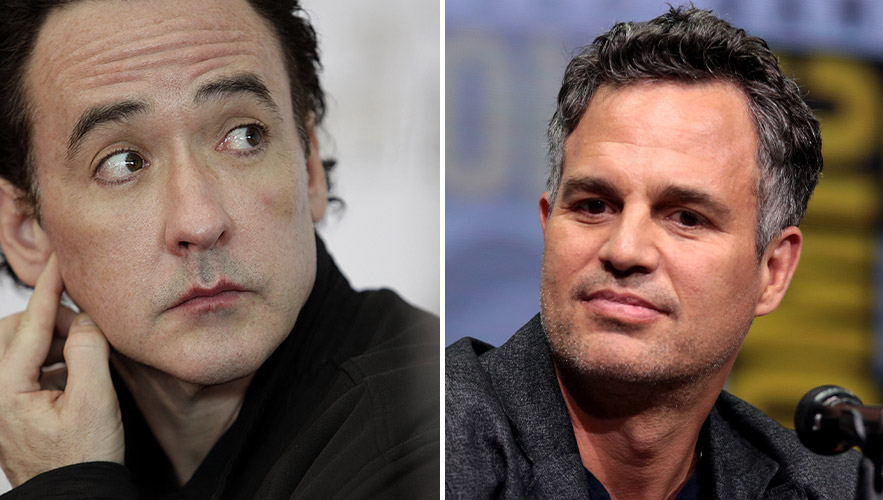
    John Cusack has publicly sided with Mark Ruffalo after Paramount said Ruffalo invoked antisemitic tropes while attacking the Ellison family and Oracle. The celebrity dispute is unfolding inside a much larger fight over Paramount’s proposed Warner Bros. acquisition, which remains blocked by litigation and fresh settlement turmoil.

    John Cusack offered a terse but unmistakable show of support for Mark Ruffalo over the weekend, writing “Solidarity — well said” after Ruffalo rejected Paramount’s characterization of his criticism as antisemitic. The exchange turned a Hollywood merger fight into a broader argument over Israel, corporate power, technology and the line between political criticism and antisemitism.
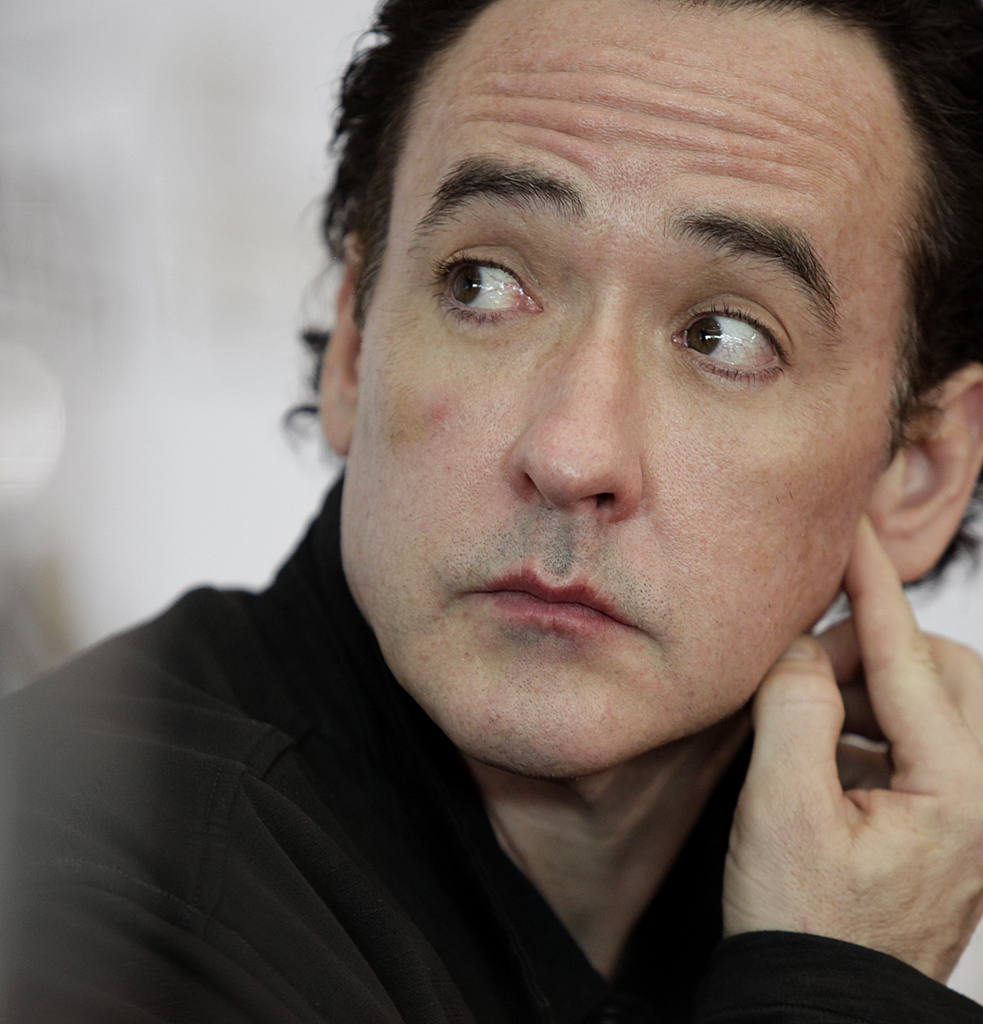
    Ivan Bessedin, CC BY 2.0, via Wikimedia Commons

    Ruffalo’s response came after Paramount said it was troubled by the use of “antisemitic tropes” in what the company described as a business dispute. Ruffalo denied hostility toward Jewish people and argued that criticism of Israel’s government, military technology contracts and corporate executives should not be conflated with antisemitism.

    Cusack joins Ruffalo’s defense

    Cusack did not offer a lengthy argument of his own. His post was essentially an endorsement of Ruffalo’s defense, making him one of the most recognizable actors to publicly stand with Ruffalo after Paramount’s unusually pointed corporate statement. Entertainment Weekly reported the exchange Monday as the controversy continued to spread beyond the original merger debate.

    Ruffalo, meanwhile, framed the issue as one of political speech and corporate scrutiny. In his Saturday response, he called the accusation against him “appalling and fundamentally dishonest,” while stressing that his views came from his political convictions and should not be read as hostility toward Jewish people. He also emphasized the influence Jewish friends and colleagues have had on his life and work.

    His defense did not retreat from the substance of his earlier criticism. Instead, Ruffalo returned to the proposed Paramount-Warner Bros. combination and argued that the public should examine the Ellison family’s wealth, Oracle’s government and surveillance businesses, and the consequences of concentrating major entertainment and news assets under one corporate structure.

    What Ruffalo actually argued

    Gage Skidmore from Peoria, AZ, United States of America, CC BY-SA 2.0, via Wikimedia Commons

    The confrontation began after Ruffalo shared a 2024 video clip of Safra Catz, Oracle’s former chief executive and current executive vice chair, discussing technology the company made available to support Israel after the Oct. 7, 2023 Hamas attacks. In the clip, Catz referred to some Oracle technology as “profoundly scary,” while saying there were details she could not discuss publicly.

    Ruffalo used the clip to connect Oracle’s relationship with Israel to the financing and power surrounding Paramount’s Warner Bros. bid. He described Israel’s actions in Gaza as “genocide” and invoked “apartheid,” while portraying Larry Ellison and the companies around him as part of a broader concentration of economic, technological and media power. Those descriptions were Ruffalo’s political characterizations, not findings made in the merger litigation.

    He also warned that technology associated with Oracle could ultimately sit alongside a much larger media empire if the Warner Bros. transaction closes. That argument blended several distinct issues — military technology, corporate finance, media ownership and editorial influence — that Paramount said should not be collapsed into an accusation against the company or its leaders.

    Paramount’s response drew a line

    Paramount answered Ruffalo with language that went beyond a standard merger rebuttal. A spokesperson said the company was troubled when “antisemitic tropes” were invoked in service of a business dispute and argued that the words “genocide” and “apartheid,” when applied in this context, were wrong and diminished the suffering those terms are meant to describe.

    The company also said it did not tolerate prejudice against anyone. Paramount’s statement did not establish that Ruffalo holds antisemitic beliefs; it asserted that his rhetoric invoked antisemitic tropes. Ruffalo, in turn, treated that characterization as an accusation of antisemitism and rejected it directly. That distinction matters because the dispute is about the meaning and implications of his words, not a formal adjudication of his motives.

    The argument has since drawn responses from Jewish advocacy organizations. Variety reported Monday that the Simon Wiesenthal Center praised Paramount for drawing a line against what it viewed as antisemitic messaging, while Creative Community for Peace also criticized Ruffalo’s rhetoric. Their statements add a significant counterweight to Cusack’s public support.

    Oracle’s role needs precision

    One detail in the public debate is easy to overstate. Oracle is not simply a private company “owned” by Larry Ellison. It is a publicly traded corporation. Ellison co-founded Oracle, serves as its executive chairman and chief technology officer, and remains deeply associated with the company, but Oracle and Ellison’s personal finances are not interchangeable.

    That distinction also matters for the Warner Bros. deal. Securities filings show that the transaction is supported by a massive equity investment involving the Ellison family and RedBird Capital Partners. Earlier deal materials also described personal guarantees and financing commitments tied to Larry Ellison and the Ellison trust. The filings do not describe Oracle Corporation itself as the buyer of Warner Bros.

    Catz’s position has changed as well. She stopped serving as Oracle’s CEO in 2025 and is now executive vice chair of Oracle’s board. She also serves on Paramount’s board, which helps explain why Ruffalo highlighted her remarks, but it is more accurate to describe her current roles than to present her as Oracle’s sitting chief executive.

    That does not make Oracle irrelevant to the story. Larry Ellison’s fortune and influence are closely associated with the company he founded, and Catz bridges the two corporate worlds through her Oracle and Paramount board roles. But a connection between people and companies is different from evidence that Oracle itself is financing, buying or controlling Warner Bros.; the deal documents identify Paramount as the buyer.

    Why the Warner deal matters

    Paramount and Warner Bros. Discovery announced a definitive merger agreement in February. The companies valued Warner Bros. Discovery at about $110 billion on an enterprise-value basis, with Paramount agreeing to pay $31 per share in cash. The proposed combination would bring major film, television, streaming and news properties under the same corporate umbrella.

    That scale is why the transaction has become a political and labor flash point independent of Ruffalo’s activism. California and 11 other states sued in July to block the deal, arguing that combining two of Hollywood’s five major film distributors and two major owners of basic cable channels would reduce competition. The states say the result could mean higher prices, fewer choices and weaker bargaining conditions for workers.

    Paramount disputes that case and has argued that the combined company would be better positioned to compete with larger technology and streaming rivals. The federal Justice Department has already cleared the merger, and reports indicate it has also received major international approvals. But federal clearance did not end the matter because state attorneys general can bring their own antitrust challenge in court.

    That means two statements can be true at once: the transaction has passed important regulatory reviews, and it still cannot close. The states are asking a federal court to block the combination under antitrust law. Their case is not an appeal from the Justice Department’s decision; it is a separate enforcement action seeking its own judicial remedy.

    The merger is already stalled

    The current legal status is more concrete than Ruffalo’s suggestion that regulators have simply failed to provide an answer. California Attorney General Rob Bonta’s office says Paramount and Warner Bros. agreed in July not to close the merger before June 1, 2027, or until after a court decision on the states’ claims, whichever comes first. A trial is expected in March 2027.

    That pause creates real financial pressure. The merger agreement provides for additional payments to Warner Bros. shareholders if the transaction remains unclosed after Sept. 30. Reporting on the current dispute has estimated those “ticking” costs at roughly $650 million per quarter, giving Paramount a strong incentive to resolve the state litigation sooner rather than later.

    The conflict intensified Monday when Bonta canceled a planned meeting with Paramount that had been intended to explore a possible settlement. Bonta accused the company of leaking and misrepresenting details from preliminary discussions and said his office would be willing to meet again when Paramount engaged sincerely. Paramount had not immediately commented on that accusation in Reuters’ report.

    The July standstill agreement also clarifies what the current pause does and does not mean. It prevents the companies from completing the merger while the states’ challenge proceeds, but it is not a final ruling that the merger is unlawful. California said that if the states prevail, the deal would remain blocked pending an appeal; otherwise the litigation can continue toward a merits decision.

    The politics now overlap

    Ruffalo has been a visible opponent of the merger, but the court case does not depend on his objections. The states’ lawsuit advances antitrust claims about competition in film distribution and cable television. Those claims will rise or fall on evidence about markets, concentration and competitive effects, not on whether Ruffalo or Paramount wins the public argument over his posts.

    Still, the timing has fused the two controversies. Ruffalo’s attack on Oracle and the Ellisons landed just as Paramount and California were maneuvering over settlement. The canceled meeting now underscores how combustible the broader dispute has become, even though Bonta’s stated reason for calling off talks concerned alleged leaks and negotiating conduct rather than Ruffalo’s comments.

    That separation is important. It would be misleading to suggest that Cusack’s support, Paramount’s antisemitism allegation or the advocacy-group responses determine whether the acquisition violates antitrust law. They do, however, shape the public fight over who should control some of the country’s most influential entertainment and news brands.

    What happens next

    For Ruffalo, the immediate question is whether the dispute remains a social-media clash or produces consequences in his professional relationships. So far, the central verified development is rhetorical: Paramount condemned his language, Ruffalo rejected the charge, Cusack backed him, and Jewish advocacy groups have publicly criticized him. None of that by itself establishes an employment, contractual or legal sanction against the actor.

    For Paramount, the higher-stakes issue remains the merger. The company still faces the 12-state lawsuit and a scheduled 2027 trial unless the parties reach another resolution. Reports say California has been considering structural remedies, including potential cable-channel divestitures and measures to preserve separation between major studio operations, but no settlement has been announced.

    Cusack’s four-word intervention therefore matters less for its length than for what it signals: the fight is no longer confined to boardrooms, regulators and merger lawyers. It has become a public argument about Israel, antisemitism, corporate concentration and political speech, with Hollywood figures choosing sides while the transaction itself remains legally unresolved.

    The clearest facts are narrower than the rhetoric. Paramount says Ruffalo invoked antisemitic tropes; Ruffalo denies antisemitism and says he is criticizing governments, contracts and executives; Cusack has publicly supported that defense. Meanwhile, the proposed Paramount-Warner Bros. merger has not closed, and the latest attempt to open settlement talks in California has fallen apart before it formally began.
  • Linda McMahon praises classroom AI while conceding the evidence is still thin

    Linda McMahon praises classroom AI while conceding the evidence is still thin

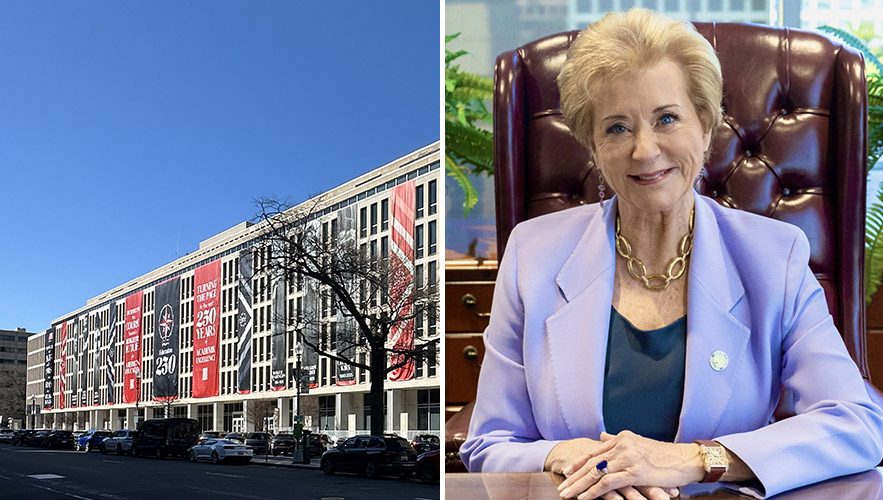
    Education Secretary Linda McMahon defended carefully guarded AI use after CNN asked whether children were “guinea pigs for chatbots.” Her answer echoed new federal guidance demanding proof of learning gains, but her praise for Alpha School went further than independent evidence currently supports.

    US Department of Education, CC BY 2.0, via Wikimedia Commons

    Education Secretary Linda McMahon walked into a fast-moving debate Sunday with two positions that can coexist only if schools take the evidence requirement seriously: artificial intelligence may become a useful classroom tool, and educators still do not have enough long-term evidence to know where its benefits end and its risks begin.

    During CNN’s State of the Union on Aug. 23, host Dana Bash pressed McMahon on that uncertainty. McMahon did not dismiss the concern. She acknowledged that “there aren’t a lot of metrics available now,” while arguing that AI can be introduced slowly, with guardrails, monitoring and a willingness to remove products that fail to improve learning.

    McMahon’s answer was more nuanced

    The exchange was sharper than a routine technology interview because Bash framed the issue around children becoming experimental subjects for a rapidly changing industry. McMahon responded by pointing to Alpha School in Austin, Texas, where she said students spend the first part of the day on computers and receive personalized instruction while adults monitor their progress.

    McMahon described the model as offering something close to a one-on-one tutor. If a student falls behind, she said, material can be repeated; if a student moves quickly, the program can accelerate. She called the technology a “great tool” at that school but also said schools should ask who uses AI, for how long, and with what outcome.

    McMahon did not say AI should replace teachers. Later in the same interview, she said human interaction is “incredibly important” and that nothing should replace direct teacher-student interaction. She also endorsed removing recreational screen distractions while distinguishing them from screen time used for instruction.

    The tension came from how confidently she described Alpha’s results while admitting the broader evidence base remains limited. McMahon called the model “incredibly effective” for those students. Yet a visit, student conversations and a school’s reported outcomes are not the same as independent evidence showing that a model will work across different ages and school systems.

    Federal policy is pushing AI

    The administration is not approaching classroom AI as a neutral observer. President Donald Trump’s April 2025 executive order made AI literacy and proficiency an explicit federal policy goal and called for “appropriate integration” of AI into education, teacher training, public-private partnerships and research aimed at improving student outcomes.

    The Education Department moved further in April 2026 by establishing “Advancing Artificial Intelligence in Education” as one of the secretary’s supplemental priorities that can be used in discretionary grant competitions. AI is therefore an area the federal government has formally chosen to encourage within existing education programs.

    APK, CC BY 4.0, via Wikimedia Commons

    But on Aug. 20, three days before McMahon’s CNN appearance, the department issued guidance that sounded more cautious than a technology sales pitch. It told states and districts to prioritize instructional value, preserve educator judgment, provide transparency to parents and demand evidence that technology is producing meaningful learning outcomes.

    The guidance distilled that approach into five questions: What learning problem does a tool solve? When should it be used? For whom? For how long? And what evidence shows that it improves learning? It also said schools should change course when evidence is weak and remove tools when repeated findings show persistent shortcomings.

    Alpha School is the test case

    Alpha School has become a prominent example because its model is more ambitious than adding a chatbot to homework help. Alpha says students can complete core academic work in two hours a day through adaptive technology and mastery-based learning, leaving the rest of the day for projects, life skills, sports and other activities.

    The school reports eye-catching results. Its website says students average 2.6 times the growth of similarly scoring peers on nationally normed MAP assessments and that a majority perform near the top of national distributions. Those are Alpha’s claims, based on data it presents from its own students; they are not an independent randomized evaluation of the model.

    That distinction matters when a federal official presents Alpha as evidence that AI is working well. Its outcomes may reflect many variables beyond software, including admissions, family resources, student motivation, staffing, school culture and individualized adult attention surrounding the technology.

    Even Alpha’s own model complicates the shorthand that students are simply being taught by chatbots. The school describes a broader system combining adaptive technology, mastery learning and human “guides.” The policy question is whether a technology-heavy instructional system can reliably produce durable learning without weakening the human parts of schooling.

    Research cuts both ways

    There is more evidence about AI-supported learning than the phrase “no real studies” might suggest, but it remains uneven. A 2025 systematic review of 28 studies involving 4,597 K-12 students found that AI-driven intelligent tutoring systems generally had positive effects on learning and performance, while advantages were smaller when compared with non-intelligent tutoring systems.

    The authors called for longer studies, larger and more diverse samples, and greater attention to ethical questions. Much of the older “AI tutoring” literature also concerns structured intelligent tutoring systems, not the open-ended generative chatbots now being integrated into products used by students.

    A Harvard randomized controlled trial published in 2025 found that college students using a carefully designed AI tutor learned more in less time than students in an active-learning physics class and reported higher engagement and motivation. But the experiment involved university students, a specific subject and a tutor deliberately built around established teaching practices.

    Those results show that AI can support learning under some conditions. They do not establish that a general-purpose chatbot is effective for elementary students or that the same gains would survive when a tool is scaled across thousands of classrooms with different teachers, curricula and student needs.

    Guardrails can change the result

    One of the strongest warnings comes from a large high-school mathematics experiment led by researchers at the University of Pennsylvania. Nearly 1,000 students in Turkey were assigned to use no AI, a standard GPT-4 interface, or a specially designed GPT tutor during practice sessions.

    During practice, access to GPT-4 helped students answer more problems correctly. The problem appeared when the AI disappeared. Students who had used the more open-ended version performed worse on a later unassisted test than students who never had AI access, while the specially guarded tutor substantially reduced that negative effect.

    The mechanism is intuitive: a tool that supplies answers can improve immediate task performance without building the knowledge a student needs when the tool is gone. A tutor that prompts reasoning, limits shortcuts and is designed around instructional goals can behave differently. “AI in education” is too broad a category to have one universal effect.

    That finding puts weight behind McMahon’s phrase “AI with guardrails.” The unresolved question is who defines those guardrails, who tests them, how quickly weak products are removed and whether schools have the expertise to demand evidence from vendors before a technology becomes embedded in everyday instruction.

    Educators are not simply anti-AI

    The criticism that followed McMahon’s interview was real, but it should not be stretched into a claim that educators uniformly reject artificial intelligence. Raw Story highlighted posts from teachers and advocates who argued that AI should not displace human teachers and criticized McMahon for praising a technology-heavy model while acknowledging the need for more evidence.

    That skepticism fits a broader labor position, but the American Federation of Teachers is not calling for a blanket rejection of all AI. The union operates an AI training initiative and says technology can enhance teaching when educators remain central, student safety and privacy are protected, and schools use explicit guardrails.

    At the same time, the AFT’s 2026 policy is far more restrictive for younger children. It advocates no screens for prekindergarten through second grade except for compelling needs, opposes student-facing AI in elementary schools, and calls for strict protections for older students. It also wants independent research rather than evidence financed only by technology companies.

    The National Education Association has taken a similarly process-focused approach. Its guidance asks who chooses AI systems, how student data are protected, whether humans verify AI-generated content and grades, and how districts will reevaluate tools. It specifically asks how schools will ensure AI supports rather than supplants human-directed teaching.

    Why the backlash landed

    McMahon’s answer irritated critics because the burden of proof is unusually important when children are involved. Schools cannot treat a product like a consumer app that can be abandoned with little cost. Once districts train teachers, sign contracts, redesign lessons and normalize a platform, removing it can become financially and institutionally difficult.

    The secretary’s own department recognizes that problem. Its guidance tells schools to demand evidence before allowing technological novelty to substitute for instructional value. The difficulty is applying that rule consistently while an administration is simultaneously promoting AI literacy, directing grant priorities toward AI and celebrating high-profile models not independently validated at public-school scale.

    There is also a difference between teaching students about AI and placing AI between students and teachers for core instruction. The Trump executive order supports AI literacy, workforce preparation and teacher training. Those goals do not logically require schools to turn elementary lessons over to chatbots or adopt a two-hour software-centered model.

    A school can teach students how AI works, use AI to help teachers plan lessons, deploy a tightly constrained tutor for a specific skill and still reject open-ended chatbot use for younger children. Those are separate choices with different risks.

    The real test comes next

    McMahon’s CNN interview did not settle whether students are becoming “guinea pigs.” It clarified the standard by which the administration says classroom technology should be judged: evidence of learning, limited and purposeful use, teacher involvement, parental transparency and removal when a tool fails. The challenge is whether policy decisions will actually follow that standard.

    For school leaders, the available research supports carefully designed AI tutoring in some settings and warns that poorly designed systems can weaken independent learning. Age, subject, instructional design, data practices and the continuing role of human educators all change the risk-benefit calculation.

    For McMahon, the political vulnerability is narrower. She has made Alpha School a positive example while conceding that the field lacks many of the metrics needed to judge newer AI products. If the administration wants schools to demand evidence from vendors, it will face the same demand when it points to particular schools as models.

    That is why the controversy extends beyond one Sunday interview. The federal government is trying to accelerate AI literacy while telling schools not to confuse innovation with effectiveness. Whether those goals can coexist will depend on rigorous evidence, transparent evaluation and a willingness to stop when the technology does not help students learn.

  • Trump gets cheers at D.C. IndyCar race after boos at World Cup and NBA Finals

    Trump gets cheers at D.C. IndyCar race after boos at World Cup and NBA Finals

    Donald Trump received a markedly warmer reception at Washington’s inaugural Freedom 250 Grand Prix than at two recent championship events. But the cheers in a patriotic, Trump-backed setting show how one crowd reacted — not what IndyCar fans nationwide think of the president.

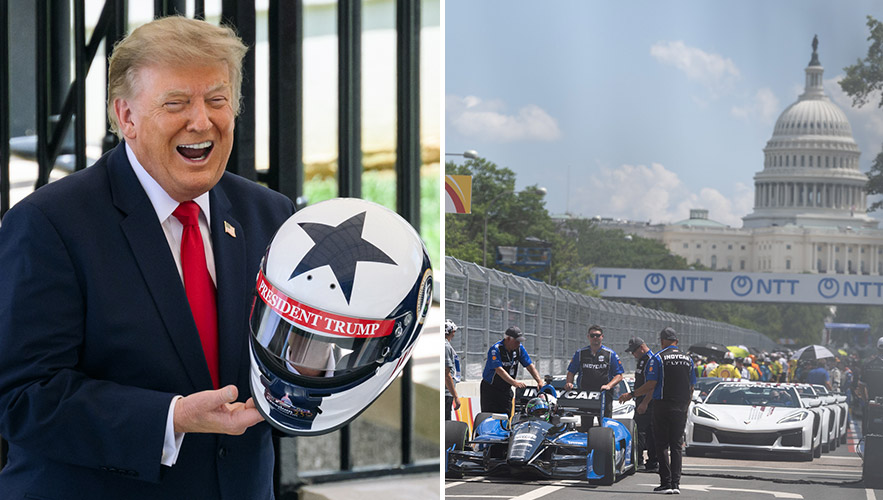
    President Donald Trump was cheered by spectators Sunday as he arrived for the Freedom 250 Grand Prix in Washington, D.C., joined drivers before the start and took a ceremonial lap in the presidential limousine known as “The Beast.” He then waved the green flag from his viewing box to begin the race.

    NASA HQ PHOTO, CC BY-NC-ND 4.0 via Flickr

    The event is no longer in the “about to happen” stage. Kyle Kirkwood went on to win the 250-mile race, giving the first IndyCar event around the National Mall an American winner and cutting into Alex Palou’s championship lead. That result matters because it updates a story that initially centered on Trump’s pre-race reception.

    Trump gets a warmer welcome

    Video and contemporaneous reports from the circuit showed Trump greeted with cheers before entering the presidential limousine. As his motorcade made its ceremonial lap, spectators could be heard joining patriotic chants, while a Marine Corps band played “Stars and Stripes Forever.”

    The scene was a clear contrast with Trump’s appearances at Madison Square Garden in June and the World Cup final in New Jersey in July, where boos were audible when he was shown or entered the field. At the Freedom 250, the dominant reaction around his ceremonial appearance was supportive rather than hostile.

    That difference, however, has a narrow meaning. It establishes the reaction of people who were present at this particular event. It does not provide a scientific measure of IndyCar fans as a whole, and it cannot show whether the broader fan base approves or disapproves of Trump.

    The setting also matters. The race was created as part of the country’s 250th-anniversary celebrations, was strongly promoted by Trump and featured overtly patriotic staging. Fans knew the president was closely associated with the event before they arrived.

    The race made its own history

    The Freedom 250 was the first IndyCar race staged on the streets around the National Mall. The temporary circuit measured 1.7 miles and used seven turns, with the 147-lap race covering 250 miles through a route that included Pennsylvania Avenue and some of Washington’s most recognizable federal landmarks.

    Kirkwood, driving for Andretti Global, started second and controlled most of the race. IndyCar said he led 128 of the 147 laps and finished 3.0906 seconds ahead of Christian Lundgaard. Will Power finished third, giving Andretti two of the top three positions.

    The afternoon was not straightforward. Six caution periods interrupted the race, and championship leader Palou endured a drive-through penalty, a slow pit stop and a late crash. He finished 20th. Kirkwood’s victory reduced Palou’s championship advantage to 91 points with three races remaining.

    IndyCar reported a two-day attendance of 215,000. Reuters had said before the race that officials expected roughly 200,000 spectators and that general-admission tickets were free, although premium trackside hospitality carried much higher prices.

    Trump was built into the spectacle

    Trump was not simply another prominent spectator. His administration helped create the race, and the event’s presentation placed him at the center of its ceremonial opening.

    On Jan. 30, Trump signed Executive Order 14381, directing the secretaries of the Interior and Transportation to designate a suitable Washington route and accelerate the permits and approvals needed to hold the Freedom 250. The order described the race as part of the celebration of America’s 250th birthday.

    On race day, Trump and first lady Melania Trump met drivers before the start. The presidential motorcade then completed an honorary lap. Air Force One and fighter aircraft flew overhead during the pre-race ceremonies, and Trump later waved the green flag that officially sent the field away.

    The Associated Press reported that IndyCar owner Roger Penske, a longtime Trump friend who received the Presidential Medal of Freedom in 2019, helped lead the effort to bring the race to Washington. Penske Corporation president Bud Denker said the company was covering the vast majority of the race’s costs, including track construction and road improvements.

    The combination of motorsport, military flyovers, national monuments and presidential ceremony made the Freedom 250 something more specific than an ordinary stop on the IndyCar calendar. It was both a race and a major America 250 production with Trump visibly attached to it.

    The route itself reflected the unusual legal and logistical demands of staging a commercial motor race beside federal landmarks. Reuters reported that an earlier plan involving Capitol grounds stalled because it would have required congressional approval and conflicted with restrictions on advertising there. The final route avoided the need to run through Capitol grounds while keeping the National Mall and Pennsylvania Avenue at the center of the course.

    The event also reshaped normal Sunday movement through downtown Washington. Major streets were closed for the race and security, while air traffic at Ronald Reagan Washington National Airport was paused for about three hours to accommodate military flyovers. Those disruptions underscored the scale of the production behind what was, on the sporting calendar, a single weekend race.

    Why this crowd was different

    Crowd reactions at sporting events are tempting to treat as instant political verdicts. They are vivid, easy to hear and easy to compare. But they are also highly dependent on who bought or obtained tickets, why people came, where cameras and microphones were positioned and what was happening when the reaction began.

    The Freedom 250 audience was not assembled as a representative sample of American voters or even of all IndyCar followers. It was a self-selected crowd attending a free, heavily promoted Washington event tied directly to the country’s semiquincentennial and to a president who had personally ordered federal agencies to help make the race possible.

    That does not make the cheers meaningless. They were real evidence that Trump received a favorable reception from many spectators within earshot during his ceremonial lap and pre-race appearance. It simply limits the conclusion that can responsibly be drawn from them.

    The same caution applies to boos. A hostile reaction in one arena does not prove that every fan of that sport opposes a politician. Crowd noise is an observation about a venue at a particular moment, not a substitute for polling or election results.

    None of those episodes supplies a comparable measure of crowd composition or intensity. The useful comparison is descriptive: boos were documented at the two earlier championship events, while cheers were documented around Trump’s Freedom 250 appearance.

    Madison Square Garden brought boos

    The clearest recent contrast came June 8 at Game 3 of the NBA Finals between the New York Knicks and San Antonio Spurs at Madison Square Garden. Trump became the first sitting president to attend an NBA Finals game.

    The Associated Press reported that Trump was booed loudly after arena video screens showed him saluting during the national anthem. “U-S-A!” chants had already been heard during the anthem, illustrating that patriotic chanting and a negative reaction to the president could occur in the same building within moments of each other.

    Trump later told reporters he thought the reception was “mostly cheers.” The available reporting, however, documented a substantial chorus of boos when he appeared on the screens. The episode also came with a large security operation around the arena that altered normal game-day access.

    That is a more precise description than saying simply that “NBA fans” rejected Trump. The documented fact is that a sizable portion of the Madison Square Garden crowd booed him during that appearance.

    World Cup final repeated the contrast

    Trump encountered another negative reception July 19 at the World Cup final in New Jersey, where Spain beat defending champion Argentina 1-0.

    Reuters reported that boos came from the stands when Trump and FIFA President Gianni Infantino entered the field for the trophy ceremony. The booing had stopped by the time they presented medals before the trophy was handed to the Spanish team.

    That sequence is important because it avoids exaggerating the event into a continuous stadium-wide protest. Trump was audibly booed at a specific moment, but the response changed as the ceremony progressed.

    His role at the World Cup final was also unusually prominent for a political leader at a sporting event. He took part in the medal and trophy presentation and remained on the podium as the victorious Spanish players celebrated.

    The Freedom 250 therefore provided a visible reversal in tone only about five weeks later. Instead of the jeers heard at the soccer final, Trump’s Washington lap and pre-race appearance brought cheers and patriotic chants from many spectators.

    Sports have become a presidential stage

    The IndyCar event fits a broader pattern in Trump’s second term: major sporting occasions have become recurring presidential appearances and, in some cases, centerpieces of official celebrations.

    Earlier in the summer, the White House hosted UFC Freedom 250 on the South Lawn. Trump later attended the World Cup final, and in August he appeared at the Patriot Games, a competition for high school athletes connected to the America 250 program. The Washington Grand Prix capped that run of high-visibility events.

    Reuters has described those appearances as part of a wider use of sports and spectacle to raise Trump’s domestic and international profile. Supporters see the events as celebrations of competition, patriotism and American culture. Critics argue that the presidency is being inserted too aggressively into settings that would otherwise be focused on sport.

    The Freedom 250 illustrated both sides of that tension. It produced a legitimate IndyCar contest with championship consequences, but its staging also made the president inseparable from the opening spectacle.

    Kirkwood ultimately owned race day

    For all the attention on Trump’s reception, the competitive story ended with Kirkwood.

    He seized the lead early, repeatedly rebuilt his advantage after caution periods and survived late restarts that could have erased the work he had done over more than 100 laps. His victory was his second of the season and tightened a championship race that had appeared far more comfortable for Palou before the weekend.

    The series now moves to Milwaukee, where Palou still holds the upper hand despite his poor Washington result. That is the sporting consequence that lasts beyond the cheers, boos and political interpretation surrounding Sunday’s ceremonies.

    Trump’s warm reception in Washington was still notable because it contrasted so sharply with two recent championship appearances. But the most defensible takeaway is narrower than a claim about what “IndyCar fans” think of him. At a race he championed, surrounded by patriotic pageantry in the nation’s capital, the president heard cheers. At Madison Square Garden and the World Cup final, he heard boos. Those moments show how different sports crowds received him in different settings not a single verdict from American sports fans.

  • Federal records undercut claim that Karyna Shuliak was Jeffrey Epstein’s final prison visitor

    Federal records undercut claim that Karyna Shuliak was Jeffrey Epstein’s final prison visitor

    Palm Beach County Sheriff’s Department, Stephen Ogilvy, Public domain, via Wikimedia Commons

    Karyna Shuliak was a key personal contact during Jeffrey Epstein’s incarceration, but federal records do not support the resurfacing claim that she visited him in person on July 30, 2019. The records instead document a phone call that day and a separate, unmonitored call on August 9.

    A story circulating again in August 2026 says Shuliak, a Belarus-born dentist described in prior reporting as Epstein’s girlfriend, was his only personal visitor at Manhattan’s Metropolitan Correctional Center and saw him there 11 days before his death.

    The available federal record points in a different direction. A Bureau of Prisons attorney later corrected a court filing that had described a July 30 log as showing a visit. The document, she said, was actually an intake-screening phone log. A separate BOP record from August 2019 stated that Epstein had no visitors other than legal visitors.

    Epstein had been arrested on July 6 and charged with sex trafficking of minors and conspiracy. A federal judge denied bail on July 18, leaving him detained pending trial. He died before those charges could be adjudicated.

    The visitor claim has a problem

    The distinction matters because the “final prison visitor” framing turns an old record into a new revelation. The claim traces back to reporting published in 2023 and has been repeated since. But BOP litigation produced a formal correction years before the latest version resurfaced.

    In a supplemental declaration filed in the New York Times Company’s Freedom of Information Act case against the Bureau of Prisons, MCC staff attorney Nicole McFarland said an earlier declaration had incorrectly described one record as a log showing a visitor for Epstein. She corrected that description: it was an Intake Screening Phone Log showing a phone call, not an in-person visit.

    That correction is reinforced by another BOP document now included in the Justice Department’s Epstein releases. In an August 13, 2019 response to a records request for Epstein’s signed visitor log, the document states that he did not have visitors other than legal visitors.

    Those records do not prove every later media account relied on the same mistaken description. They do, however, directly contradict the claim that the July 30 entry establishes Shuliak as an in-person visitor.

    What happened on July 30

    The July 30 contact itself is well documented — as a call. A BOP response preserved in the released files says Epstein was given a monitored call at 5:15 p.m. to “Karina Shaliak,” identified as a friend. The spelling differs from Karyna Shuliak, but the name and context match the woman identified in subsequent reporting.

    The BOP said the call was made on a monitored telephone or speakerphone and documented in a Correctional Systems Department log. Staff provided it because Epstein had not been able to use the regular inmate telephone system.

    July 30 was also important in Epstein’s custody. The Justice Department inspector general found that he had been placed on suicide watch after a July 23 incident, removed from suicide watch on July 24 and kept under psychological observation until July 30. He then returned to the Special Housing Unit, where officials said he should be housed with an appropriate cellmate.

    That sequence explains why July 30 appears repeatedly in records about his final weeks. It does not convert a telephone contact into a physical visit.

    The August 9 call is different

    The stronger and more consequential record concerns August 9, the evening before Epstein died. The Justice Department Office of the Inspector General found that MCC staff allowed him to make an unrecorded, unmonitored call from 6:58 p.m. to 7:19 p.m. using a line outside the normal inmate telephone system.

    Epstein told a unit manager he wanted to call his mother. His mother had died in 2004. According to the inspector general, a man answered the New York City-area number the manager dialed, but the manager did not verify the recipient and left the facility while Epstein was still speaking.

    The OIG did not identify the recipient by name in its 2023 report, calling her “Individual 1.” The lawyer for Individual 1 told federal prosecutors that she spoke with Epstein at about 7 p.m. for roughly 20 minutes and was in Belarus at the time. The OIG noted that it did not independently verify the location claim.

    The New York Times had identified the person as Karyna Shuliak in 2021, citing three people with knowledge of the call. That reporting described her as Epstein’s girlfriend and said phone logs showed an earlier social call to her on July 30.

    What investigators learned about the call

    The August 9 conversation was not recorded, so there is no complete, independently verifiable transcript. The most detailed official account comes from what the attorney for Individual 1 represented to the U.S. Attorney’s Office for the Southern District of New York, as summarized by the inspector general.

    According to that proffer, Epstein complained that press coverage had become intense and discussed personal subjects, including books, music and hygiene in jail. He told the recipient, “They are trying to keep me safe,” said his case would take longer than expected, told her he loved her and said he would not be able to call again for another month.

    Those remarks describe future plans, but they are not proof of Epstein’s state of mind, and the OIG did not treat them as disproving suicide. Individual 1 declined to be interviewed by the inspector general, so the office did not obtain her own account of the conversation.

    The inspector general also found that the call violated BOP policy. It should have been monitored and logged, and the recipient’s identity should have been verified. A regional BOP official called the lapse “extremely concerning” because the contents could not be reconstructed with certainty.

    The final day contained other failures

    The call was only one part of a larger breakdown at MCC. On August 9, Epstein’s cellmate was transferred out and no replacement was assigned even though psychology staff had directed that Epstein be housed with another inmate. He met with his lawyers that day before the unmonitored call.

    The previous day, while meeting with attorneys, Epstein had signed a new will. On August 9, the Second Circuit also unsealed roughly 2,000 pages in civil litigation involving Ghislaine Maxwell, producing extensive press coverage. The OIG considered those developments in reconstructing Epstein’s final state.

    After Epstein returned to his cell, staff failed to conduct required inmate counts and 30-minute rounds for hours. Records were falsified to make it appear that checks had been performed. His cell contained excess linens, and the OIG found required cell searches had not been properly carried out.

    Those failures help explain why claims about Epstein’s last contacts receive unusual scrutiny years later: the official investigation itself describes multiple simultaneous breaches of basic prison procedure.

    What investigators concluded about his death

    The New York City medical examiner ruled Epstein’s death a suicide by hanging. The FBI investigated the cause of death and, according to the OIG, found no criminality in how he died. The inspector general’s 2023 review likewise said it found no evidence contradicting the FBI’s conclusion.

    The available surveillance footage had limits. A malfunction meant only part of the prison camera system was recording, and Epstein’s cell door was not in the camera’s field of view. Still, the OIG said the surviving footage covered access from the SHU common area to his tier and showed no one entering that tier between about 10:40 p.m. and 6:30 a.m.

    In July 2025, the Justice Department and FBI again publicly affirmed the suicide conclusion, saying an independent FBI review of the available footage was consistent with the earlier findings.

    That does not erase the documented misconduct: the missing cellmate, missed rounds, falsified records, excess linens, camera problems and unauthorized phone call were all real failures. But institutional failure is not, on its own, evidence that Epstein was killed.

    Why Shuliak remains significant

    Shuliak’s importance rests on firmer ground than the disputed visitor claim. Records and reporting place her in Epstein’s personal circle for years, and the 2026 Justice Department disclosures added detail about the financial and educational support he provided.

    Bloomberg reported from newly released records that Epstein helped arrange Shuliak’s path into Columbia University’s dental school, paid her tuition and donated money connected to the school. Other released communications document travel arrangements and financial support involving her family.

    Records from Epstein’s estate also show she was an important intended beneficiary. Reporting based on released trust documents says Epstein planned substantial transfers to her, including cash and property, shortly before his death. Those arrangements demonstrate closeness and financial ties; they do not establish involvement in the crimes for which Epstein was charged.

    That distinction matters when describing a private person whose name appears throughout a huge archive. The prison-call evidence establishes personal contact. It should not be stretched into allegations the records do not support.

    What the 2026 release changes

    The Justice Department’s January 2026 production made more than 3 million additional pages public, along with thousands of videos and images, under the Epstein Files Transparency Act. The department said the broader production totaled nearly 3.5 million pages and drew from the Epstein and Maxwell cases, the death investigation, FBI files, OIG material and BOP records.

    That archive has revived old claims alongside genuinely new information. It also makes source discipline more important. A document can be authentic while a description of what it proves is wrong, and a later filing can correct an earlier characterization.

    Here, the primary records provide a cleaner account than the viral headline. The July 30 entry documents a monitored call to a woman recorded as “Karina Shaliak.” The August 9 call was unmonitored, went to a person in an alleged personal relationship with Epstein and was identified by major news reporting as Shuliak. BOP records, meanwhile, say Epstein’s in-person visitors were legal visitors.

    What still is not known

    The full substance of the August 9 call remains unknown because prison staff did not record or monitor it. The OIG’s account came through the recipient’s lawyer, and the recipient declined an OIG interview. That leaves a real evidentiary gap, but it is narrower than many retellings suggest.

    There is no basis in the federal records reviewed here to describe Shuliak as Epstein’s “final prison visitor.” The more defensible description is that she was a close personal associate who received documented telephone calls from him during his detention and was identified in reporting as the recipient of his last known personal call outside the jail.

    The correction does not make the final hours less troubling. It makes the story more precise. The unresolved issue is not who walked into MCC to see Epstein on July 30. The stronger record says no such personal visit occurred. The enduring question is what was said during an improperly authorized, unrecorded call the night before his death — a conversation investigators could only reconstruct secondhand.

  • Border Patrol detains Navy sailor’s father as USS Abraham Lincoln heads home

    Border Patrol detains Navy sailor’s father as USS Abraham Lincoln heads home

    Joshua Aviles via Facebook | U.S. Navy photo by Mass Communication Specialist 3rd Class Clint Davis, Public domain, via Wikimedia Commons

    Luis Manuel Aviles Roa remains in ICE custody after a Key West traffic stop, even as his son’s carrier begins the long trip back to San Diego. The case exposes a widening gap between military-family immigration programs and the Trump administration’s tougher enforcement policy.

    For months, Luis Manuel Aviles Roa had been waiting for one thing: the return of his son, Joshua, from an extraordinary deployment aboard the USS Abraham Lincoln. Instead, on Saturday, Aug. 22, federal immigration agents stopped Aviles in Key West, Florida, and took him into custody.

    The arrest came just as the Lincoln was finally leaving the Middle East after nearly seven months in the region and more than nine months away from home. Joshua Aviles, a Navy sailor aboard the carrier, learned of his father’s detention while still at sea, turning what had been a long-awaited family reunion into an uncertain immigration fight.

    The arrest came during a traffic stop

    Aviles, 48, is a Nicaraguan native who has lived in the United States for about 19 years and works as a handyman in Key West, according to his family. His wife, Argelia Aviles, said he was headed to a mechanic when Border Patrol agents stopped him.

    The Department of Homeland Security confirmed that Border Patrol arrested Aviles during a vehicle stop. DHS said he had entered the United States illegally and would remain in Immigration and Customs Enforcement custody while the government pursues removal proceedings.

    Joshua Aviles said his father had a driver’s license, Social Security card and employment authorization, and that the family had been pursuing a green card for him. CBS News reported that DHS did not dispute the family’s statement that Aviles has no criminal record. Those facts, however, do not by themselves establish lawful immigration status.

    DHS put its position plainly: “Having a family member in the military is not a free pass to violate our nation’s laws.” The statement reflects a broader enforcement approach adopted during President Donald Trump’s second term, under which military connections no longer carry the same practical protection from immigration enforcement that they often did under prior administrations.

    A work permit is not legal status

    One of the most important distinctions in Aviles’ case is also one of the easiest to misunderstand. A work permit can authorize a person to work in the United States without granting permanent residence or, by itself, resolving an underlying immigration violation.

    The same is true of a Social Security number or state driver’s license. Those documents may be valid and legally issued while a person still has a complicated or unresolved immigration case. DHS told Telemundo in connection with Aviles’ detention that work authorization or a pending application does not itself confer lawful immigration status.

    The family says Aviles had been waiting for approval of a green card application. Public reporting has not established the precise basis of that application, whether he had previously received military parole in place, whether he had an old removal order, or what other immigration history may affect his eligibility.

    That means two claims can be true at the same time: Aviles may have possessed valid government-issued documents and a pending path toward permanent residence, while federal authorities may still contend that he is removable under immigration law.

    Military parole in place still exists

    The detention has drawn attention to military parole in place, a longstanding immigration tool designed for certain relatives of U.S. service members and veterans. The program remains available, but it is discretionary and does not guarantee a green card or immunity from immigration enforcement.

    Under USCIS guidance, certain spouses, parents, sons and daughters of active-duty service members, selected reservists and qualifying veterans may request parole in place if they are in the United States without having been admitted. If granted, parole can help some applicants meet a procedural requirement needed to seek adjustment of status from inside the country.

    The benefit is narrower than its name can suggest. Someone who entered lawfully and then overstayed generally is not eligible for parole in place on that basis because that person was already admitted. Other immigration barriers, including prior removal orders, criminal grounds or separate inadmissibility issues, may also require additional legal steps.

    Congress has recognized the military-readiness rationale behind these policies: service members may be less able to focus on their missions when close family members face unresolved immigration problems. USCIS has historically treated military ties as a strong favorable factor in discretionary parole decisions, particularly when there are no serious adverse factors.

    Enforcement policy changed in 2025

    The most consequential change is not that military parole in place disappeared. It did not. The change is that immigration enforcement officials now operate under a different policy when deciding how much weight to give military service or military-family ties.

    An ICE memorandum issued April 10, 2025, rescinded a 2022 directive governing consideration of U.S. military service during civil immigration enforcement. The replacement guidance says military service should still be identified and considered, but it also states that service “alone does not automatically exempt” a person from immigration consequences.

    That shift matters because immigration law contains many forms of discretion. A person may be technically removable while also having a pending application, a U.S. citizen child, a military family connection or another factor that could historically have influenced whether ICE chose to arrest, detain or pursue removal at that moment.

    Former immigration officials and military-law specialists interviewed by the Associated Press described the current approach as a major break from prior practice, including during Trump’s first term. DHS, by contrast, says the administration is enforcing laws passed by Congress and that military service does not create a separate exemption from those laws.

    More military families are being detained

    Aviles’ arrest is not an isolated case. An Associated Press investigation published earlier this month identified more than 50 parents and spouses of active-duty U.S. service members who had been detained since Trump returned to office. The AP found at least six had been deported and one had left the country voluntarily.

    The government does not maintain a public count of such cases, so the AP’s tally was assembled from court records, news reports and interviews with relatives and attorneys. At the time of that review, at least eight immediate family members of service members remained in federal immigration custody, and the news organization said the true number could be higher.

    The cases are not identical. DHS told the AP that some people in the group had previous removals, existing removal orders or convictions involving drunken driving or drugs. Others were reported to have no known criminal record and were detained while trying to resolve their status.

    That variation is important. Military family membership does not erase an individual immigration history, and no single case proves how another should be resolved. But the growing number of detentions shows that family ties to active-duty troops are no longer functioning as the broad practical shield they once often provided.

    Congress is scrutinizing the shift

    The trend has begun to draw attention on Capitol Hill. More than 60 Democratic lawmakers asked DHS, the Defense Department and the Department of Veterans Affairs this month for information about deportations and detentions involving service members and their relatives.

    The lawmakers argued that the policy could harm readiness by forcing troops to take leave, delay deployments or manage child-care crises when a spouse or parent is detained. They also questioned why some military recruiters continue to discuss immigration benefits available to service members’ relatives while enforcement agencies are detaining people who may be pursuing those benefits.

    The Republican chairs of the Senate Armed Services and Veterans’ Affairs committees did not respond to AP requests for comment when the inquiry was announced. DHS has defended its enforcement policy, while the Pentagon has generally declined to comment on the broader findings involving military families.

    The dispute is therefore not simply about whether military families receive an automatic legal exemption; they do not. It is about how much discretion the government should exercise when a service member’s immediate relative is trying to regularize status and what effect aggressive enforcement has on the service member’s ability to perform military duties.

    The Lincoln deployment magnifies the strain

    Joshua Aviles’ circumstances make that readiness argument unusually concrete. He said he had spent more than nine months deployed aboard the USS Abraham Lincoln and had been working shifts of more than 12 hours. The carrier’s deployment became a national story before his father was detained.

    The Lincoln went more than 200 days without a port call, setting a modern-era U.S. Navy record and prompting complaints from families about food supplies, maintenance problems and mental-health strain. Defense Secretary Pete Hegseth has said accounts of conditions aboard the ship were “completely misrepresented,” while senior Navy leaders praised the crew’s performance under extraordinary operational demands.

    By Aug. 22, the carrier had left the Middle East and moved into the U.S. 7th Fleet area as it began the trip back toward San Diego. The USS George Washington had arrived in the region to take over the carrier mission. That means Joshua’s deployment is finally moving toward its end, but the family crisis may not be.

    In a Facebook post, Joshua said learning of the arrest left him struggling to focus while still working long hours at sea. His sister, Katherine Delgado, told the AP that Joshua had joined the military in part because he believed his service could improve his father’s prospects for obtaining lawful permanent residence.

    The next steps are still uncertain

    As of Monday, DHS said Aviles remained in ICE custody pending removal proceedings. No authoritative report had established that he had been released or that the government had carried out a deportation.

    His legal options will depend on facts that have not yet been made public in detail: how he entered the United States, whether he has an existing removal order, what application is pending, whether he has received parole or another immigration benefit, and whether any other grounds of inadmissibility or relief apply.

    For the family, the immediate question is simpler. Luis Aviles had expected to welcome his son home after one of the Navy’s most punishing recent deployments. Instead, Joshua is crossing back toward the United States while his father is in federal immigration custody, and there is no guarantee the two will be reunited when the sailor reaches home.

    The case now sits at the intersection of two policies the federal government says are important: maintaining a military force ready for sustained overseas operations and enforcing immigration law without categorical exceptions. What happens to Aviles will show how those priorities are reconciled when they collide inside the same family.

  • Sean Grayson dies in custody weeks after medical release was denied

    Sean Grayson dies in custody weeks after medical release was denied

    Freedom Fighters Upstate SC, via facebook

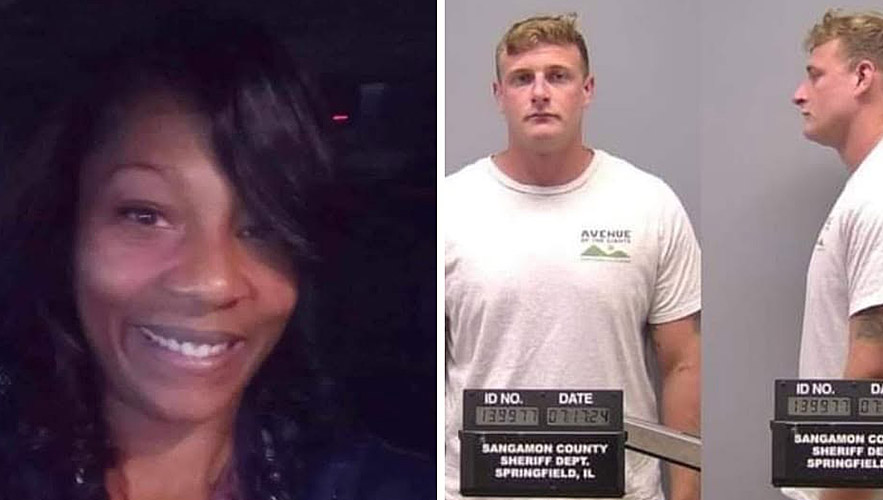
    Sean Grayson, the former Sangamon County sheriff’s deputy convicted of killing Sonya Massey, died Sunday at 32 while serving a 20-year sentence. He had advanced cancer, but officials had not publicly confirmed his cause of death or where he died as of Monday.

    Sean Grayson died on Aug. 23, less than seven months after a judge imposed the maximum prison term for his second-degree murder conviction in the killing of Sonya Massey. His attorney, Daniel Fultz, confirmed the death. The Illinois Department of Corrections had not publicly provided a cause, manner or location of death as of Monday.

    The timing immediately renewed attention to a medical-release request Grayson filed in May. A three-member Illinois Prisoner Review Board panel rejected that application unanimously on July 31, after hearing from Massey’s relatives and reviewing records showing that Grayson’s colon cancer had spread to his liver and lungs.

    What is known about his death

    Grayson was 32 and remained in the custody of the Illinois Department of Corrections when he died. His exact prison location had not been publicly disclosed, and his lawyer declined to provide additional details when confirming the death. That leaves a basic distinction important: Grayson’s cancer was documented, but an official cause of death had not yet been released.

    Attorneys Ben Crump and Antonio Romanucci, who represent Massey’s family, referred in a statement to Grayson’s “death in custody from cancer.” That characterization is consistent with his known medical condition, but it is not the same as a formal cause-of-death finding from corrections officials, a coroner or another medical authority.

    Grayson’s illness predated Massey’s killing. His defense said he was diagnosed with colon cancer in 2023. By his January 2026 sentencing, attorney Mark Wykoff told the court that the disease had advanced to Stage 4 and spread to Grayson’s liver and lungs. The defense also cited rectal cancer in arguing for leniency.

    Massey called police for help

    Massey, a 36-year-old Black woman and mother of two, called 911 early on July 6, 2024, because she believed someone was prowling outside her home in unincorporated Sangamon County near Springfield. Grayson and Deputy Dawson Farley responded but found no prowler.

    Body-camera footage later released by Illinois State Police showed the encounter moving inside Massey’s home. The deputies noticed a pot of hot water on the stove and asked Massey to deal with it. As she moved the pot, Grayson backed away. Massey said, “I rebuke you in the name of Jesus.”

    Grayson then drew his handgun, threatened to shoot Massey in the face and ordered her to drop the pot. The footage showed Massey apologizing and lowering herself behind the kitchen counter. Grayson moved toward her and fired three times. One bullet struck her in the head, fatally wounding her.

    Farley later testified that he did not view Massey as a threat before Grayson drew his weapon and that he unholstered his own gun only after Grayson did. Prosecutors also emphasized what happened immediately afterward: Grayson initially discouraged Farley from providing medical aid, while Farley retrieved medical equipment and tried to help Massey until emergency responders arrived.

    Why the verdict was second-degree

    Grayson was fired after the shooting and indicted on first-degree murder charges. Because of extensive pretrial publicity in Sangamon County, jurors were selected in Peoria County. On Oct. 29, 2025, the jury found him guilty of second-degree murder rather than first-degree murder.

    That verdict did not mean the jury found the shooting justified. Under the theory presented to jurors, they determined that Grayson’s conduct met the legal standard for first-degree murder but accepted a mitigating finding that he believed he was acting in self-defense even though that belief was unreasonable.

    Grayson had argued that he feared Massey would throw the hot water at him. Prosecutors argued that he escalated the encounter, failed to follow his crisis-intervention training and used deadly force after Massey had apologized and dropped behind the counter. The body-camera video became central evidence at trial.

    Circuit Judge Ryan Cadagin sentenced Grayson on Jan. 29, 2026, to 20 years in prison, the maximum available for second-degree murder, followed by mandatory supervised release. At sentencing, Grayson apologized for his conduct and told the judge he had made “terrible decisions,” while Massey’s relatives said the maximum term still could not restore what they had lost.

    Medical release became the last fight

    Grayson sought release under Illinois’ Joe Coleman Medical Release Act, which allows people in custody with a terminal illness or qualifying medical incapacity to apply to the Prisoner Review Board. Under the law, a terminal illness must be irreversible and incurable and, with reasonable medical certainty, likely to cause death within 18 months.

    His handwritten application created an unusual record. Grayson did not check the box saying his illness was likely to cause death within 18 months. A medical professional reviewing his case did check that box and also indicated that his condition was likely to worsen and could result in incapacity. The same medical review, however, reported no limitations across a series of basic daily activities.

    The application also revived the dispute over Grayson’s account of the shooting. In his handwritten description, he maintained that Massey had attacked him with a pot of boiling water and that he fatally shot her. Capitol News Illinois, which obtained the application through a public-records request, reported that the description expressed no remorse.

    That stood in tension with Grayson’s January sentencing remarks, when he apologized and acknowledged making serious mistakes. The medical-release record therefore did not erase his earlier apology, but it showed that months later he continued to describe Massey as the aggressor in the encounter.

    The board rejected release

    Sangamon County State’s Attorney John Milhiser opposed Grayson’s release, arguing that his cancer was already known when the sentence was imposed. He also pointed to the circumstances of the shooting and argued that releasing Grayson would be a “miscarriage of justice” and an insult to Massey’s family.

    Massey’s relatives made the same basic argument at the July 31 hearing. Her father, James Wilburn, told the board that while some people might believe compassion required allowing Grayson to die near family, his daughter had been denied that possibility when she was killed in her home.

    The three-member panel voted unanimously to deny medical release. The Joe Coleman Act does not make a qualifying diagnosis an automatic ticket out of prison. The board can weigh the medical prognosis alongside public-safety considerations, the person’s ability to pose a danger, health-care issues and statements from crime victims.

    Grayson died 23 days after that decision. The short interval makes the medical-release proceeding newly significant, but it does not establish that the board knew exactly when he would die or that his cancer caused his death. Those are separate questions, and the second still requires official confirmation.

    The killing exposed hiring failures

    Massey’s death quickly became about more than the actions captured on one body camera. Grayson had worked for six law-enforcement agencies in about four years and had two prior driving-under-the-influence convictions. Personnel records from Logan County, where he worked before joining Sangamon County, documented disciplinary problems and concerns about judgment.

    Among the records reviewed after the shooting were reports that Grayson disobeyed an order to end a high-speed pursuit and needed extensive additional training. A Logan County supervisor at one point asked him during a recorded meeting how he was still employed there. Grayson later resigned and joined the Sangamon County Sheriff’s Office in May 2023.

    The scrutiny eventually reached the sheriff who hired him. Jack Campbell, then the Sangamon County sheriff, faced mounting criticism over the department’s hiring process and announced his retirement in August 2024. Massey’s family and advocates argued that the case showed how warning signs can be lost when officers move from agency to agency.

    Illinois changed its hiring rules

    In August 2025, Gov. JB Pritzker signed legislation in Massey’s honor requiring Illinois law-enforcement agencies to conduct more extensive background reviews before hiring officers. The measure took effect Jan. 1, 2026.

    The law requires hiring agencies to request personnel files from previous employers and requires applicants to authorize access to a broad range of records, including disciplinary, employment, criminal, driving and military information. Previous employers generally must provide responsive records within a specified period, subject to limited exceptions.

    The legislation was a direct response to questions raised by Grayson’s employment history, but it was not a finding that one missing record alone caused Massey’s death. Its practical purpose is narrower: to make it harder for a prospective officer’s history to remain fragmented across agencies when a new department is making a hiring decision.

    Sangamon County also agreed in February 2025 to pay $10 million to settle the Massey family’s wrongful-death claim. The settlement provided civil compensation without replacing the separate criminal case that later produced Grayson’s conviction and sentence.

    Federal scrutiny brought broader reforms

    The Justice Department opened a civil-rights investigation after Massey’s killing and in January 2025 reached an agreement with Sangamon County, the sheriff’s office and the county’s central dispatch system. The federal review examined race and disability discrimination in policing and emergency-dispatch services.

    Under the agreement, local agencies committed to reviewing policies on nondiscriminatory policing, use of force, de-escalation and interactions with people with behavioral-health disabilities. The agreement also called for additional training, better coordination between 911 and behavioral-health services, development of a mobile crisis response program and two years of federal monitoring.

    The Justice Department made an important qualification: the agreement did not constitute an admission of liability by Sangamon County or its agencies, and the department said it had not reached a finding of discrimination. The reforms were negotiated as a resolution to the federal investigation, not imposed after a court judgment.

    Those institutional changes outlast Grayson. His death ends his incarceration and forecloses the possibility that he will serve most of the 20-year term, but it does not end the policing, hiring and crisis-response changes that Massey’s killing set in motion.

    What remains after Grayson’s death

    For Massey’s family, Grayson’s death does not reverse the event at the center of the case: she called law enforcement for help and was killed by one of the deputies who responded. In their statement Sunday, her attorneys said Grayson’s death did not bring Massey back and extended condolences to his family while emphasizing the permanent grief carried by hers.

    The most immediate unanswered question is official confirmation of how and where Grayson died. Until that information is released, reporting should distinguish his documented Stage 4 cancer from a formally established cause of death.

    The larger record is already clearer. Grayson was convicted, given the maximum sentence, denied medical release and died in state custody less than a month later. Massey’s killing produced a civil settlement, new police-hiring requirements and a federal reform agreement. Those outcomes cannot undo her death, but they remain the lasting public consequences of a 911 call that ended in her own kitchen.

  • Trump’s White House faces a pre-midterm staff reset as aides eye a harder second half

    Trump’s White House faces a pre-midterm staff reset as aides eye a harder second half

    Karoline Leavitt and James Braid are heading out, while David Warrington has a successor and Ed Martin is leaving the Justice Department. The departures are real, but the evidence does not show one shared motive; they arrive as Republicans face mounting electoral and governing risks before Nov. 3.

    President Donald Trump is entering the final stretch before the 2026 midterm elections with several prominent aides leaving or changing roles, creating a personnel reset at the same time the White House is confronting a more difficult political environment. The most consequential West Wing departures are press secretary Karoline Leavitt and legislative affairs director James Braid.

    Politico, in reporting later republished by Yahoo, quoted a former first-term Trump official saying people were “seeing the writing on the wall” and thinking Republicans could lose the House and possibly the Senate. That is an insider’s interpretation, not proof that every departing official shares the same calculation. The stated reasons for leaving vary significantly.

    What is actually changing

    Leavitt announced on Aug. 12 that she would step down at the end of August after recently returning from maternity leave. She said the decision was about spending more time with her family, and Trump said she would remain one of his top outside advisers. She is also expected to return to MAGA Inc., the pro-Trump political organization where she worked before joining the administration.

    Braid’s departure followed days later. Trump announced Aug. 20 that his director of legislative affairs would leave the White House in September, praising his role in moving administration priorities through Congress. Unlike Leavitt, Braid’s public departure announcement did not lay out a detailed personal explanation or identify his next job.

    Other exits around the administration are not all equivalent. White House Counsel David Warrington is leaving for the private sector, but Trump already named staff secretary Will Scharf to replace him effective Sept. 1. Ed Martin, meanwhile, is leaving his position as U.S. pardon attorney at the Justice Department, not a White House staff job.

    Leavitt leaves a visible gap

    Leavitt’s move has attracted the most attention because the press secretary is one of the few White House aides whose work is continuously visible to the public. At 28, she became the youngest person to serve as White House press secretary and spent Trump’s second term defending the administration in briefings, television interviews and rapid-response appearances.

    Her departure is also unusual because she is not leaving Trump’s political orbit. Trump said she would continue as an outside adviser and an influential Republican voice through the midterms, while reporting this weekend said she plans to rejoin MAGA Inc. after a break with her family. That makes the move a transition from government service to political work, not a break with Trump.

    No successor had been publicly announced as of Aug. 24. The immediate issue is communications discipline: the press secretary has to translate Trump’s decisions for reporters, absorb daily scrutiny and coordinate with a communications operation built around the president’s own constant media presence. Whoever takes the job will inherit that pressure just as the midterm campaign reaches its most intense phase.

    Braid exits at a legislative hinge

    Braid’s job is less public but potentially more important to the White House’s governing strategy. The director of legislative affairs is the president’s main institutional link to lawmakers, helping count votes, negotiate details, coordinate priorities and manage relationships with congressional leaders. Trump credited Braid with work on the One Big Beautiful Bill, the GENIUS Act, shutdown fights and confirmation efforts.

    That portfolio becomes more difficult after a midterm election even when the president’s party keeps control, because lawmakers immediately begin positioning for the next presidential cycle. If Democrats capture the House, the White House would also have to navigate divided government. If they capture the Senate as well, Trump’s leverage over legislation and nominations would be reduced further.

    The timing gives Braid’s departure significance regardless of his personal reason. A replacement would not simply be taking over an established legislative program. That person could be moving from an agenda focused on passing Republican priorities to one dominated by defensive negotiations, oversight disputes, funding deadlines and efforts to salvage bipartisan pieces of Trump’s program.

    Warrington’s exit is different

    David Warrington’s departure has been grouped into the same “exodus” narrative, but his succession is already settled. Trump announced on Aug. 9 that Will Scharf would become White House counsel on Sept. 1 while Warrington moved to the private sector.

    Scharf is a former federal prosecutor and former personal lawyer for Trump who has served as White House staff secretary. As counsel, he will be central to disputes over executive privilege, congressional demands for documents and testimony, and other legal questions that could become more prominent if Democrats take control of a chamber. Axios specifically noted the potential midterm oversight burden when reporting his appointment.

    That makes this change less a vacancy crisis than a planned transfer at an important legal post. The distinction matters because departures announced close together can look more chaotic even when successors are already chosen and some officials are taking conventional private-sector jobs.

    Ed Martin is not West Wing staff

    Geraldshields11, CC BY-SA 4.0, via Wikimedia Commons

    Ed Martin’s departure adds to the sense of movement around Trump’s administration, but it belongs in a different category. Martin is leaving the Justice Department, where he served as U.S. pardon attorney after an earlier stint as acting U.S. attorney for Washington, D.C. Trump said Martin would turn his attention to election-related legal battles around the 2026 midterms and the 2028 presidential race.

    Martin’s move therefore does not create a White House vacancy in the same way Leavitt’s or Braid’s does. It does, however, reinforce a broader pattern of Trump allies shifting from governing posts toward the political and legal fights expected to dominate the next phase of the administration.

    Another White House departure fits the traditional revolving-door model. Axios reported that senior policy aide Emily Underwood is leaving to become a partner at venture-capital firm Trust Ventures. Her exit widens the personnel churn beyond the handful of names that have received the most attention.

    Midterm risk is now concrete

    The political backdrop helps explain anonymous talk about marketability, investigations and diminishing legislative returns. Republicans still control both chambers, but their House majority is narrow, while the Senate stands at 53 Republicans, 45 Democrats and two independents who caucus with Democrats.

    The Senate is not a foregone conclusion. Democrats need a net gain of four seats to secure a majority, and they must defend seats of their own. But the map has become more competitive: recent Cook Political Report ratings moved Republican-held Senate races in Texas and Iowa into the toss-up category, expanding a battlefield that had previously looked more favorable to the GOP.

    The House may present the more immediate institutional risk for Trump. Associated Press reporting on a recent meeting between Jared Kushner and House Democratic leader Hakeem Jeffries noted that a Democratic House would put Jeffries in position to become speaker and could expose the administration to more aggressive investigations and oversight. That possibility is central to the anxiety described by people around the White House.

    Trump’s standing adds pressure

    The staffing changes also coincide with weaker public numbers for Trump. A Reuters/Ipsos poll completed Aug. 17 found Trump’s approval rating at 33%, the lowest of his current presidency, with 64% disapproving. The poll came amid public frustration over the economy and the continuing war with Iran.

    The Iran conflict has become a substantial political liability. An AP-NORC poll released in late July found that about two-thirds of U.S. adults said the war had not been worth fighting, while approval of Trump’s handling of Iran had fallen. Reuters reported this week that Republican organizers see the party’s Sept. 9-10 convention in Dallas partly as an opportunity to recover momentum before the election.

    None of that establishes that Leavitt, Braid, Warrington or Martin left because they expect Republican defeat. Leavitt has publicly cited family and is moving into pro-Trump political work. Warrington is headed to the private sector. Martin is shifting into election law. The political environment is a backdrop to those choices, not a proven common cause.

    Turnover is not new to this term

    Trump’s second administration was relatively stable at the senior White House level through much of 2025, but it was never free of high-profile departures. National security adviser Mike Waltz was removed in May 2025 after controversy surrounding a Signal chat that included sensitive military planning, with Secretary of State Marco Rubio taking over the national security role on an interim basis.

    Turnover accelerated in 2026 at the Cabinet and intelligence level. Trump fired Homeland Security Secretary Kristi Noem in March and Attorney General Pam Bondi in April. Director of National Intelligence Tulsi Gabbard later announced her resignation, citing her husband’s cancer diagnosis, with her departure effective at the end of June. Those changes had different causes and should not be folded into a single explanation.

    That history cuts both ways. It shows broader personnel transition, but undercuts the simplest “everyone is fleeing” narrative. Some officials were fired, some resigned for family reasons, some moved to private-sector jobs and some remain close Trump allies after leaving government.

    What the exits really signal

    The strongest conclusion is narrower than the most dramatic headlines suggest. Trump is losing several experienced aides at a moment when the work facing the White House could change sharply. Leavitt’s replacement will have to defend the president through a difficult campaign climate. Braid’s successor could inherit divided government. Scharf may face a heavier oversight docket. Political allies moving outside government will be preparing for elections rather than administration work.

    Politico’s anonymous sources described aides thinking about their prospects before Republican political capital potentially declines. One person close to the White House framed the question in terms of leaving while relationships with the majority still have value. The White House rejected the idea that individual departures would derail Trump’s agenda, with spokesperson Taylor Rogers saying the movement was larger than any one staff member.

    The next test is the replacements. If Trump quickly fills Leavitt’s and Braid’s jobs with aides who already have his trust and strong internal standing, the transition may prove manageable. If those searches drag on, or if more senior officials leave before November, the argument that the administration is entering a more disruptive phase will gain stronger factual support.

    For now, the “writing on the wall” quote captures the concern around the West Wing, but not a settled outcome. Republicans could still retain one or both chambers, and the reasons behind individual exits remain mixed. What is established is that Trump is approaching the Nov. 3 midterms with more turnover, weaker poll numbers and a growing need to prepare for a second half of his term that could operate under very different political rules.

  • Pence warns Canada trade fight could worsen U.S. affordability pressure

    Pence warns Canada trade fight could worsen U.S. affordability pressure

    D. Myles Cullen, Public domain, The White House, Public domain, via Wikimedia Commons

    Former Vice President Mike Pence is urging President Donald Trump to avoid a prolonged trade war with Canada after new 50% U.S. tariffs took effect. His warning lands as inflation remains elevated and Canada prepares its own retaliatory duties for September.

    Former Vice President Mike Pence warned Sunday that the renewed U.S.-Canada trade fight could aggravate cost pressures for American families, breaking with President Donald Trump’s tariff strategy as a fresh round of import taxes took effect over the weekend.

    Speaking from Kyiv on CNN’s State of the Union, Pence said Americans were already focused on affordability and added that “the last thing we need right now, as our economy is getting back on its feet, is a trade war with Canada.” The dispute is no longer hypothetical: 50% U.S. tariffs on roughly $20 billion of Canadian goods took effect Saturday after last-minute negotiations collapsed.

    What Pence is warning about

    Pence’s criticism rests on a basic feature of tariffs: the U.S. government collects them from importers bringing covered goods into the country. What happens afterward varies. Importers can absorb some of the cost, suppliers can cut prices, companies can shift sourcing, or businesses can pass part of the increase to customers.

    That is why a 50% tariff does not automatically translate into a 50% increase at the cash register. But it can still create upward pressure on prices, especially when businesses have few substitutes or when Canadian goods are embedded in supply chains that serve U.S. manufacturers and retailers.

    Federal Reserve research published this year found that tariffs imposed in 2025 raised prices most in categories with greater tariff exposure. One June Fed paper estimated 15% to 20% price pass-through in the categories it studied and found that households reduced spending as tariff exposure increased. Those estimates concern earlier tariffs, not the new Canada duties, so they do not establish the size of any future price effect from this weekend’s measures.

    Pence has opposed broad tariff increases since Trump’s second term. On CNN, he argued for a different approach: negotiate aggressively, but preserve freer trade with close allies. His remarks are notable because he served as Trump’s vice president during the first-term negotiation of the U.S.-Mexico-Canada Agreement.

    What took effect Saturday

    The new U.S. measures come from three proclamations Trump signed July 20 under Section 338 of the Tariff Act of 1930. The White House said the measures impose additional 50% tariffs on selected Canadian products in response to what the administration calls discriminatory Canadian treatment of U.S. alcohol, dairy products and motor vehicles.

    The covered goods range from wine and other consumer products to hockey equipment and cement. The White House said the duties apply even when a covered product otherwise qualifies for preferential treatment under the U.S.-Mexico-Canada Agreement. Energy, potash, some fish and critical minerals, and goods already subject to certain Section 232 tariffs are among the exclusions.

    Trump initially set the duties to begin in August, then delayed the effective date by three days while negotiators tried to reach a compromise. That pause expired at 12:01 a.m. Eastern time Saturday, August 22.

    The Associated Press reported that the new duties cover about $20 billion in Canadian goods, roughly 5% of Canada’s annual exports to the United States. That makes the new tariff round narrower than an across-the-board tax on all Canadian imports, but still significant enough to hit specific companies, retailers and consumers.

    Why the talks collapsed

    The two governments offer sharply different accounts of why the negotiations failed.

    Canadian Prime Minister Mark Carney said Ottawa had been prepared to eliminate remaining retaliatory tariffs on strategic sectors such as steel, aluminum and autos if the United States substantially reduced its own duties. He also said Canada was willing to encourage provinces to restore U.S. alcohol sales and consider administrative steps involving dairy supply management.

    Carney said the U.S. then introduced last-minute terms that Canada considered economically unacceptable and intrusive on Canadian sovereignty, including demands affecting vehicle tariff relief and Canada’s ability to make trade arrangements with other countries. Summing up his view, Carney said Washington “asked too much and offered too little.”

    U.S. Trade Representative Jamieson Greer disputed that account. He said Canada had made new demands, retreated from earlier commitments and chosen retaliation instead of accepting what the administration regarded as favorable tariff reductions. The Trump administration has argued that the new duties are intended to counter Canadian barriers and protect U.S. workers and supply chains.

    The result is that there is no agreement and, for now, no announced timetable for another round of talks. AP reported Saturday that no further negotiations were planned.

    Canada is preparing retaliation

    Carney said Canada will match the new U.S. tariffs “dollar for dollar,” with the countermeasures scheduled to take effect September 8, the Tuesday after Labor Day. Ottawa has not yet published the complete product list.

    He said the retaliation will concentrate on sectors including steel, dairy, appliances, agricultural equipment, pulp and paper, and electronics. Canada also plans support for industries and workers exposed to U.S. tariffs.

    That timing creates a short window for diplomacy before the dispute becomes more expensive in both directions. U.S. tariffs are already being collected, while Canada’s next round is still pending. If the two sides find an off-ramp before September 8, some of the additional economic damage could be limited. If they do not, U.S. exporters will face new barriers in one of their largest foreign markets.

    Carney acknowledged that retaliation itself carries a cost. In his August 22 remarks, he said the measures would raise prices and reduce choice for Canadians. That admission reflects the broader trade-off in retaliatory tariffs: they can pressure the other government while also imposing costs at home.

    Why affordability is a live issue

    Pence tied the trade dispute directly to affordability at a time when recent U.S. data show households are still dealing with elevated prices and a softer labor market.

    The Consumer Price Index rose 3.4% over the 12 months through July, according to the Bureau of Labor Statistics. Food prices were up 3.0%, shelter was up 3.2% and energy was up 14.7%. Gasoline prices were 24.6% higher than a year earlier, even though energy prices fell in July itself.

    The labor picture has also lost momentum. U.S. nonfarm payroll employment fell by 23,000 in July, while the unemployment rate was 4.1%. The government also revised May and June job growth lower by a combined 103,000 jobs.

    The broader economy is still growing, but at a slower pace. The Bureau of Economic Analysis estimated that real gross domestic product increased at a 1.5% annual rate in the second quarter, down from 2.1% in the first quarter. A revised second-quarter estimate is due August 26.

    None of those figures proves the new Canada tariffs will materially worsen inflation or trigger a downturn. They do explain why the risk of additional price pressure has become politically sensitive.

    The economic stakes go beyond shopping

    The U.S.-Canada relationship is unusually integrated. The two countries sold each other about $880 billion in goods and services last year, according to the Associated Press, and cross-border supply chains connect industries ranging from autos and machinery to agriculture, energy and consumer products.

    That integration means tariff effects can travel through several layers before reaching a household. A tariffed Canadian input may first raise costs for a U.S. manufacturer. The manufacturer may absorb the cost, raise wholesale prices, switch suppliers or alter production. Retail prices can then change later, sometimes gradually rather than immediately.

    Federal Reserve researchers have documented that pattern in earlier tariff episodes. An April Fed analysis concluded that tariff changes made in 2025 had pushed up core goods prices, with the effects building over several months. A separate March study found retail price pressure developed gradually rather than appearing as a single jump.

    Retaliation adds a second channel. Canadian tariffs can make U.S. products more expensive in Canada and reduce demand for American exports. That can hurt producers even when they do not directly import Canadian goods.

    The fight tests Trump’s trade strategy

    Trump has made tariffs a central economic tool, arguing that they can protect domestic industries, force trading partners to change policies and encourage investment in U.S. production. The White House says the Canada measures are designed to address unequal treatment of American alcohol, dairy and automotive exports.

    The legal path is also unusual. After the Supreme Court in February rejected Trump’s use of emergency economic powers for a large portion of his earlier tariff program, the administration turned to other statutes. For the Canada measures, Trump invoked Section 338, a rarely used provision allowing tariffs of up to 50% against a country found to discriminate against U.S. commerce.

    The new duties therefore serve two purposes for the administration: they are leverage in a specific dispute with Canada and a test of an alternative legal foundation for Trump’s broader tariff agenda.

    For businesses, however, the legal theory is only one part of the calculation. Companies also have to decide whether the tariffs will remain in place long enough to justify changing suppliers, renegotiating contracts or moving production.

    What happens next

    The immediate deadline is September 8, when Canada says its retaliatory tariffs will begin. Before then, both governments could restart negotiations, modify the tariff lists or offer temporary relief, but neither side has announced a new round of talks.

    Pence’s intervention adds a prominent Republican voice to pressure for a negotiated settlement. His position is not that the United States should avoid hard bargaining with Canada. It is that leverage should be used to reach freer trade rather than normalize an escalating tariff exchange.

    For American families, the most important question is not the rhetoric on either side of the border but how long the tariffs last, how broadly retaliation spreads and how much of the added cost businesses pass through.

    The new 50% duties have only just taken effect, so their specific impact on U.S. consumer prices cannot yet be measured. What is already clear is that a dispute between two deeply connected trading partners has moved from threat to implementation, while Canada’s next response is scheduled and no new negotiating track has been announced.

    That makes Pence’s affordability warning a forward-looking judgment, not a measured outcome. The economic evidence from earlier tariff rounds shows that import taxes can raise consumer-goods prices, but the scale of this episode will depend on its duration, product coverage, business responses and whether Washington and Ottawa find an off-ramp before retaliation widens the fight.

  • Iran’s hijab battle returns as women keep defying hardline pressure

    Iran’s hijab battle returns as women keep defying hardline pressure

    Ideophagous, CC BY-SA 4.0, Darafsh, CC BY-SA 4.0, via Wikimedia Commons

    Iran’s renewed push to enforce compulsory hijab is colliding with a social reality transformed by the 2022 “Woman, Life, Freedom” uprising. Authorities are closing businesses and threatening prosecutions, but the harsher 2024 law remains suspended while widespread public defiance continues.

    Four years after Mahsa Amini’s death in morality-police custody triggered nationwide protests, Iran’s leadership is again testing how far it can push compulsory veiling without provoking another confrontation. A United Nations fact-finding mission later concluded that Amini was subjected to physical violence that led to her death in custody and that the Iranian state bore responsibility for her unlawful death. Iranian authorities have disputed allegations that police violence caused her death.

    The pressure has become more visible in recent weeks. Prosecutors have warned cafes, restaurants and clothing stores over alleged violations of “public chastity,” while businesses in several cities have been sealed over failures to enforce dress rules. Yet women without headscarves remain a common sight in parts of Tehran and other large cities, underscoring the widening gap between the law on paper and everyday behavior.

    Enforcement is returning indirectly

    The newest campaign is not simply a revival of the street patrols that became a symbol of state coercion after Amini’s death. Much of the pressure is being applied through businesses, prosecutors and administrative controls.

    Tehran Prosecutor Ali Salehi said authorities would act against cafes, restaurants and clothing sellers accused of violating public-morality rules. Iran International reported that he later ordered judicial officials to identify what he called “organized and networked actors” promoting unveiling. Recent closures have affected cafes, restaurants, shops and sports clubs in more than 15 cities.

    Iranian media also reported the creation of a specialized prosecutor’s office in Tehran dealing with “moral security” cases, including hijab violations and other alleged offenses against public morality. The move adds another institutional channel for enforcement even without a blanket return to intensive morality-police patrols.

    CNN, citing the Human Rights Activists News Agency, reported that at least seven cafes and restaurants in Tehran were closed on July 19 over alleged failures to enforce mandatory hijab. In South Khorasan Province, the Mehr news agency reported that 10 cafes had been shut over alleged violations of social norms and hijab rules.

    That approach shifts some of the burden from police directly confronting women to private businesses that risk being sealed if customers or staff do not comply. Human Rights Watch has documented business closures, vehicle impoundments, prosecutions and digital surveillance as tools for enforcing compulsory hijab even while authorities have reduced some highly visible arrests.

    A stricter law remains suspended

    Iran’s basic compulsory-veiling rule has not disappeared. Article 638 of the Islamic Penal Code provides penalties for women who appear in public without what the law calls “Islamic hijab.” The provision does not precisely define what constitutes a proper hijab, leaving substantial discretion to authorities.

    The more sweeping “Hijab and Chastity” law is a separate measure. Finalized in 2024, it was designed to expand penalties, surveillance and enforcement responsibilities. But the Supreme National Security Council blocked its implementation, and the suspension remains in effect.

    That distinction matters because political rhetoric can make the current enforcement drive sound as though the full 2024 law has been activated. It has not. Human Rights Watch said in its 2026 Iran report that the law was suspended but not repealed, while older compulsory-hijab laws and enforcement mechanisms remained in force.

    Hardliners have repeatedly demanded that the tougher measure be implemented. Parliament Speaker Mohammad Bagher Ghalibaf disclosed in May 2025 that the Supreme National Security Council had instructed parliament not to promulgate it for the time being. Iranian officials have continued to say that decision has not been reversed.

    Defiance survived the 2022 crackdown

    Amini, also known by her Kurdish name Jina, was 22 when morality police detained her in Tehran in September 2022 over an alleged hijab violation. Her death three days later helped ignite the “Woman, Life, Freedom” movement, which rapidly became a broader challenge to the Islamic Republic’s political and social order.

    The UN fact-finding mission found that the state response involved grave human-rights violations, including killings, arbitrary detention, torture and sexual violence, and concluded that some violations amounted to crimes against humanity. The mission identified structural discrimination against women and girls as an important underlying factor in the abuses.

    The protests were suppressed, but compulsory veiling never fully returned to its previous social position. In major cities, increasing numbers of women continued appearing in public without headscarves. By 2025, Radio Farda reported that women in multiple Iranian cities described unveiled public life as increasingly normalized.

    That change is central to the government’s current dilemma. A rule can remain legally enforceable while becoming harder to impose socially, especially when large numbers of people openly ignore it and when enforcement itself risks reviving memories of the unrest that followed Amini’s death.

    Hardliners frame hijab as loyalty

    For conservative clerics and politicians, the dispute is not being presented merely as a question of clothing. It is increasingly tied to national identity, religious legitimacy and political loyalty.

    State-aligned voices have described widespread unveiling as “nudity,” “public vice” or an organized effort to erode Islamic values. Tehran Friday prayer leader Mohammad Javad Haj Ali Akbari has alleged that some people are paid to appear publicly in clothing authorities consider improper. No publicly established evidence shows that widespread noncompliance is a paid operation.

    At pro-hijab gatherings, the rhetoric has sometimes gone further by linking unveiling to Iran’s foreign enemies. One placard displayed at a gathering in Isfahan attributed to Israeli Prime Minister Benjamin Netanyahu the line, “Unveiled women are our free soldiers.” There is no verified record that Netanyahu made that statement.

    The slogan nevertheless illustrates how some hardliners are trying to recast domestic civil disobedience as a security issue. That framing is especially significant during Iran’s conflict with the United States and after the leadership transition that placed Mojtaba Khamenei, son of the late Ali Khamenei, in the position of supreme leader. Reuters reported that the Assembly of Experts selected Mojtaba Khamenei in March.

    War has complicated the crackdown

    Iran entered 2026 under extraordinary pressure. The United States and Israel launched strikes on February 28, killing Supreme Leader Ali Khamenei, and the ensuing conflict has imposed heavy military and economic costs. Iran is also dealing with sanctions, disrupted oil exports and continuing disputes with Washington over the Strait of Hormuz.

    During periods of acute military confrontation, the government had incentives to emphasize national unity rather than provoke a fresh internal fight over women’s clothing. CNN reported that unveiled women appeared at some pro-government gatherings and in state media during the height of the conflict.

    As the intensity of fighting has fluctuated, the hijab issue has returned to the foreground. That does not mean the government has resolved its internal argument over enforcement. President Masoud Pezeshkian has previously questioned whether behavior and belief can be changed through coercion or legislation, while hardliners have continued demanding tougher action.

    The political calculation is difficult. Aggressive street enforcement risks reviving the imagery and grievances of 2022. Doing too little, however, invites accusations from hardliners that the state is abandoning one of the Islamic Republic’s defining social rules.

    Artists remain vulnerable

    The case of singer Parastoo Ahmadi shows that reduced street enforcement does not mean cultural defiance is consequence-free.

    Ahmadi drew international attention after livestreaming a 2024 performance in which she sang without a headscarf. In June 2026, a criminal court in Qom issued a first-instance ruling sentencing Ahmadi and eight musicians and production-team members to 74 lashes, a two-year travel ban and a two-year ban on artistic activity.

    Reports on the verdict said the defendants were accused of offenses involving public decency and publishing content authorities deemed vulgar or immoral. Importantly, the ruling remained subject to appeal. Describing the punishment without that procedural qualification would risk presenting a preliminary judgment as final.

    The case also shows how hijab enforcement overlaps with restrictions on artistic expression, online publication and women’s public performance. Authorities do not need a mass morality-police deployment to exert pressure when courts, licensing bodies, online controls and venue closures can produce other forms of deterrence.

    Rights groups see a wider system

    International rights organizations have argued that compulsory veiling is enforced through an interlocking system rather than a single police unit.

    Amnesty International said in 2024 that authorities had intensified what it called a “War on Women” through surveillance, arrests, beatings and other abusive treatment aimed at women and girls defying compulsory veiling. Its reporting followed the launch of the “Noor Plan,” a nationwide enforcement campaign.

    The UN fact-finding mission has described Iran’s compulsory-hijab laws and practices as discriminatory and documented penalties including detention, fines, property seizures, travel bans, employment consequences and restrictions on access to education and social media.

    Human Rights Watch’s 2026 assessment similarly said authorities continued prosecuting women and girls, closing businesses and using digital surveillance even as officials reduced some violent arrests in larger cities. That combination of restraint and coercion helps explain why the present moment can look contradictory: women appear more visibly unveiled while the state retains numerous ways to punish them.

    The state faces a changed society

    One revealing front is the fight over motorcycles. Iranian media and social posts have shown women riding scooters and motorbikes, often wearing helmets but no headscarves. Iran International reported that women were still being denied motorcycle licenses despite a government decision sent to police in February.

    The dispute shows how the struggle over compulsory veiling spills into mobility and public space. Women are testing boundaries not only by uncovering their hair but by entering activities long restricted in practice. Each visible change makes a full return to pre-2022 norms harder to impose without a much larger enforcement effort.

    The key question is therefore no longer whether Iran has compulsory-hijab rules. It does. The question is how much enforcement the state can impose without creating political costs greater than the behavior it is trying to stop.

    For many women, especially those who came of age around the 2022 uprising, appearing in public without a headscarf has become an ordinary act as well as a political one. Reversing that shift would require more than restoring a patrol or opening another prosecutor’s office. It would mean forcing a broad social retreat that authorities have so far been unwilling or unable to achieve.

    That helps explain the current pattern: selective prosecutions, pressure on businesses, official warnings and cultural campaigns alongside hesitation about a sweeping street crackdown. The state is enforcing enough to signal that compulsory hijab remains policy, but not yet at the scale hardliners are demanding.

    The balance could still change. Iran’s leadership is operating amid war, sanctions, economic stress and a reconfigured power structure under Mojtaba Khamenei. In that environment, hardliners may continue pressing to treat unveiling as both a religious offense and a challenge to state authority.

    But four years after Amini’s death, the government is confronting a reality produced partly by the crackdown itself. The “Woman, Life, Freedom” uprising did not overturn the compulsory-hijab system, yet it transformed public behavior in ways that have proved difficult to reverse. The renewed enforcement drive is therefore not a return to the old status quo. It is a test of whether the state can recreate one.

  • Trump election push tests constitutional limits as emergency talk grows before midterms

    Trump election push tests constitutional limits as emergency talk grows before midterms

    Joe Ravi, CC BY-SA 3.0, The White House, Public domain, via Wikimedia Commons

    Trump has not declared an election emergency, but his refusal to dismiss the idea comes as his administration expands federal election initiatives and defends executive orders already blocked in court. The most consequential fight is now before the Supreme Court, where a stay request remains pending.

    President Donald Trump has spent the summer arguing that U.S. elections remain vulnerable to noncitizen voting and foreign interference, while his administration has released intelligence records, voter-roll analyses and enforcement material to support a broader election-integrity campaign. His July prime-time address brought those themes into unusually prominent national focus.

    The debate escalated in August when conservative broadcaster Wayne Allyn Root asked Trump whether he would declare a national security emergency over elections. Trump did not endorse the proposal, but he also did not reject it, replying that “stranger things have happened.” As of Aug. 23, no such emergency had been declared.

    Emergency talk is still speculation

    Some Trump allies and critics have treated the president’s remarks as a signal of what could come before the Nov. 3 midterm elections. Former Trump strategist Steve Bannon has predicted an emergency declaration. Ty Cobb, a former White House lawyer who is now a Trump critic, told PBS after the July address that he believed the speech was intended to help create a predicate for one.

    Those are interpretations, not announced administration policy. The White House has declined to address hypothetical emergency scenarios and instead says its election initiatives are aimed at restoring confidence, enforcing citizenship requirements and persuading Congress to enact additional safeguards.

    The strongest version of the concern — that Trump has already decided to nationalize election administration through emergency powers — is not established by the public record. What is established is that his administration has pursued a more expansive federal role, that Trump has left the emergency idea open in public, and that some allies are urging him to act.

    In his July address, Trump said his goal was to confront vulnerabilities and make elections more trustworthy. The White House has also assembled an “Election Integrity” page featuring declassified intelligence, voter-roll claims and investigative materials intended to support that case.

    An emergency is not a blank check

    Even if Trump declared a national emergency related to elections, the declaration itself would not give the president general power to rewrite voting rules across the country.

    The National Emergencies Act provides a framework for presidents to declare emergencies and activate specific authorities that Congress has placed in federal law. It requires the president to identify the statutory powers being invoked. It does not create a free-standing presidential authority to suspend the Constitution or take over state election systems.

    Federal election administration is divided differently. The Constitution gives states the initial responsibility for setting the “Times, Places and Manner” of congressional elections, while giving Congress authority to alter those rules. The president is not given a comparable general power to dictate election procedures.

    An emergency declaration could still trigger real federal authorities in other areas, so litigation would turn on the particular statutes invoked and actions ordered. Any effort to use federal personnel or executive resources at polling places would face additional statutory and constitutional constraints. The central question would be what power Congress actually granted.

    Courts have already limited Trump

    The legal boundaries are not hypothetical. Federal judges have already blocked important parts of Trump’s election-related executive actions.

    In March 2025, Trump signed an election order that sought documentary proof of citizenship on the federal voter-registration form and changes affecting mail ballots. A federal judge in Washington later preliminarily blocked key provisions, concluding that the Constitution assigns election-regulation authority to states and Congress rather than giving the president an independent lawmaking role.

    In June 2026, a federal court in Massachusetts permanently enjoined major provisions of that 2025 order as applied to the states and jurisdictions before it. The ruling did not establish that a president can never take any action touching elections. It reinforced a narrower principle: executive orders need a valid constitutional or statutory foundation.

    Those cases matter to emergency speculation because changing the label on an executive action would not automatically cure the underlying separation-of-powers problem. An emergency declaration can activate powers Congress has granted. It cannot, by itself, manufacture an election power Congress never delegated.

    A second order faces a bigger test

    Trump’s newer election order, signed March 31, 2026, has created an even more immediate legal fight.

    Executive Order 14399 directs the Department of Homeland Security and Social Security Administration to help compile state-specific citizenship lists using federal databases and send them to states before federal elections. It also directs the Postal Service to develop new election-mail procedures and contemplates restrictions involving absentee or mail ballots from voters who are not on specified state lists.

    The order also tells the attorney general to prioritize investigations and prosecutions involving ballots allegedly issued to ineligible voters. Supporters describe those steps as enforcement tools; opponents argue that the order intrudes into election administration without congressional authorization and could wrongly flag eligible citizens.

    On June 25, a federal district court in Massachusetts blocked key provisions in 23 plaintiff states and the District of Columbia through the Nov. 3 election. The First U.S. Circuit Court of Appeals later declined to pause that injunction.

    The administration then asked the Supreme Court for emergency relief. Trump v. California was docketed July 27, with briefs filed in early August. As of Aug. 23, the Supreme Court docket showed no order resolving the government’s stay request, making that application one of the most concrete election-power disputes to watch.

    Voter-roll numbers need qualification

    The administration has leaned heavily on estimates of noncitizens appearing on voter rolls, but its most prominent figures require careful reading.

    In July, Trump cited a Department of Homeland Security review that the White House said had identified about 278,000 noncitizens registered in California, Nevada, Pennsylvania and New Jersey. Subsequent information from Nevada showed why such topline numbers should not be treated as completed findings of illegal voting.

    Nevada officials initially received a figure of 15,903 potential noncitizens. By mid-August, DHS had manually reviewed a much smaller subset and said 185 had been confirmed as noncitizens. Thousands of other records remained under review. A noncitizen match also does not prove that the person cast an illegal ballot.

    Timing can create errors: someone may appear in an older immigration database as a noncitizen and later become a naturalized citizen. Large-scale data matching can also produce false positives when records are incomplete or identifiers do not align cleanly.

    There are genuine administrative failures. New Jersey disclosed this summer that about 6,600 noncitizens had been mistakenly registered because of a motor-vehicle agency software problem, and fewer than 400 cast ballots. That episode warrants investigation, but it does not establish that the administration’s larger estimates are accurate.

    Census analysis is preliminary

    A separate Census Bureau analysis released in August added another disputed number: more than 24,000 records associated with people the bureau classified as noncitizens in the 2020 election.

    The report is explicitly an initial analysis. It says more than 128 million records were classified as citizens, more than 24,000 as noncitizens and more than 32 million remained to be analyzed. The bureau used a commercial voter file and federal administrative data, then linked records using internal identifiers.

    The report does provide a short methodological appendix, contrary to claims that no methodology was disclosed. What it does not provide is enough detail for outside researchers to calculate the false-positive rate or fully validate each match.

    Election specialists interviewed by the Associated Press said the analysis does not prove that 24,000 noncitizens illegally voted. The conclusion depends on the accuracy of the commercial voter file, federal citizenship records and the record-linkage process. A database match is not the same as an individualized eligibility determination.

    Twenty-four thousand is roughly 0.015% of the nearly 158.4 million presidential votes cast in 2020. The bureau’s preliminary state counts were below the presidential margin in every state. None of that makes an illegal vote acceptable; it does mean the report does not substantiate Trump’s false claim that the 2020 presidential election was stolen.

    Congress remains the clearest route

    Trump has simultaneously pushed Congress to pass the SAVE America Act, legislation that would impose new federal requirements involving proof of citizenship, voter identification and voter-roll maintenance.

    The House passed the measure in February by a 218-213 vote. The Senate, where most legislation still needs 60 votes to overcome a filibuster, left Washington for its summer recess without passing it. Senators are scheduled to return in September, leaving the proposal unresolved rather than enacted law.

    That path is constitutionally important. Congress has broad authority to regulate federal elections, subject to other constitutional protections, while the president’s ability to alter election procedures on his own is much narrower. New rules enacted by Congress therefore present a different legal question from comparable changes attempted through unilateral executive action.

    The White House says the bill would help ensure only citizens participate in federal elections and argues Democratic opposition undermines public confidence. Voting-rights groups and Democratic officials say documentary requirements can burden eligible citizens and that evidence does not show widespread noncitizen voting.

    The dispute is therefore partly about policy and partly about evidence: how large a problem has actually been demonstrated, and which branch has the lawful power to address it.

    What matters before November

    The most important developments before the midterms will be concrete ones, not predictions.

    The Supreme Court could act on the administration’s request to revive portions of the March order. Congress could revisit the SAVE America Act after the Senate returns. Federal agencies may release more election-integrity material, while states continue reviewing voter-roll matches and preparing their own procedures.

    An emergency declaration, if Trump ultimately issues one, would create a major constitutional confrontation, but it would not settle that confrontation in the president’s favor. Courts would likely be asked quickly to examine the statutes invoked and actions ordered. Trump’s previous election directives show that judges are willing to scrutinize whether presidential action exceeds delegated authority.

    For now, the public record supports two conclusions at once. Trump and his administration are making an unusually aggressive push for greater federal involvement in election security, and the president has declined to rule out an emergency declaration. But no election emergency has been declared, and neither the National Emergencies Act nor the Constitution gives the president automatic power to take national control of voting.

    That distinction will matter if rhetoric becomes action. So will the evidence used to justify any new step. Preliminary database matches, genuine but limited registration errors, declassified intelligence about vulnerabilities and political claims about 2020 are not interchangeable. Each carries a different evidentiary weight, and any effort to change the rules for November would face scrutiny on both facts and law.