Author: ArkansasPublicAdvocate Editorial Team

  • Ford’s electricity and mineral threat exposes a new front in Trump’s Canada trade fight

    Ford’s electricity and mineral threat exposes a new front in Trump’s Canada trade fight

    President Donald Trump’s threatened 50% tariff on Canadian autos is only one part of the confrontation. Ontario Premier Doug Ford is now pointing to electricity and critical minerals as possible retaliation, raising a harder question: how much leverage does Canada actually have over U.S. industry?

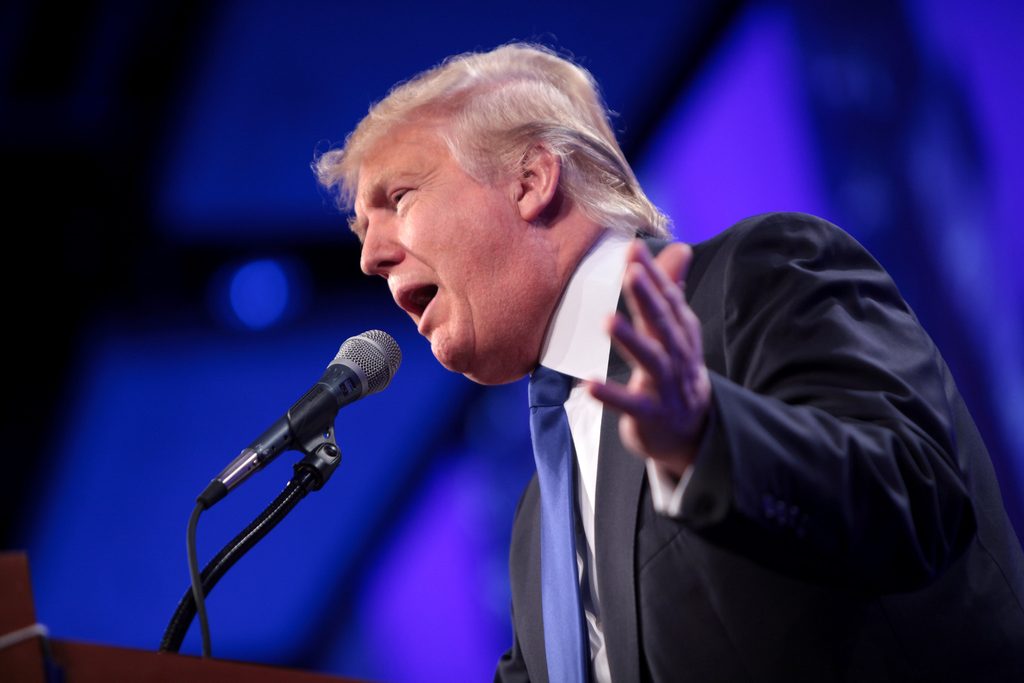
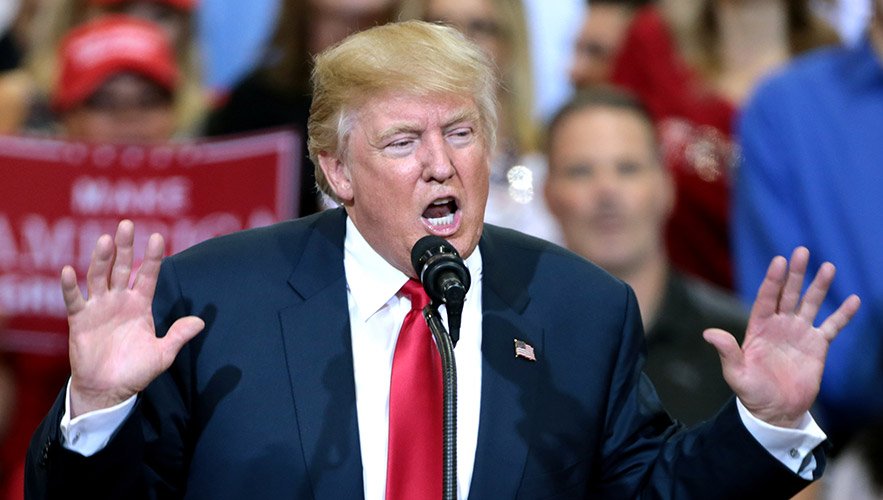
    Joey Coleman, CC BY 2.0, via Wikimedia Commons

    Ontario Premier Doug Ford has pushed the U.S. Canada trade dispute beyond tariffs on cars and steel. In an Associated Press interview Monday, Ford said “everything is on the table” if Washington keeps targeting Canadian industries, including electricity and critical mineral exports from Ontario.

    The warning came as Prime Minister Mark Carney said U.S. negotiating demands confirmed his fear that Washington is trying to erode Canadian auto production. Trump, meanwhile, said Canadian cars, trucks, auto parts and steel would face a 50% tariff beginning Jan. 1, 2027. That future auto threat is separate from 50% U.S. duties on about $20 billion of other Canadian goods that took effect Aug. 22 after trade talks collapsed.

    Why Ford’s threat matters

    Ford’s comments change the focus of the dispute. His retaliation menu reaches into cross border systems the United States uses every day: electricity grids, mineral supply chains, nuclear fuel processing and inputs needed for advanced manufacturing.

    Ford specifically cited high grade nickel and uranium refined in Ontario. He also said Ontario could raise the price of electricity sold to the United States or stop shipments. He suggested Canada consider oil and potash as additional leverage if the conflict worsens.

    None of those steps has been announced as policy. Ford is a provincial premier, not the federal government, and he does not control every Canadian export he named. But Ontario is unusually important because it sits at the center of Canada’s auto industry, has major mineral production and processing assets, and is physically connected to U.S. power markets.

    The threat therefore matters even before it is implemented. It signals that Canadian retaliation could move from matching tariffs on American goods toward restricting inputs that U.S. factories, utilities and defense related supply chains use.

    Electricity is real but local leverage

    Changku88, CC BY-SA 4.0, via Wikimedia Commons

    Ontario has already tested electricity as a trade weapon. In March 2025, the province imposed a 25% surcharge on power exports to Michigan, Minnesota and New York during an earlier tariff confrontation. Ontario said the measure affected electricity used by roughly 1.5 million homes and businesses.

    The surcharge did not last. Trump threatened to double tariffs on Canadian steel and aluminum, and Ontario suspended the charge as the two sides stepped back from that round of escalation.

    That episode shows both the strength and weakness of the electricity card. Cross border power flows can create political pressure, but they do not give Ontario control over the U.S. electric system.

    RBC estimated that all Canadian electricity exports supplied less than 2% of total U.S. generation in 2024. The dependence becomes more meaningful at the state level. RBC estimated Ontario supplied about 6% of Michigan’s electricity needs, while New York relied on Ontario and Quebec for about 6% of its power.

    Other states can be more exposed to Canadian supply, but not necessarily to Ontario alone. Ford can influence Ontario exports, while electricity from Quebec, Manitoba and New Brunswick is governed by other provincial utilities and governments.

    Cutting power would carry costs

    A cutoff would not automatically produce blackouts across the northern United States. Regional grid operators can buy from multiple sources, shift flows and bring other generation online. The impact would depend on weather, demand, transmission constraints, reserve capacity and how long any restriction lasted.

    Still, electricity must be balanced in real time, and neighboring grids are interconnected partly because sharing power makes the system more reliable. A sudden political restriction could force utilities to find replacement supply at higher prices or under tighter conditions.

    Canada would absorb costs too. Ontario generators earn revenue from exports, and restricting sales could leave the province with excess power at some times while reducing access to a neighboring market that can also send electricity north when needed. RBC noted that the cross border electricity relationship runs in both directions.

    Electricity is therefore better understood as targeted leverage than as an easy economic weapon. It can create pressure in particular states, especially during high demand periods, but using it aggressively risks hurting both sides of an integrated grid.

    Critical minerals raise security questions

    Ford’s reference to critical minerals may be more strategically significant because the Trump administration itself has described imported processed minerals as a national security vulnerability.

    In a January 2026 proclamation, the White House said processed critical minerals are essential to defense programs, critical infrastructure and advanced weapons systems. The administration said the United States remains too dependent on foreign sources and directed officials to pursue agreements aimed at securing supply.

    Ontario’s critical minerals strategy highlights nickel, cobalt, copper, platinum group elements, uranium and other resources. The province lists nickel among its leading mineral exports and identifies operating nickel mines and refining facilities, including Vale operations in the Sudbury region and Port Colborne.

    Ontario also hosts important uranium processing infrastructure. Cameco operates the Blind River Refinery and the Port Hope Conversion Facility, both listed by the province as part of Ontario’s critical mineral processing base.

    That does not mean Ford could halt every shipment of nickel or uranium to the United States with a single order. Export controls, contracts, federal jurisdiction and the specific product involved would all matter. But the concentration of processing capacity gives his threat more substance than a purely rhetorical warning.

    Washington wants safer mineral supply

    The United States has spent years trying to reduce strategic dependence on China and other potentially unreliable suppliers for minerals used in batteries, aerospace, electronics and weapons. Canada has generally been presented as the kind of allied supplier Washington wants more of.

    Canada’s federal government has said the country produces more than 60 minerals and metals important to U.S. defense supply chains, including cobalt, graphite, uranium, germanium, titanium and lithium. Ottawa’s critical minerals strategy also identifies nickel, copper and rare earth elements as inputs for advanced manufacturing and national security applications.

    Ontario, meanwhile, has been investing in domestic processing rather than simply exporting raw ore. Its current strategy calls for more refining and value added production inside the province and describes critical mineral supply as a matter of economic resilience and sovereignty.

    If a tariff war pushes Canada to treat those materials as bargaining chips rather than automatic allied supply, the dispute could undermine one of Washington’s broader goals: building secure North American alternatives to Chinese dominated processing chains.

    Autos connect the retaliation story

    Ford’s threats are ultimately tied to the industry at the center of the dispute: automobiles.

    Canada’s federal industry department says the automotive sector directly employed more than 125,000 people in 2024 and indirectly supported about 427,000 more jobs. Canadian Vehicle Manufacturers’ Association data show 92% of Canadian vehicle exports went to the United States in 2024.

    That dependence makes Canada vulnerable to Trump’s threatened 50% rate. But the same supply chain also creates U.S. exposure. Parts, materials and vehicles move through a continental production system built around decades of tariff reduced trade.

    A component manufactured in the United States can be installed in a vehicle assembled in Ontario and then return to an American dealership inside the finished product. A Canadian part can likewise feed a U.S. assembly plant. Higher border costs can therefore land on companies and workers on both sides.

    The overall relationship is enormous. The Office of the U.S. Trade Representative says two way goods trade with Canada totaled about $715.5 billion in 2025. Canada bought $333.6 billion in U.S. goods that year, making it not simply a supplier but one of the largest customers for American producers.

    Retaliation can become self damage

    That interdependence is why Ford’s most aggressive options carry risk for Canada as well as the United States.

    Restricting minerals could hurt Canadian miners, processors and communities that depend on U.S. customers. Limiting electricity exports could reduce revenue or distort Ontario’s power market. Broadening the fight to oil or potash would involve sectors and provinces outside Ford’s direct authority and could raise costs throughout North America.

    Carney has acknowledged the same problem with conventional counter tariffs. Canada plans dollar for dollar retaliation beginning Sept. 8 against the U.S. tariffs that took effect Aug. 22, but retaliatory duties can raise prices and reduce choices for Canadian consumers and businesses too.

    That does not make retaliation meaningless. Governments sometimes accept domestic costs to increase bargaining pressure. The key distinction is that Ford’s threats are leverage proposals, not pain free switches Canada can flip without consequences.

    Canada’s political unity is unusual
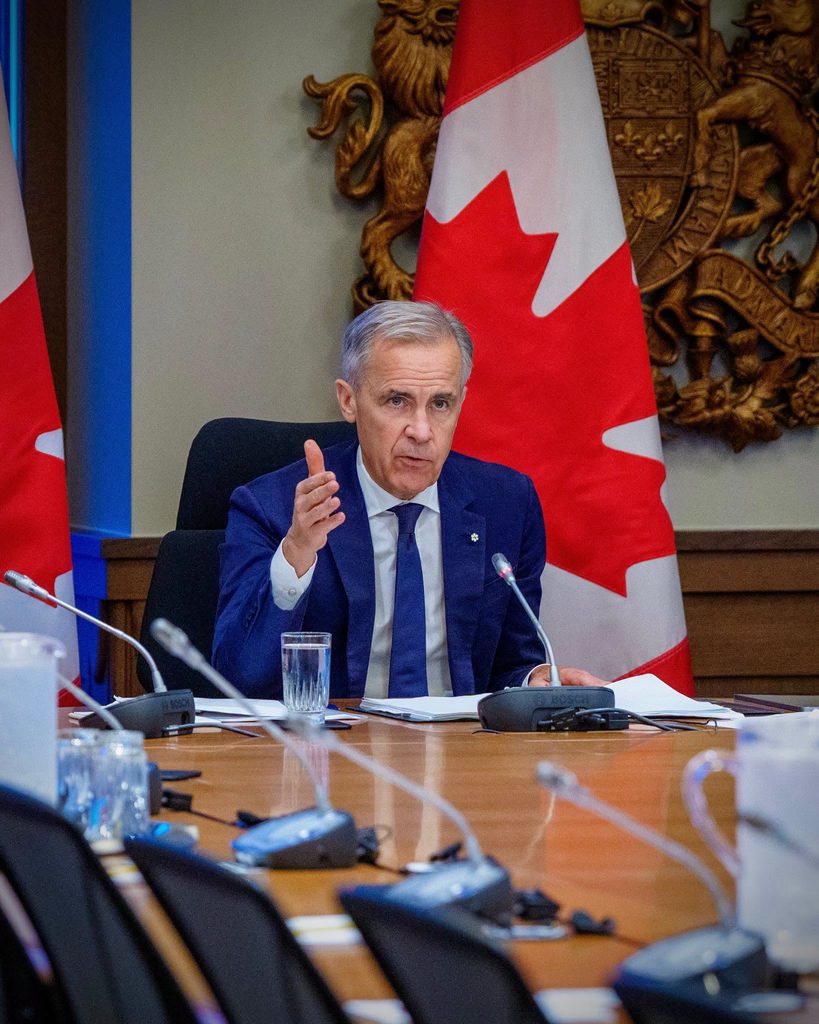
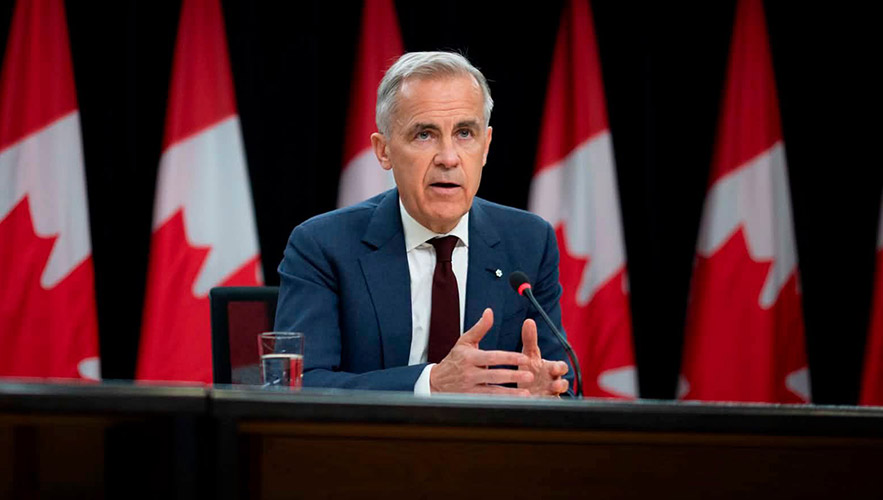
    Mark Carney via facebook

    Ford’s language is notable because he and Carney come from different political traditions. Carney leads the federal Liberal government; Ford is a Progressive Conservative premier. Their agreement that Canada should resist U.S. pressure gives the dispute a broader national character.

    They do not agree on every tactic. Ford said he opposed the preliminary agreement Carney had been considering before the talks collapsed, including restoring American liquor to Ontario store shelves. He said he was prepared to publicly reject a deal he believed gave Washington too much.

    Yet both leaders say negotiations should remain possible. Carney has said Canada will negotiate if the United States treats it as a sovereign partner. Ford told the AP he does not believe in abandoning the table permanently.

    That combination — hard retaliation language paired with continued willingness to negotiate — suggests the threats are partly designed to improve Canada’s bargaining position before the next deadline.

    The next escalation is not automatic

    For now, no Canadian electricity cutoff or critical mineral export ban has been ordered. Trump’s 50% auto tariff is also a future measure scheduled for Jan. 1, not a blanket rate already being collected on every Canadian vehicle and part.

    The more immediate date is Sept. 8, when Canada says its new counter tariffs will begin. Ottawa has said those measures will match the value of the U.S. duties that took effect Aug. 22.

    The January deadline then creates another negotiating window. Washington could issue additional legal details, modify the tariff plan or return to talks with Ottawa. Canada could also adjust its retaliation depending on what the United States does next.

    What Ford has changed is the range of consequences being discussed. The dispute began with tariffs and market access, but it is now touching electricity reliability, mineral security, nuclear supply chains and the structure of North American manufacturing.

    That is the larger risk for both countries. The more each side turns integrated systems into leverage, the harder it becomes to confine the damage to the industry being targeted. Canada may be more economically dependent on the United States overall, but Ford’s warning is a reminder that dependence in a deeply connected economy runs in both directions.
  • Trump Media says Truth API customers reach ‘mid teens’ as lawsuit tests paid access to Trump posts

    Trump Media says Truth API customers reach ‘mid teens’ as lawsuit tests paid access to Trump posts

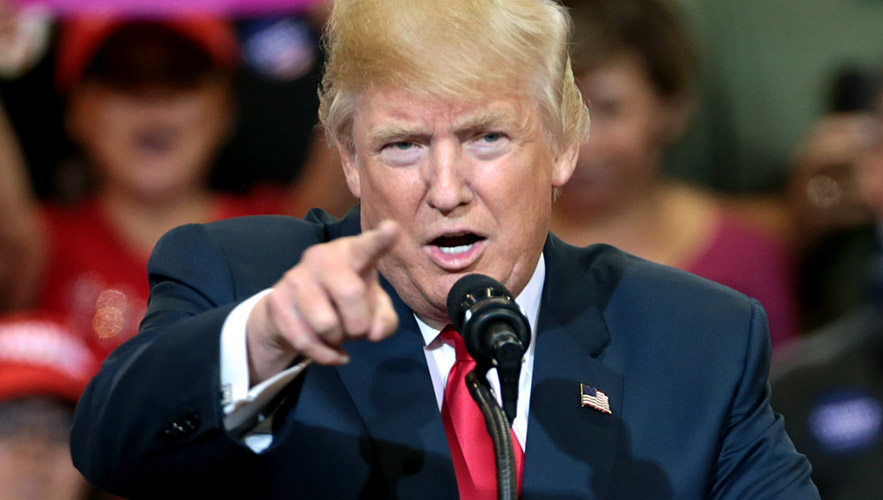
     Gage Skidmore, CC BY-SA 2.0 via flickr

    Trump Media’s interim CEO told CNBC that paying customers for its high speed Truth API have climbed into the “mid teens.” The growth comes as a pending federal lawsuit argues that faster paid access to presidential posts containing official announcements violates constitutional protections, a claim no court has yet accepted.

    Trump Media & Technology Group is reporting additional customer growth for Truth API, the data licensing service it launched Aug. 1 for institutions seeking rapid, machine readable access to influential Truth Social posts.

    In an Aug. 24 appearance on CNBC’s Squawk Box, interim CEO Kevin McGurn said the number of paying customers was getting into the “mid teens” and continuing to climb. That updates Trump Media’s Aug. 10 disclosure that it had signed more than 10 customer agreements, primarily with high frequency trading firms.

    The commercial expansion is unfolding alongside The Intercept Media, Inc. v. Trump, a federal lawsuit filed Aug. 12 by The Intercept Media and the Freedom of the Press Foundation. The case remains pending in the Southern District of New York. The lawsuit presents constitutional allegations; it has not produced a ruling that Truth API or the administration’s conduct is unlawful.

    What Truth API actually sells

    Trump Media announced Truth API on July 16 in a release filed with the Securities and Exchange Commission. The company described it as a business to business feed providing licensed, real time access to posts from the highest ranking Truth Social accounts, with institutional availability beginning Aug. 1.

    According to that SEC filed announcement, the product uses standard data delivery methods to send posts in milliseconds and includes a historical archive dating to 2022. Trump Media specifically identified high frequency and algorithmic trading firms as potential customers because those businesses can place a premium on low latency, machine readable information.

    The company has not published a conventional public price list. During its second quarter earnings call, McGurn said the agreements signed at that point were generally priced between $60,000 and $100,000 a month. Trump Media said the initial customer group consisted mainly of high frequency trading firms and that it was also talking with major technology companies, news organizations and developers of large language models.

    That distinction matters because describing the service simply as “$100,000 a month access” can overstate what every customer is paying. The company’s own executive put the current contract range at $60,000 to $100,000 monthly.

    Faster does not mean unpublished

    Another important distinction is what subscribers receive. Trump Media has said Truth API is not a channel for secret drafts or unpublished presidential statements.

    During the Aug. 10 earnings call, McGurn described the product as delivering machine readable versions of posts that have already been published and made publicly available on Truth Social, while allowing API customers to receive and process those posts fractionally faster than people relying on ordinary platform access. CNBC separately reported that explanation when covering the lawsuit.

    The lawsuit disputes the significance of that distinction. Its theory is that even if the information technically becomes public first, paying customers may obtain an economically valuable timing advantage before ordinary users, journalists or automated systems that do not subscribe can receive and process the same information.

    That is the legal controversy. It is not established that Truth API customers receive information before Trump publishes it, and the pending complaint should not be described as having proven that they do.

    Who is actually being sued

    The case was filed in Manhattan federal court by The Intercept Media and the Freedom of the Press Foundation — not an organization called the “Freedom of the Press Association,” as some summaries of the story have stated.

    The defendants are Donald Trump in his official capacity as president; presidential executive assistant Natalie Harp; White House Deputy Chief of Staff Daniel Scavino; the Executive Office of the President; and the White House Office. The complaint lists Harp and Scavino in their official capacities as well.

    Trump Media itself is not named as a defendant in the complaint. That is an important procedural point because the commercial service is operated by Trump Media, but the plaintiffs have framed their constitutional claims around government officials’ use of Truth Social for official communications.

    The case was assigned to U.S. District Judge J. Paul Oetken. The latest available docket shows the complaint, summonses, proof of service filings and attorney admission matters. It does not show a substantive decision on the constitutional claims or an order finding the administration liable.

    What the plaintiffs allege

    The complaint argues that Trump has repeatedly used Truth Social to announce government actions and policy positions while Trump Media sells subscribers a faster mechanism for receiving posts from his account and other prominent accounts.

    The plaintiffs contend that this arrangement burdens access to official presidential communications and violates the First Amendment. They also assert Fifth Amendment theories involving allegedly unreasonable financial conditions and unequal treatment of people who cannot or will not buy the service. Those arguments are the plaintiffs’ legal claims, not established facts or court findings.

    The complaint points to Trump’s use of Truth Social for matters including appointments, tariffs and other domestic and foreign policy announcements. It argues that some presidential posts function as official government communications even though they appear on a privately operated social network.

    The plaintiffs are seeking declaratory and injunctive relief. Their requested remedy focuses on the combination of official government information being posted through Truth Social and preferential paid access to those communications. Whether the Constitution requires equal speed access in these circumstances is among the issues the litigation seeks to test.

    Trump’s ownership is significant, not a majority

    Trump’s financial relationship with Trump Media is another area where precision matters.

    Trump transferred 114.75 million Trump Media shares to the Donald J. Trump Revocable Trust in December 2024. Trump Media’s amended annual report says the trust held about 41% of the company’s outstanding shares as of April 28, 2026. Donald Trump Jr. is the trust’s sole trustee, while President Trump is its settlor and sole current beneficiary.

    The lawsuit similarly describes the nearly 115 million shares as representing approximately 41.4% of Trump Media and calls Trump the company’s largest shareholder.

    That means descriptions portraying Trump or his family as holding a current majority of Trump Media are outdated or inaccurate based on the latest cited ownership figures. A roughly 41% stake is substantial and makes the trust the largest shareholder, but it is below the more than 50% threshold ordinarily meant by “majority shareholder.”

    The plaintiffs say that financial interest strengthens their argument that the president can benefit from increased Trump Media revenue. The ownership facts are documented; the conclusion that the API arrangement is unconstitutional remains disputed and unresolved.

    Why milliseconds interest Wall Street

    Trump Media itself has emphasized the potential importance of speed to financial firms. Its July announcement said markets already move in response to Truth Social posts and promoted the API to organizations for which delays in receiving information carry a cost.

    High frequency trading firms use automated systems capable of reacting to new information far faster than a human reading a social media feed. In that environment, a difference measured in milliseconds can be commercially relevant because computers can parse a message, connect it to trading rules and submit orders almost immediately.

    That does not mean a Truth API subscriber has necessarily profited from a presidential announcement, nor does it establish insider trading, market manipulation or another securities violation. The available court docket contains no such finding.

    The controversy instead concerns the structure of the service: a private company with a major financial connection to the president is charging sophisticated customers for a faster technical route to posts that can include official statements and potentially affect markets.

    Trump Media’s position is that this is ordinary data licensing built around already public information. The plaintiffs argue that presidential use of the platform makes the arrangement constitutionally different from an ordinary commercial news feed.

    Trump Media sees a new business

    For Trump Media, Truth API is also part of an effort to develop revenue beyond conventional social media advertising.

    In its Aug. 10 earnings materials, the company said Truth API was already generating revenue with more than 10 agreements signed. On the earnings call, McGurn described the revenue at that point as modest while saying management believed the product could grow into a meaningful, durable contributor alongside advertising, subscriptions and other parts of the business.

    The Aug. 24 CNBC interview supplied the newest customer update. According to the interview as reported by Quartz and Yahoo Finance, McGurn said the number had advanced into the mid teens. Trump Media has not disclosed the identities of those customers or provided a separate revenue total attributable specifically to Truth API.

    That means the latest evidence supports saying customer adoption has increased. It does not yet establish how profitable the service is, how long its contracts will remain in place or whether the current growth rate will continue.

    Those are materially different claims, and Trump Media’s predictions about future revenue remain company expectations rather than realized results.

    The financial backdrop is unusual

    Truth API arrives at a time when Trump Media’s overall financial results remain dominated by investments and other activities far larger than its operating revenue.

    Trump Media reported $1.7 million in second quarter 2026 revenue, an increase of 89% from approximately $900,000 in the same period a year earlier. It nevertheless recorded a $238.1 million net loss for the quarter.

    The company said the bulk of that loss involved noncash items, including $190.4 million in unrealized losses on digital assets, pledged digital assets and equity securities, along with $11.7 million in accreted interest and $8.1 million in stock based compensation. It reported approximately $1.9 billion in financial assets at quarter end.

    Reuters likewise reported that the quarterly loss widened sharply from roughly $20 million a year earlier and attributed much of the deterioration to unrealized cryptocurrency related losses.

    Those numbers help explain why management is emphasizing recurring revenue streams such as data licensing. They should not, however, be used to imply that Truth API was created because of the quarterly loss unless the company explicitly establishes that causal connection.

    What remains unresolved

    As of the latest available case information, the most important legal questions remain open.

    The lawsuit is active, but Judge Oetken has not ruled that Truth API violates either the First or Fifth Amendment. The docket reviewed through Aug. 23 primarily reflects filing, service and attorney admission activity rather than a merits determination.

    The plaintiffs will still have to establish that the challenged government conduct fits the constitutional doctrines they invoke and that they are entitled to the relief requested. The defendants may dispute the plaintiffs’ characterization of the communications, the claimed injury, the constitutional theories or other threshold issues.

    Meanwhile, the commercial service remains in operation. Trump Media’s latest public customer figure has moved from more than 10 agreements on Aug. 10 to the mid teens in McGurn’s Aug. 24 CNBC interview.

    That creates a more precise current story than simply saying Trump has been sued over early access to his posts. The verified development is that Trump Media says demand for its high speed feed is increasing while a newly filed federal case challenges the government’s role in an arrangement that sells faster access to presidential communications.

    For now, both parts of that sentence matter: the paying customer base is growing, and the constitutional challenge remains pending rather than decided.

  • Bessent widens Iran sanctions threat but gives trade partners time to cut ties

    Bessent widens Iran sanctions threat but gives trade partners time to cut ties

    Treasury’s Operation Economic Outcast immediately sanctioned nearly 60 Iran linked people, entities and vessels while creating broader authority to target foreign business in five sectors. But Washington did not immediately punish major third country banks, leaving the campaign’s real force dependent on follow through.

    The Trump administration has opened a broader phase of its economic campaign against Iran, pairing fresh designations with a warning that foreign governments, banks and companies could face U.S. sanctions if they continue specified business with Tehran.

    Treasury Secretary Scott Bessent announced the campaign Monday, Aug. 24, as Iran’s war with the United States and Israel approached the six month mark. The new policy raises the risk for companies far beyond Iran, but the rollout contained an important limitation: the most consequential new secondary penalties were threatened rather than immediately imposed.

    United States Department of the Treasury, Public domain, via Wikimedia Commons

    What Treasury actually changed

    Treasury called the campaign Operation Economic Outcast. Its central legal move was to issue five new sectoral determinations under Executive Order 13902, covering digital assets, technology, gold, aviation and shipping. That gives the Office of Foreign Assets Control broader authority to sanction foreign people or companies operating in, or supporting, those areas of Iran’s economy.

    U.S. Department of the Treasury, Public domain, via Wikimedia Commons

    At the same time, OFAC sanctioned nearly 60 entities, individuals and vessels in multiple jurisdictions. Treasury said the targets were linked to nuclear and missile procurement, cyber operations and networks that transport Iranian oil and move revenue to the Islamic Revolutionary Guard Corps and other Iranian state actors.

    The department also suspended several general licenses that had authorized certain remittance payments to Iran and some Iranian access to U.S. cultural and academic programs. It issued additional guidance warning companies about sanctions risks tied to Iranian demands involving shipping through the Strait of Hormuz.

    Those steps are concrete. What did not happen Monday was an immediate blanket sanction on every country, bank or company still dealing with Iran. Treasury instead expanded the categories of conduct that can trigger future penalties and said governments would receive defined timelines to shut down activity Washington has identified.

    Why the rollout stops short

    Bessent made clear that the administration wants foreign institutions to change behavior before Treasury uses its most disruptive tools. He said the United States would allow a “cure period,” arguing that immediately targeting major institutions could destabilize the global financial system.

    That distinction matters because secondary sanctions work differently from direct sanctions on Iranian targets. They pressure non U.S. actors by threatening consequences for specified dealings with sanctioned Iranian sectors or entities. For a foreign bank, one serious risk is losing or facing strict limits on access to U.S. correspondent accounts and the dollar based financial system.

    Treasury’s rules also preserve exceptions and authorizations for some humanitarian activity. OFAC says transactions involving food, agricultural commodities, medicine and medical devices generally do not expose non U.S. persons to secondary sanctions under Executive Order 13902 when the applicable conditions are met.

    The administration therefore announced a wider enforcement framework, not an instantaneous cutoff of all lawful commerce. The practical effect will depend on which institutions Treasury names next, how quickly it moves after the cure periods expire and whether major trading partners comply.

    China is the biggest test

    China is the most consequential country in the next phase because it has for years been the largest buyer of Iranian oil. Washington has already sanctioned smaller Chinese “teapot” refineries and companies involved in Iran’s shadow fleet oil trade, but it has generally avoided imposing the harshest penalties on major Chinese banks.

    Reuters reported that Monday’s package did not include large Chinese financial institutions suspected of facilitating Iranian oil commerce. Bessent would not identify future targets, although he said no country was beyond the reach of U.S. sanctions.

    That restraint comes with a broader economic calculation. Trump and Chinese President Xi Jinping are scheduled to meet in Washington in late September, and sanctions against major Chinese banks could spill into trade negotiations and financial markets. The administration must therefore balance its stated goal of isolating Iran against the potential cost of confrontation with Beijing.

    The United Arab Emirates has already moved in the direction Washington wants. The UAE said last week that it would suspend trade, commercial exchanges and financial transactions with Iran until further notice after a reported Iranian missile attack. Bessent said Trump had been calling world leaders with specific requests to curtail ties with Tehran.

    Iran’s economy is already strained

    The sanctions push arrives as Iran faces a severe economic contraction. The rial reached a record low Monday, trading at about 2.02 million to the U.S. dollar on the market used by many Iranians. The official Central Bank rate was around 1.5 million rial to the dollar.

    The International Monetary Fund’s July outlook projects Iran’s real gross domestic product to shrink 5.4% in 2026 and consumer prices to rise 68.9%. The deterioration reflects pressures that predated the war as well as the effects of military conflict, export restrictions and the U.S. naval blockade.

    Associated Press reporting from Tehran found that everyday costs have surged since the war began, with rice prices up about 60% and beef prices more than 150% higher. Those increases are not proof that sanctions alone caused the hardship, because wartime disruptions, currency depreciation and supply constraints are also affecting prices.

    For Washington, the question is whether additional financial pressure changes the Iranian government’s calculations. Tehran has endured decades of U.S. sanctions, repeatedly building front companies, alternative payment channels and shadow shipping networks to keep trade moving. Treasury’s latest campaign is explicitly designed to attack those workarounds.

    Hormuz keeps Tehran leverage

    Economic weakness has not eliminated Iran’s strongest source of leverage: the Strait of Hormuz. Before the conflict, roughly one fifth of the world’s traded oil moved through the narrow waterway. Attacks, threats and restrictions have since sharply reduced traffic, helping keep energy prices elevated and spreading the economic cost of the war well beyond Iran.

    That creates a difficult feedback loop for Washington. Tougher sanctions may reduce Iranian revenue, but an intensified confrontation can also increase the risk to shipping through the strait. Higher oil and fuel prices then impose costs on U.S. consumers and other economies that the administration is asking to support its pressure campaign.

    Treasury has already warned companies about payments or other arrangements made to secure passage through the strait. Earlier sanctions targeted an Iranian entity that Washington described as an IRGC linked mechanism for extracting payments from commercial shipping.

    Iranian officials have threatened further retaliation if other countries join the U.S. campaign. Mohsen Rezaei, head of Iran’s national security council, said Tehran would treat participation in what it calls America’s economic war as an act of war. Such statements are threats, not evidence that Iran will carry out every measure it has described, but they increase the stakes for regional governments.

    Sanctions have limits

    The United States has used sanctions against Iran for decades, targeting oil exports, banking, aviation, weapons procurement, the Revolutionary Guard and a wide range of intermediaries. The Trump administration has intensified that architecture during its second term, repeatedly adding ships, brokers, exchanges and front companies to sanctions lists.

    The record shows why enforcement matters as much as announcement. Iran has often responded to restrictions by changing vessel registrations, creating new shell companies, using informal finance and selling crude through networks designed to obscure its origin. New designations can disrupt those channels, but replacement structures can emerge.

    Monday’s action tries to raise the cost of that adaptation by widening the number of sectors that can expose foreign partners to U.S. penalties. Digital assets and gold are especially significant because they can provide alternatives when conventional banking channels are blocked, while shipping and aviation can move goods, cash, equipment and personnel.

    Still, the administration has not established that financial pressure by itself will produce a political settlement. Bessent presented the campaign as a choice between deeper isolation and reintegration, but Tehran has publicly rejected the premise that Washington can dictate its external economic relationships.

    Diplomacy is still moving

    The sanctions announcement came alongside renewed regional diplomacy, underscoring that financial pressure is not the only track still active. Pakistan sent a high level delegation to Tehran on Monday, led by army chief Field Marshal Asim Munir, as part of efforts to revive negotiations and reduce tensions.

    The White House, Public domain, via Wikimedia Commons

    Reuters reported that Trump spoke with Munir before the visit and urged Pakistan to use its influence with Iran. Pakistan had previously played a role in mediation, including efforts surrounding a 60 day ceasefire earlier in the summer.

    Matt Johnson, CC BY 2.0 via flickr

    Oman, another key intermediary, is also engaged. Foreign Minister Sayyid Badr Albusaidi was scheduled to visit Tehran on Tuesday, Aug. 25, for talks that Iran’s Foreign Ministry said would include security and traffic through the Strait of Hormuz. U.S. officials have said in recent weeks that discussions over the waterway have made progress, but no final agreement has been announced.

    Those diplomatic channels matter because the administration’s economic strategy ultimately depends on a political objective. Sanctions can deny revenue, complicate trade and pressure intermediaries, but they do not themselves specify the terms of a settlement over Iran’s nuclear program, the war or shipping access through Hormuz.

    What happens next

    The clearest near term test is Treasury’s promised follow up. Bessent said he expected a major financial institution to be sanctioned by the end of the week, though he did not identify it. If that action targets a large bank with substantial exposure to the U.S. financial system, it would show how aggressively the administration intends to enforce its new warnings.

    Governments and companies will also be watching the length and terms of the cure periods. A warning backed by specific deadlines can cause banks, insurers, shippers and commodity traders to withdraw before formal sanctions are imposed, particularly when access to dollars and U.S. markets is at risk.

    But the largest strategic question remains unresolved. Washington wants to cut Iran’s revenue and force a change in behavior without causing a broader financial shock. Tehran, meanwhile, is trying to preserve external trade and leverage over Hormuz while resisting U.S. demands.

    For now, Operation Economic Outcast is best understood as an escalation in legal authority, enforcement pressure and diplomatic warning rather than a completed economic blockade. The nearly 60 designations are already in force. The broader threat to third country commerce is now more explicit. Whether it becomes the “economic D Day” the administration promised will depend on who Treasury targets next — and how the rest of the world responds.

  • Trump threatens 50% tariffs on Canadian autos for 2027 after trade talks collapse

    Trump threatens 50% tariffs on Canadian autos for 2027 after trade talks collapse

    President Donald Trump says Canadian cars, trucks and auto parts will face a 50% U.S. tariff starting Jan. 1, 2027, but the increase has not yet been detailed in a new presidential proclamation. The threat raises the stakes after separate 50% duties took effect Aug. 22.

    Gage Skidmore, CC BY-SA 2.0 via flickr

    President Donald Trump escalated the United States’ trade confrontation with Canada on Monday, saying tariffs on Canadian cars, trucks and automotive parts would rise to 50% on Jan. 1, 2027. The announcement came in a Truth Social post three days after negotiations collapsed and two days after a separate package of U.S. tariffs took effect.

    Trump also said steel tariffs would be increased to 50%. That part of the announcement is less straightforward: most steel articles were already subject to a 50% Section 232 tariff under earlier presidential actions, with different rates applying to some derivative products and certain trading partners.

    What Trump announced Monday

    Trump accused Canada of imposing unfair barriers on U.S. agricultural exports and said companies could avoid the threatened auto duties by manufacturing in the United States. His post described the new rate as applying to “all Cars, Trucks, both large and small, Automotive Parts, and Steel” beginning Jan 1.

    The timing matters. Trump’s social media announcement sets a future effective date more than four months away, and the White House had not published a new proclamation Monday laying out how the 50% auto rate would interact with existing tariffs, U.S. content exemptions or the U.S. Mexico Canada Agreement. The Washington Post reported that Trump offered no additional details.

    That means the cleanest description is that Trump has threatened or announced a planned increase, not that a new 50% auto tariff is already being collected. The current automobile regime was created under Section 232 of the Trade Expansion Act and imposes a 25% tariff on imported passenger vehicles, light trucks and certain parts, subject to special treatment for USMCA compliant goods.

    The current auto tariff is narrower

    Under the 2025 automobile proclamation, importers of USMCA compliant vehicles from Canada or Mexico may certify U.S. content, and the 25% duty applies only to the value of non U.S. content. USMCA compliant auto parts were initially allowed to remain tariff free until the Commerce Department and Customs and Border Protection established a system for taxing non U.S. content.

    Canada’s government says that framework has meant Canadian made vehicles face a 25% U.S. tariff on their non U.S. content while U.S. content in qualifying vehicles is exempt. That distinction is especially important in an industry where a car assembled in Ontario can contain engines, electronics, steel, software and other components sourced from both sides of the border.

    Trump’s Monday post did not say whether a 50% rate would continue to apply only to non U.S. content in qualifying vehicles or whether the administration intends to rewrite that treatment. It also did not specify how auto parts would be handled. Those details could determine whether the policy is a steep but targeted increase or a much broader shock to North American production.

    A different 50% tariff already started

    The threatened January auto increase should not be confused with the 50% tariffs that began Saturday on a different set of Canadian goods. Those duties trace back to three proclamations Trump signed July 20 under Section 338 of the Tariff Act of 1930, a rarely used authority that allows the president to respond to what he determines is discriminatory foreign treatment of U.S. commerce.

    The administration said the Section 338 measures cover about $20 billion in Canadian imports, including products such as wine, dairy related goods, cement and hockey equipment. The White House specifically said those tariffs do not apply to energy, potash, fish, critical minerals or products already subject to Section 232 tariffs.

    Trump briefly delayed the Section 338 duties for three days as negotiators tried to finish a deal. When those talks failed late Friday, the tariffs took effect at 12:01 a.m. Eastern on Aug. 22. Reuters reported that the affected trade represents a little more than 5% of Canadian exports to the United States.

    Why the negotiations broke down

    For several days last week, Washington and Ottawa appeared close to a broader agreement that could have reduced U.S. tariffs on Canadian autos, steel and aluminum. Reuters reported that one proposal would have lowered the auto tariff from 25% to 15%, with further relief tied to U.S. content, while Canada pushed for better treatment.

    The talks unraveled over multiple issues. Reuters reported that Canada wanted favorable treatment proposed for light duty vehicles to extend to medium and heavy duty trucks, while the United States resisted. Prime Minister Mark Carney also said later U.S. demands would have constrained Canada’s trade policy and touched matters Ottawa considered questions of sovereignty, culture and French language protections.

    The two governments blame each other. U.S. Trade Representative Jamieson Greer said Canada backed away from terms that had been agreed earlier in the week and described the breakdown as a missed opportunity. Carney said Washington introduced last minute conditions that were “uneconomic” and “unfair,” concluding that the United States had asked too much and offered too little.

    Canada is preparing retaliation

    Mark Carney via facebook

    Carney suspended the negotiations, ordered Canadian negotiators back to Ottawa and announced that Canada would answer the new U.S. tariffs “dollar for dollar.” He said the response would focus on sectors including steel, dairy, appliances, agricultural equipment, pulp and paper and electronics.

    The Canadian measures are scheduled to take effect Sept. 8, the Tuesday after Labor Day, with the detailed product list still to be released. Carney acknowledged retaliation would raise some costs and reduce consumer choice in Canada but argued that accepting the U.S. terms would do greater damage to Canadian industries and sovereignty.

    Ontario Premier Doug Ford, whose province contains the core of Canada’s auto industry, has advocated an even harder response. On Monday he said Canada should be prepared to restrict electricity and critical mineral exports if the dispute worsens. Those threats are not yet federal policy, but they show how rapidly the conflict has moved beyond tariff schedules into broader questions about cross border economic dependence.

    Why autos are the pressure point

    Whpq, CC BY-SA 3.0, via Wikimedia Commons

    Canada’s auto industry is unusually exposed to the U.S. market. The Canadian government says more than 90% of Canadian made vehicles and about 60% of Canadian made auto parts are exported to the United States. Canada produced more than 1.2 million passenger vehicles in 2025, and the sector supports roughly 125,000 direct jobs.

    That dependence runs both ways. Canadian government data say about half the value of Canadian built vehicles exported to the United States comes from U.S. parts, and Canada is a major market for American vehicles and components. Parts can cross the border repeatedly before a finished vehicle leaves an assembly line, making the sector difficult to separate cleanly by nationality.

    The scale of the broader relationship magnifies that risk. USTR estimates U.S. Canada goods and services trade totaled $872.3 billion in 2025, while two way goods trade alone reached $715.5 billion. Canada was the top destination for U.S. exports and one of the largest sources of U.S. imports. A disruption centered on autos therefore sits inside a much larger commercial relationship involving energy, agriculture, machinery and cross border services.

    The integrated structure is why tariffs can hit U.S. manufacturers as well as Canadian plants. A higher duty on a Canadian assembled vehicle can penalize American made components inside it, while tariffs on parts can raise costs for factories on either side of the border. Automakers therefore care not only about the headline tariff rate but also about content rules, exemptions and customs procedures.

    Financial markets registered that concern Monday. Reuters reported declines in shares of major automakers after Trump’s announcement, while market coverage showed Ford, Stellantis and General Motors among companies under pressure. The reaction does not establish the eventual economic cost, but it reflects investor concern about another disruption to already complicated North American supply chains.

    Trump’s trade deficit claim needs context

    Trump said Canada’s trade practices had produced a $60 billion deficit for the United States. Official U.S. Trade Representative data put the U.S. goods trade deficit with Canada at $48.3 billion in 2025, down 21% from 2024. The United States simultaneously ran a $27.7 billion services surplus with Canada.

    Those figures do not settle the policy argument, but they show why the number depends on what is being counted. A merchandise deficit measures trade in goods; a broader balance that includes services produces a smaller net U.S. deficit. Energy imports are also a major component of U.S. purchases from Canada, a point Carney emphasized in his Aug. 22 remarks.

    The administration argues tariffs can encourage domestic manufacturing, reduce dependence on imports and strengthen industries it considers important to national security. Critics counter that tariffs are import taxes collected from U.S. importers and can be passed through in higher costs, absorbed by companies through lower margins, or partly offset by changes in supply chains and exchange rates. The eventual burden varies by product and market conditions.

    The next dates matter most

    The trade fight now has two separate clocks. Canada says its retaliation against the tariffs that took effect Aug. 22 will begin Sept. 8. Trump’s threatened increase on Canadian autos and auto parts is dated Jan. 1, 2027. Between those dates, either government could change course, reopen negotiations or issue new legal measures.

    The January threat also lands ahead of the next major phase in North American trade policy. The three countries have already been wrestling with the future of the USMCA, and auto rules are among its most politically sensitive provisions. Earlier this year, major auto trade groups urged the administration to preserve the agreement, arguing that integrated regional production is crucial to U.S. competitiveness.

    For now, the most consequential fact is not that Canadian automobiles are already paying a blanket 50% tariff. They are not. Trump has put a Jan. 1 escalation on the table after negotiations failed, while existing auto duties and a separate set of new 50% Canadian tariffs remain in force under different legal authorities.

    Whether that threat becomes the final tariff regime depends on what the administration formally issues next and whether Washington and Ottawa return to the negotiating table. With Canada preparing retaliation and both governments publicly hardening their positions, the period before Jan. 1 has become another negotiating deadline rather than a settled endpoint.

  • Melissa Gilbert calls for stronger child actor safeguards after Hayden Panettiere’s death

    Melissa Gilbert calls for stronger child actor safeguards after Hayden Panettiere’s death

    Melissa Gilbert says Hollywood needs lasting protections for young performers, not another cycle of mourning. Her argument is gaining support from other former child stars, but the deaths she cites have different medical circumstances, and Hayden Panettiere’s official cause of death remains undetermined.

    DaveyCasey, CC BY 4.0, via Wikimedia Commons

    Melissa Gilbert is using the death of Hayden Panettiere to press Hollywood for a broader reckoning over how children are treated before, during and after careers in entertainment.

    The former Little House on the Prairie star, who began acting professionally as a child and later served as president of the Screen Actors Guild, published an Aug. 22 essay titled “Enough Is Enough.” She called for former child performers, studios, networks and unions to build stronger support systems, including accessible mental health care as young actors move into adulthood.

    Gilbert wants more than tributes

    Melissa E. Gilbert via facebook

    Gilbert’s essay was written after Panettiere, 36, was found unresponsive in Greenville, South Carolina, on Aug. 16. Gilbert also invoked Michelle Trachtenberg and Daveigh Chase, two other former child actors who died before age 40, and described their deaths as a warning that the industry should not treat as a passing moment of grief.

    Her central argument is not a narrowly defined legislative proposal. It is a call for structural change: a peer network of former child performers, direct talks with studio and network executives, stronger advocacy inside the performers’ union, free mental health support during the transition to adulthood and, eventually, legislation that could create clearer boundaries around privacy and exploitation.

    Gilbert has unusual standing in that debate. SAG AFTRA’s historical records show she led the Screen Actors Guild from 2001 to 2005, after spending most of her life in the business. In her essay, she argues that people who grew up on sets understand pressures that may be invisible to adults who enter the profession later.

    The timeline needs one correction

    Gilbert wrote that Panettiere, Trachtenberg and Chase had died “within one year.” The broader point was that three women from a similar generation of former child performers had died young, but the one year timeframe is not accurate.

    Trachtenberg was found unresponsive in New York City on Feb. 26, 2025, and was 39. That was roughly 18 months before Panettiere’s death in August 2026. Chase, 35, died on June 16, 2026, two months before Panettiere.

    That distinction matters because proximity can imply a common event or common cause where none has been established. The deaths can still prompt a legitimate discussion about childhood fame, support systems and long term welfare, but they should not be presented as epidemiological evidence that child acting itself caused the outcomes.

    Panettiere’s death remains under investigation

    The newest official status also requires caution. Panettiere was found unresponsive and in cardiac arrest at a Greenville residence, where emergency crews attempted advanced life support measures. She was pronounced dead at 2:32 p.m. on Aug. 16.

    The Greenville County Coroner’s Office said an autopsy found no signs of trauma that contributed to her death. The cause and manner of death remain pending while additional studies are completed. The coroner has said toxicology results could take several weeks.

    ABC News reported Aug. 24 that the Greenville City Police Department is leading the investigation and the Drug Enforcement Administration is assisting. A police report obtained by ABC said it was unknown whether Panettiere had been using drugs or alcohol. That means reports or dispatch references to a possible overdose should not be converted into an official cause of death.

    The three deaths had different circumstances

    Trachtenberg’s death was ruled natural. The New York City Office of Chief Medical Examiner said she died from complications of diabetes mellitus.

    The Los Angeles County medical examiner said Chase died from AIDS, with chronic polysubstance use listed as another significant condition. Her manner of death was listed as natural. Earlier statements from people close to Chase had described meningitis and a blood infection, but the medical examiner’s finding is the controlling official account.

    Panettiere’s cause, by contrast, is still pending. She had spoken publicly about addiction, postpartum depression and other painful experiences, and her memoir discussed them extensively. Those facts are relevant context, but they do not establish what killed her.

    The distinction is central to an evidence first reading of Gilbert’s essay. Her concerns about workplace culture can be evaluated on their own merits. They do not require treating three separate deaths as proof of a single causal pattern.

    Gilbert describes a culture of pushing through

    Much of Gilbert’s case comes from her own experience. She wrote that child performers are often praised for being able to “deliver no matter what,” a professional expectation she believes can teach children to ignore physical or emotional distress rather than say no.

    Gilbert recalled returning to work on Little House on the Prairie after her father died when she was 11 and said adults on the set avoided discussing his death with her because they feared upsetting her. She also described working through illnesses and injuries later in life, including returning to a production soon after an appendectomy before becoming seriously ill.

    Those recollections are Gilbert’s personal account, not findings from an investigation into industrywide practices. But they illuminate the specific reform she is seeking: young performers should have adults around them whose responsibility is not simply to keep production moving, but to recognize when work should stop.

    She also argues that smartphones and social media have eroded the limited privacy famous children and young adults once had. In her view, the modern attention economy extends workplace pressure far beyond a studio lot because private moments can become content almost instantly.

    Panettiere had described her own costs

    Panettiere’s May memoir, This Is Me: A Reckoning, gave that debate a particularly personal backdrop. She wrote and spoke about addiction, postpartum depression, family conflict, domestic abuse and experiences in Hollywood that left her feeling exploited or unsafe.

    In one widely reported episode, Panettiere described being taken at 18 by a trusted woman into a yacht cabin where a famous, undressed singer was waiting. Panettiere said she felt shocked and betrayed but ultimately stopped the encounter and left. She did not publicly identify the man.

    The memoir also explored what it meant to learn performance habits at a very young age. The important point for the current debate is not to diagnose Panettiere after her death or to infer a medical cause from her writing. It is that she herself connected parts of her adult distress to experiences and expectations formed while she was young and working.

    That makes her testimony relevant to questions about consent, boundaries and adult responsibility without making it proof that childhood acting caused her death.

    Other former child stars are joining in

    Gilbert is not speaking alone. Anna Paquin, who won an Academy Award at 11 for The Piano, wrote after Panettiere’s death that former female child stars were not as protected by industry systems as they should have been. She encouraged others with similar experiences to contact her and said they should support one another.

    Rose McGowan went further, arguing that children should not be put into show business at all. Other former young performers have publicly supported Paquin’s message, reflecting a widening discussion among people who experienced fame before adulthood.

    Those reactions are advocacy and personal testimony, not scientific evidence of a shared syndrome. Still, they matter because they identify a recurring concern from people with firsthand experience: rules that govern hours, schooling and money do not necessarily address identity, privacy, mental health or the abrupt loss of structure when a child’s career changes.

    Protections exist, but they are fragmented

    Hollywood does not operate without child labor rules. California, the center of much U.S. film and television production, requires entertainment work permits for minors and permits for employers. It limits working hours by age, requires schooling time in many circumstances and mandates studio teachers for younger performers.

    California studio teachers have authority that extends beyond academics. State regulations make them responsible for the health and safety of covered minors, and they may remove a child from a set if they believe conditions present a danger.

    Financial safeguards also exist. Under the Coogan framework, 15% of a minor performer’s gross earnings must generally be placed in a blocked trust account. California also requires certain people who provide paid services to child performers to obtain permits and undergo background checks. Beginning in 2026, the state expanded mandated reporter requirements to include talent agents, managers and coaches working with minors.

    But the national picture is uneven. The U.S. Department of Labor’s state by state summary shows large differences in entertainment rules, and federal child labor law contains an exemption for children employed as actors or performers. In practice, protections depend heavily on where work occurs and which state rules apply.

    Mental health is the gap Gilbert emphasizes

    Gilbert’s proposal goes beyond traditional child labor protections. She wants an industrywide system that would provide free, accessible mental health support to child actors as they transition into young adulthood, when the structures surrounding a working minor can disappear quickly.

    Some resources already exist. SAG AFTRA’s Young Performers programs and the Entertainment Community Fund’s Looking Ahead program provide support to young performers and families. SAG AFTRA has also hosted programming on substance use and financial planning for young and next generation performers.

    Those programs complicate any claim that nothing is being done. At the same time, they are not the same as a universal, guaranteed mental health system that follows every child performer into adulthood. Gilbert’s argument is essentially that voluntary resources and committees do not create the kind of durable safety net she believes the industry owes young workers.

    What “real change” would require

    Turning that demand into policy would raise practical questions. Who would pay for continuing care? How long after a minor turns 18 would support last? Would access depend on union membership, earnings or the size of a production? How would confidentiality be protected when parents, agents, managers and employers all have financial interests in a child’s career?

    There is also an enforcement question. California already gives studio teachers authority to intervene on set, but Gilbert is describing pressures that can extend into publicity, family finances, social media, relationships and adulthood. A meaningful reform plan would have to define which institutions remain responsible once the camera stops rolling.

    As of Aug. 24, Gilbert’s essay is a call to organize, not an announced industrywide policy. SAG AFTRA publicly lists young performer committees and support programs, but no new system matching Gilbert’s proposal has been announced in response to her essay.

    The immediate facts surrounding Panettiere’s death remain narrower than the debate her death has triggered. Investigators have not announced an official cause. The deaths of Trachtenberg and Chase had different documented medical circumstances. None of that negates Gilbert’s argument that child performers deserve stronger safeguards; it simply keeps the reform debate separate from claims the evidence cannot yet support.

  • Harry and Meghan plan extended UK return after July reunion with King Charles

    Harry and Meghan plan extended UK return after July reunion with King Charles

    The Sussexes’ reported return to Britain is a larger development than the summer accommodation offer that first suggested a thaw with King Charles III. Their children are enrolled in British schools, but Harry and Meghan are still non working royals, and their long running security dispute remains unresolved.

    A late June report that Prince Harry and Meghan, the Duchess of Sussex, had accepted King Charles’ offer to use royal accommodations during a July visit looked at the time like a cautious sign of family rapprochement. The visit itself did not unfold that neatly: a dispute over timing, staffing and security meant the family did not stay at Buckingham Palace.

    What did happen was more consequential. On July 10, Charles and Queen Camilla hosted Harry, Meghan, Prince Archie and Princess Lilibet at Highgrove, the king’s private country residence in Gloucestershire. It was Charles’ first meeting with his grandchildren since 2022, according to Reuters, and the palace characterized it only as a private family occasion.

    Now the story has moved again. The Associated Press and Reuters reported on Aug. 19 and 20 that the Sussexes plan an extended stay in Britain, with Archie, 7, and Lilibet, 5, due to begin school there in September. The family is expected to live at a private, non royal residence outside London while keeping its California home.

    What changed after the accommodation offer

    Northern Ireland Office, CC BY 2.0, via Wikimedia Commons

    The original accommodation story was narrower than the later headlines made it seem. In the source report supplied for this article, Sussex representatives said the couple expected to divide their July stay between royal residences and private accommodations. They did not identify the properties, and they did not confirm a meeting with Charles or other royals.

    By July 6, the arrangements had become a public point of disagreement. The Guardian reported that palace officials considered Harry’s request too late for staffing arrangements, while his team said security planning explained the delay.

    The offer therefore should not be treated as evidence that Harry and Meghan had secured a continuing place inside the royal residential system. Buckingham Palace accommodation did not become part of the family’s July stay. The more durable development came several days later, when the king received the Sussexes privately at Highgrove.

    That distinction matters because the June story captured a plan in progress, not the final outcome. The accommodation was proposed, disputed and ultimately unused. The family meeting, by contrast, actually happened.

    The Highgrove meeting mattered more

    Reuters reported that Charles and Camilla met Harry, Meghan and both children at Highgrove on July 10. A palace source said no photographs, video or further details would be released. That deliberately limited description is important: the gathering was a private family reunion, not a restored public royal role or ceremonial palace event.

    The visit nevertheless marked a change from the pattern of recent years. Harry had returned to Britain periodically on his own, including for court cases and family events, while Meghan and the children had largely stayed away. Charles had not seen Archie and Lilibet since 2022, making their presence at Highgrove the clearest family development of the trip.

    It also put the accommodation dispute in a different light. The Sussexes did not need to stay at Buckingham Palace to spend private time with the king. Instead, the reunion took place at his Gloucestershire home, away from a formal royal engagement and without a public photo opportunity.

    The meeting does not reveal what was discussed, nor does it prove that years of disagreement have been resolved. It does establish something narrower and more concrete: Charles saw Harry, Meghan and both grandchildren together again.

    This is not a royal comeback

    The most important limitation on the August reports is that the Sussexes are not returning as working members of the royal family. AP reported that they plan to live in a private, non royal residence outside London while retaining their Montecito home and a property in Portugal. Their formal royal status is not changing.

    That is consistent with the framework established after they stepped back in 2020. Buckingham Palace said at the time that Harry and Meghan would no longer receive public funds for royal duties and would no longer formally represent Queen Elizabeth II. In February 2021, the palace confirmed that they would not return as working members of the royal family.

    The royal family’s current website continues to describe the Duke and Duchess of Sussex as having stepped back as working members. Nothing in the new reporting alters that status.

    A return to Britain can therefore be significant for family life, schooling and Harry’s U.K. based charitable work without reopening the institutional settlement that followed their departure.

    That distinction also guards against the familiar “half in, half out” shorthand. Living in Britain does not itself create an official royal role. The latest reporting points instead toward private housing, independent work and the continuation of their non working status.

    Archie and Lilibet change the stakes

    The strongest evidence that this is more than another short visit is the children’s schooling. AP reported that Archie and Lilibet have already been enrolled in British schools and are expected to begin classes in September. The information came from a person close to the Sussexes who was not authorized to speak publicly.

    The same reporting describes the family’s return as an extended stay rather than a permanent abandonment of California. Reuters reported that they intend to move to somewhere outside London for an extended period, while their Montecito home will be retained.

    For Harry, the children’s presence also addresses a concern he has raised publicly for years: wanting them to know Britain as part of their heritage. The July Highgrove visit demonstrated that they could spend private time with their grandfather. A school term in Britain would make those family connections less dependent on occasional, tightly scheduled visits.

    There is no evidence, however, that Archie or Lilibet will take on public royal duties. Their schools have not been publicly identified, and speculation about their precise location would collide directly with the privacy and security issues surrounding the family.

    Security remains the hardest question

    Security has been the most persistent practical obstacle to the Sussexes spending more time in Britain. After Harry stepped back from royal duties, the Executive Committee for the Protection of Royalty and Public Figures, known as RAVEC, changed the basis on which his publicly funded police protection would be considered.

    Harry challenged that decision in court. In May 2025, the Court of Appeal dismissed his case. The judgment said the government was entitled to use bespoke arrangements under which his protection could be considered according to the circumstances of future U.K. visits rather than automatically giving him the protection attached to his former working royal status.

    That ruling did not mean Harry could never receive police protection. It meant he lost his legal challenge to the system used to decide what protection was appropriate. The court described a process in which his circumstances could be considered when he returned to Britain.

    The distinction is important because the security dispute is often compressed into a binary question of protection being either “granted” or “denied.” The actual framework is more conditional.

    The issue remained active during the July visit. Reuters reported that Harry had wanted his family with him earlier in the trip but that an agreement over police protection had not been reached for that part of the schedule. Meghan and the children ultimately joined him later and attended the Highgrove meeting.

    For the planned extended stay, the exact security arrangements have not been disclosed. Prime Minister Andy Burnham said Aug. 20 that security funding was a private matter for Harry and Meghan and wished them well. His comment did not announce a new taxpayer funded protection package.

    Why royal housing carried extra weight

    The June offer of royal accommodations mattered because a royal residence could provide more than a symbolic family gesture. It also offered a controlled setting in which access, staffing and security could be coordinated with the Royal Household.

    That helps explain why the question of where the Sussexes would sleep became intertwined with the separate fight over police protection. Housing and personal security were distinct issues, but during a high profile visit they affected the same practical question: how Harry could bring Meghan and the children to Britain safely.

    The July sequence ultimately showed the limits of using housing as a proxy for reconciliation. A Buckingham Palace stay fell through, yet the family still met Charles and Camilla privately at Highgrove. The personal relationship and the logistical arrangements were connected, but they were not identical.

    The August plan makes the distinction even clearer. AP and Reuters report that the family expects to live outside London in a non royal residence. If that plan proceeds, Harry and Meghan will be geographically closer to the king without moving back inside the residential structure of the monarchy.

    For readers following the earlier accommodation story, that is the central update: the royal residence question was temporary and trip specific. The broader development is a proposed change in where the Sussex family spends a substantial part of its time.

    Reconciliation still has clear limits

    The July reunion supplies evidence of warmer contact between Harry and his father, but it does not establish a full royal family reconciliation. The Highgrove meeting was private, and Buckingham Palace offered no detailed account of what the family discussed.

    Relations with Prince William appear especially unresolved. Reuters and AP both report that Harry’s relationship with his older brother remains strained. There has been no verified announcement of a meeting between the brothers tied to either the July visit or the planned extended return.

    That matters because family proximity can create opportunities without guaranteeing outcomes. Charles can see his son and grandchildren more often even if Harry and William remain apart. The Sussexes can live in Britain without becoming working royals. A private family meeting can be meaningful without amounting to an institutional reset.

    The strongest evidence therefore points to a partial thaw, not a completed reconciliation: Charles hosted the Sussex family, the children are expected to attend school in Britain and an extended stay is planned.

    The unresolved pieces include security arrangements, the precise duration of the stay, the family’s eventual living pattern between Britain and California, and Harry’s relationship with William.

    What happens next

    As of Aug. 24, the latest major reporting describes the return as planned rather than fully completed. Harry declined to discuss it when AP asked him at a veterans event in Washington, while both his representative and Buckingham Palace declined formal comment on the reports.

    That qualification matters. Reporting from AP and Reuters is strong, including information from people close to the Sussexes, but the couple has not issued a detailed public announcement laying out a move date, the duration of the stay or their security arrangements.

    The next concrete milestone is September, when Archie and Lilibet are expected to begin school in Britain. Before then, attention will center on where the family settles, how security is handled and whether Harry and Meghan say more publicly about their plans.

    What is already clear is that the original story has been overtaken by events. The June accommodation offer suggested the possibility of a warmer family relationship. The July Highgrove reunion supplied tangible evidence of renewed family contact.

    The August plan for an extended U.K. stay, if carried out as reported, would make the shift substantially more important. It would bring Harry, Meghan and their children back into everyday British life while leaving the Duke and Duchess of Sussex firmly outside the ranks of working royals.

  • Melania Trump leaves seat before Natalie Harp approaches president in viral Freedom 250 clip

    Melania Trump leaves seat before Natalie Harp approaches president in viral Freedom 250 clip

    Chairman of the Joint Chiefs of Staff, CC BY 2.0 via Flickr

    Video from the Aug. 23 race shows the first lady rise from her seat and, shortly afterward, presidential aide Natalie Harp approach Donald Trump. The sequence is visible, but the clip does not establish why Melania moved, what Harp said, or that the moments were connected.

    A short video from Washington’s Freedom 250 Grand Prix has become the latest focal point for speculation about President Donald Trump, first lady Melania Trump and one of his most closely watched aides, Natalie Harp.

    The footage from Sunday, Aug. 23, shows the Trumps seated together in a VIP viewing area. Melania Trump then gets up and leaves the immediate seating area. Harp, who had been positioned nearby with other members of the president’s entourage, subsequently approaches Trump briefly before moving away.

    That chronology is visible. The motive is not. The clip does not establish that Melania Trump left because of Harp, that the first couple were arguing, or that Harp “demanded” the president’s attention. Those interpretations go beyond what the available footage establishes.

    What the footage actually shows

    The Freedom 250 brought Trump family members, Cabinet officials, senior White House aides and political allies into the same viewing area. The Independent reported that Harp sat several rows behind the president and first lady as the race began and was also seen talking with Eric Trump before the start.

    Other footage and photographs from the event show Melania Trump sitting beside her husband while Harp remained only a short distance away. TMZ similarly reported that Harp was seated a few feet behind the first couple during the race.

    But a few seconds of movement in a crowded spectator box cannot, on their own, establish anyone’s state of mind. The reporting circulating with the clip provides no verified audio explaining why Melania Trump stood up. It also does not establish that Harp’s later approach to the president caused, followed from or was otherwise related to the first lady’s departure.

    That matters because the viral framing is stronger than the evidence. “Melania left her seat” is observable. Characterizing Harp as having demanded Trump’s attention requires an inference that the video itself does not substantiate.

    Why Harp draws unusual attention

    Harp is not simply another staffer who happened to appear behind the president. The New York Times reported that her formal titles are special assistant to the president and executive assistant to the president, and that she receives a $150,000 taxpayer-funded salary.

    Her work is unusually close to Trump’s personal information flow. The Washington Post has described her as the aide known in Trump’s circle as the “human printer,” a reference to her habit of carrying printed articles, social-media posts and messages to him. The Post also reported that she routinely helps publish material on Trump’s Truth Social account.

    Harp’s association with Trump predates his second White House term. She was a host at the conservative One America News Network from 2020 to 2022 and joined Trump’s political operation in 2022. She had earlier gained his attention after publicly crediting legislation he signed during his first term with helping her during cancer treatment.

    That last claim has itself drawn scrutiny. The Washington Post reported that experts it consulted in 2020 said the drug Harp received was already FDA-approved and that the federal Right to Try law was unlikely to have affected her access to it.

    The closeness of her day-to-day role means questions about Harp are not solely celebrity-style curiosity. An aide who helps determine what a president reads, sees and posts can exercise practical influence even without holding a Cabinet position or formal policymaking portfolio.

    The letters intensified the story

    Scrutiny accelerated after deeply personal letters attributed to Harp became public. The Daily Beast, working with Trump biographer Michael Wolff, published two letters it said Harp wrote to Trump in 2023. The New York Times separately reported viewing at least one letter from Harp.

    In one, Harp told Trump, “You are all that matters to me,” and thanked him for being her “Guardian and Protector in this Life.” Another letter reflected on the period when she worked as a television host and expressed a desire to regain the personal rapport she said they once shared.

    Those passages are striking because they are substantially more personal than ordinary workplace correspondence. They also help explain why otherwise routine scenes showing Harp near Trump have attracted unusual attention.

    There is still an important verification boundary. CNN said it had not independently confirmed that Harp wrote or sent the two letters published by The Daily Beast. People likewise said it had not independently authenticated them. The Times’ separate report that it viewed one Harp letter adds corroboration for at least part of the correspondence, but it does not validate every interpretation attached to the documents.

    If authentic, the letters document intense expressions of loyalty. They do not, by themselves, prove a romantic relationship, misconduct or any specific conflict involving Melania Trump.

    Ossoff turned Harp into politics

    The story moved from White House insider coverage into electoral politics after Sen. Jon Ossoff, the Georgia Democrat seeking reelection, invoked Harp during a campaign speech.

    Ossoff accused Trump of neglecting presidential work and said he wanted to “build his ballroom and travel with Natalie,” a line that drew a strong response from the crowd and later from Trump’s allies.

    The reference was tied partly to reporting that Harp was among a small group of aides who accompanied Trump during a covert plane switch in Turkey in July amid a potential Iranian assassination threat. The Washington Post reported that she was among the loyal, long-serving aides who moved with the president while some senior officials did not.

    Ossoff’s phrasing also injected personal innuendo into what could otherwise be a debate about access, staffing and presidential decision-making. That distinction has shaped the backlash. Critics of Trump have focused on Harp’s unusual proximity and influence; Trump allies have argued that attention to her age, gender and presence around the president has crossed into sexist speculation.

    The available reporting supports scrutiny of Harp’s official role and access. It does not support treating every suggestive interpretation about her relationship with Trump as established fact.

    White House allies push back

    The White House has publicly defended Harp. In statements reported by both The Washington Post and The New York Times, administration officials described her as one of the president’s “most loyal and hardest-working aides.”

    Eric Trump also defended Harp after CNN interviewed her estranged brother, writing that she was deeply committed to his father, her job and the country. His comments addressed Harp’s character and work rather than resolving the authenticity or meaning of every reported letter.

    At the Grand Prix itself, Sen. Bernie Moreno of Ohio told TMZ that scrutiny of Harp had become “super misogynistic.” Moreno argued that a male aide with similar access would not face the same speculation. He also acknowledged that he had not read the letters and did not know whether they were authentic.

    His defense points to a broader evidence problem surrounding the story. Legitimate questions about who influences a president can coexist with unsupported assumptions about a female aide’s personal life. Responsible reporting has to separate those categories rather than treating them as interchangeable.

    Melania had her own race-day role

    Melania Trump’s presence at the Freedom 250 was not limited to sitting beside the president or appearing in viral clips.

    She joined Trump for a ceremonial lap of the street circuit in the presidential limousine before the race. She also gave a Fox Sports interview in which she discussed a childhood interest in cars and racing that she associated with her father while growing up in Slovenia.

    Her appearance came shortly after an expansion of her Fostering the Future initiative, which supports young people transitioning from foster care. People reported that a $2 million donation from IndyCar and Fox Corporation would support scholarships connected to the program at Indiana University and Purdue University.

    Those details provide important context because they show that the first lady had her own public role and agenda at the event. A short clip of her standing up from a spectator seat therefore cannot reasonably be treated as self-explanatory evidence of a personal dispute.

    The available footage establishes her movement. It does not explain her reason for moving.

    The race was a major spectacle

    The Freedom 250 itself was staged as part of celebrations marking the United States’ 250th anniversary. IndyCar listed the Washington event as Race 15 of the 2026 season, held Aug. 22 and 23.

    The temporary course ran 1.7 miles through central Washington, with 25 drivers contesting a 147-lap, 250-mile race. Trump took a ceremonial lap in “The Beast” and waved the green flag to begin the competition.

    Kyle Kirkwood won for Andretti Global, leading 128 of 147 laps and finishing 3.0906 seconds ahead of Christian Lundgaard. Will Power placed third. Championship leader Alex Palou endured a penalty and other setbacks before finishing 20th, reducing his points advantage with three races remaining.

    The sporting result also supplies an important time marker for the political footage: the video came from a completed event on Aug. 23. Accounts written before the race that describe the Freedom 250 as still pending have therefore been superseded by the final result.

    The event gathered a large cross-section of Trump’s political and personal circle in one place, making brief interactions among aides and family members inevitable. Harp’s presence remains notable because of her particular role, but her proximity alone does not establish what any individual conversation meant.

    What remains unverified

    The strongest factual account of the viral moment is also the narrowest. Melania Trump sat beside the president, stood up and left the immediate seating area. Harp, who was nearby, subsequently approached Trump briefly. That is the sequence described in the published account and visible in the circulated clip.

    What remains unverified is more expansive: why Melania Trump left, what Harp said to the president, whether Trump summoned Harp, whether Harp initiated the exchange for a particular reason, and whether either interaction reflected tension involving the first lady.

    Likewise, the public record supports describing Harp as an unusually close presidential aide whose reported correspondence contains intense expressions of loyalty. It does not establish a romantic relationship or a specific dispute between Harp and Melania Trump.

    The difference is not semantic. It is the line between reporting an observable event and assigning a motive that the evidence does not prove.

    For now, the Freedom 250 clip is significant less because it resolves questions about Trump’s inner circle than because it shows how quickly an existing controversy can shape the interpretation of an otherwise ambiguous moment. Harp’s access, the reported letters and Ossoff’s political attack are all part of the documented context. The reason Melania Trump stood up is not.

  • Voting groups seek enforcement after USPS finalizes Trump mail ballot rule

    Voting groups seek enforcement after USPS finalizes Trump mail ballot rule

    Eight voting and civil rights organizations asked a federal judge to enforce her Aug. 11 injunction after the U.S. Postal Service issued a 95 page mail ballot rule tied to President Donald Trump’s executive order. The rule remains blocked for the Nov. 3 elections unless existing injunctions are lifted.

    Gage Skidmore, CC BY-SA 2.0 via Flickr

    The immediate fight is not over whether the new Postal Service requirements are already governing the 2026 midterms. They are not. It is over whether USPS was allowed to finish the rulemaking at all after U.S. District Judge Indira Talwani ordered the agency not to implement Section 3 of Trump’s March election executive order or complete the specified rulemaking for elections on or before Nov. 3.

    That dispute sharpened over the weekend. USPS issued the final rule on Aug. 21 and put it on track for formal Federal Register publication Aug. 26. On Aug. 23, Talwani ordered the federal defendants to respond to the voting groups’ emergency motion by 8 a.m. Aug. 25, one business day before publication. She has not yet ruled that USPS violated the injunction or ordered the rule withdrawn.

    What the Postal Service finalized

    The rule creates new standards for ballot mail in federal general, special and runoff elections. Outbound ballot envelopes would have to carry the official Election Mail logo, meet automation standards and bear a unique Intelligent Mail barcode. States or their authorized mailers would use a new Federal Ballot Mail Portal to upload information associated with mailed ballots.

    The final version is less rigid than Trump’s executive order on one timing point. The order contemplated state lists at least 60 days before an election. USPS instead says initial Portal data should be entered, if possible, at least 30 days before Election Day or by the date state law requires ballots to begin going out. States could later add, correct or remove entries.

    The USPS headquarters at 475 L’Enfant Plaza, Washington, D.C.

    USPS says verification occurs when election officials present outbound ballot mailings for acceptance. Noncompliant mailings would be returned for correction and resubmission. Once accepted, an outbound mailing would move through the mailstream normally. Voters returning completed ballots could still use residential mailboxes, blue collection boxes or postal counters.

    The rule exempts ballots covered by the Uniformed and Overseas Citizens Absentee Voting Act and does not apply to primaries. Its document lists Aug. 21 as the effective date, even though formal publication is scheduled for Aug. 26. USPS says it will not implement the rule for the 2026 midterms unless it obtains relief from the court orders now blocking Section 3.

    Why Judge Talwani intervened

    Trump’s March 31 executive order directed USPS to develop rules for mail ballots, including state submitted participation information and standards that could result in some ballot mail not being transmitted when required conditions were not met. Lawsuits by Democratic led states and voting rights groups argued that the president had crossed constitutional and statutory lines by trying to regulate elections through executive action.

    Talwani first blocked parts of the order in a case brought by 23 states and the District of Columbia. On Aug. 11, in a separate case brought by voting organizations, she entered a preliminary injunction barring USPS from implementing or enforcing Section 3 for the Nov. 3 election or any earlier federal election. The order specifically covered refusing to transmit mail ballots and “initiating or completing rulemaking” for the regulations described in the executive order.

    A preliminary injunction is interim relief, not a final judgment resolving every legal question. But Talwani concluded that the plaintiffs had shown the requirements for relief, including a likelihood of success on their claims. Her order was designed to preserve the preexisting election mail system while litigation continued and election officials moved closer to mailing ballots.

    Why the emergency motion matters

    The eight plaintiffs — including the League of Women Voters of Massachusetts, the League of Women Voters of the United States, U.S. Vote Foundation, OCA Asian Pacific American Advocates and Delta Sigma Theta Sorority returned to court after USPS issued the final rule. They argued that completing the rulemaking itself violated the plain terms of the Aug. 11 injunction, regardless of whether USPS immediately enforces the new standards.

    The Justice Department disputes that reading. In a filing opposing the plaintiffs’ request for an accelerated schedule, the government said the final rule creates no new obligations for the Nov. 3 election while the injunctions remain in place. Its position is that USPS has not violated the order because the agency will not implement the requirements unless courts lift all relevant restraints.

    Talwani’s Aug. 23 order did not resolve that conflict. Instead, she noted that the federal defendants had neither appealed her Aug. 11 preliminary injunction nor obtained a stay of it, and she questioned why USPS issued the final rule anyway. She gave the government the Aug. 25 response deadline, while also saying she could allow a later filing deadline if she temporarily stayed publication.

    Election timing raises the stakes

    The calendar explains why both sides are moving quickly. Election Day is Nov. 3, and the final rule itself says ballots generally begin being mailed in September. USPS said it made the rule effective Aug. 21 because delaying effectiveness could make implementation impracticable if courts later lift the injunctions in time for the midterms.

    That same timetable is central to the challengers’ argument. Election administrators have already been preparing ballot designs, mailing systems, vendor contracts and voter instructions under existing rules. The Postal Service’s own final rule document records objections from election officials and other commenters who warned about implementation costs, data systems, privacy, ballot envelope redesigns and the risk of disruption close to voting.

    The agency said it received more than 200,000 responses, many of them form submissions, plus more than 250 organizational letters. USPS made some changes from the proposal but retained the central Portal, barcode and mail acceptance framework.

    USPS says this is postal regulation

    The Postal Service rejects the characterization that it is deciding who may vote. In the final rule, USPS says states remain responsible for voter eligibility and voter rolls. The agency says it will not compare Portal information against state voter databases, inspect ballot contents, open sealed ballot mail or collect party affiliation.

    USPS describes the Portal information as data tied to the exterior of ballot mail, including names, addresses and barcodes submitted by election officials. It says the resulting participation list is intended to give states and law enforcement better visibility into ballot mail activity. Postmaster General David Steiner has argued that the system would let officials compare the ballots states say they are sending with what actually enters the mailstream.

    The administration frames the policy as an election integrity measure. Critics, including the plaintiffs and Democratic state officials, argue that USPS lacks authority to impose election administration conditions of this kind and that the rules create a risk of lawful ballot mail being rejected or delayed. Those competing legal claims remain in litigation; USPS’s issuance of a final rule does not settle them.

    Mail voting remains a major channel

    The practical importance is substantial because mail voting is not a marginal feature of U.S. elections. The U.S. Election Assistance Commission reported that 30.3% of voters cast ballots by mail in the 2024 general election. That was down from the pandemic era share in 2020 but still above pre 2020 levels.

    Mail rules differ sharply by state, including whether ballots are sent automatically or must be requested and which return deadlines apply. That state by state structure is part of the dispute: challengers say the executive branch is imposing federal conditions in an area where states and Congress have specified roles.

    Trump has long criticized mail voting and has continued to allege serious fraud risks. Reuters notes that his claim that widespread fraud caused his 2020 defeat is false. The Postal Service’s own final rule takes a narrower position: it says disagreement over how common mail voting fraud is does not determine whether USPS has legal authority to adopt mail processing standards.

    A separate voter data fight continues

    The mail ballot case is one piece of a broader administration effort involving state election records, but the disputes should not be conflated. The Justice Department has separately sued numerous states seeking unredacted voter registration data. Those cases concern federal access to voter rolls, not the Postal Service’s ballot mail acceptance rule.

    As of Aug. 7, Reuters counted 21 consecutive district court losses for the administration in those voter roll cases. Judges appointed by presidents of both parties had rejected the government’s demands, while the administration had appealed 16 of the losses and other lawsuits remained pending. That record is stronger evidence than a broad claim that every state challenge has been finally resolved.

    The administration argues federal law authorizes access needed to enforce election statutes. States resisting the demands cite privacy rules, limits on federal authority and sensitive personal information. Appeals could change the picture, so the current losing streak is not a final nationwide judgment.

    The Supreme Court has not settled it

    A separate injunction from Talwani’s June ruling is already before the Supreme Court on an emergency application from the Trump administration. The government asked the justices to stay that order while litigation proceeds, and after the Aug. 11 League of Women Voters ruling, the Justice Department filed a supplemental brief telling the Court that the new nationwide injunction increased the urgency of Supreme Court action.

    As of Aug. 24, the Supreme Court docket shows no order granting the administration’s requested stay. That means the judicial restraints remain important to the Postal Service’s own implementation plan. Even if the Supreme Court acts in the separate state case, additional litigation over the Aug. 11 injunction could still matter.

    This distinction is central: an emergency stay ruling would address whether a lower court order remains in force during litigation. It would not, by itself, necessarily resolve the ultimate merits of every constitutional or statutory challenge to Trump’s election order.

    What happens next

    The next concrete deadline is Talwani’s Aug. 25 response order. If the government maintains that publication can proceed without violating the injunction, the judge could decide whether to enforce or clarify her Aug. 11 order. She also raised the possibility of temporarily staying publication if the government needs more time to respond.

    Formal Federal Register publication is scheduled for Aug. 26. Under USPS’s own terms, however, the new requirements will not govern the Nov. 3 election unless the agency obtains relief from the outstanding injunctions. The administration’s Supreme Court application and separate appellate proceedings could therefore determine whether the rule remains only a finalized contingency plan or becomes an operational change during the midterm cycle.

    The current record shows a fast moving institutional fight: eight organizations are asking a federal court to enforce an injunction, USPS says it has finalized but will not yet implement its rule, and courts are deciding how much authority the executive branch and Postal Service may exercise over election mail.

  • Liz Cheney lost her seat, but her break with Trump still defines a GOP fault line

    Liz Cheney lost her seat, but her break with Trump still defines a GOP fault line

    Liz Cheney via Facebook

    Liz Cheney’s congressional career ended four years ago, but the dispute that ended it has not. As Republicans campaign through the 2026 midterms, her clash with President Donald Trump still frames a basic party question: whether loyalty to a leader can outweigh loyalty to institutions, elections and constitutional process.

    Liz Cheney no longer holds office, yet the argument that cost her a House leadership job and then her Wyoming seat remains current. Trump is back in the White House, Republicans are defending congressional majorities, and the House is again investigating questions surrounding Jan. 6, 2021.

    That makes Cheney less important as a prospective candidate than as a political case study. Her career shows how dramatically the Republican Party’s internal definition of loyalty changed during the Trump era — and how costly dissent became even for a lawmaker whose policy record was deeply conservative.

    The split was not ideological

    Cheney’s break with Trump is sometimes described as the story of a moderate Republican pushed out by a more conservative party. Her voting record does not fit that description.

    During Trump’s first term, Cheney voted in line with his position about 92.9% of the time, according to FiveThirtyEight’s congressional tracker. She backed much of the administration’s tax, regulatory, defense and energy agenda. When House Republicans later replaced her as conference chair with Elise Stefanik, Stefanik’s own Trump-alignment score was lower.

    Cheney’s politics had long been rooted in the national-security conservatism associated with her father, former Vice President Dick Cheney. She served in the State Department, won Wyoming’s at-large House seat in 2016 and rose to chair the House Republican Conference, then the third-ranking GOP position in the chamber.

    Her earlier electoral history is also more complicated than some profiles suggest. Cheney did not lose a 2014 Senate election, and she was not seeking a Senate seat previously held by her father. Dick Cheney represented Wyoming in the House. Liz Cheney challenged Republican Sen. Mike Enzi, then withdrew in January 2014 before the primary, citing family health issues.

    Jan. 6 changed the test

    The decisive rupture came after the 2020 election. Trump rejected his defeat and pursued efforts to overturn the result. After a mob attacked the Capitol on Jan. 6, 2021, while Congress was certifying Joe Biden’s victory, Cheney became one of 10 House Republicans who voted to impeach Trump.

    In a statement entered into the Congressional Record, Cheney said Trump had “summoned this mob” and “lit the flame of this attack.” She framed the issue not as a disagreement over policy but as a constitutional question about the peaceful transfer of presidential power.

    Cheney continued to describe herself as a conservative, but argued that ordinary policy agreement could not excuse attempts to overturn an election or the false claim that the 2020 result had been stolen. In a 2021 CBS interview, she said the line that could not be crossed was what happened after the election.

    For many Republican voters and elected officials, however, continued public confrontation with Trump became intolerable. The dispute moved from one impeachment vote to a broader test of whether a Republican leader could repeatedly challenge the party’s dominant figure and remain in leadership.

    The GOP punished the break

    House Republicans removed Cheney as conference chair in May 2021 by voice vote after weeks of conflict over her criticism of Trump’s election claims. The removal took less than 20 minutes, according to Associated Press reporting, showing that a strongly conservative voting record did not protect her from a party increasingly organized around Trump’s leadership.

    Cheney then became vice chair of the House select committee investigating Jan. 6. The panel gathered testimony, held televised hearings and issued a final report. Her participation made her one of the most visible Republican critics of Trump and deepened her isolation from the party’s base.

    The electoral judgment in Wyoming was overwhelming. In the August 2022 Republican primary, Trump-backed Harriet Hageman won 66.26% of the vote to Cheney’s 28.91%, according to Federal Election Commission results. It was a decisive rejection by Republican primary voters in one of the nation’s most Republican states.

    Cheney’s defeat became shorthand for the risk Republicans face when they openly defy Trump. It did not prove that every Trump critic would lose, but it showed how quickly leadership, incumbency and a conservative record could become secondary to a confrontation with him.

    Cheney moved beyond party loyalty

    After leaving Congress, Cheney did not retreat from the argument that ended her career. She created a political action committee, wrote Oath and Honor, supported candidates she regarded as committed to constitutional government and eventually backed Democrat Kamala Harris against Trump in the 2024 presidential election.

    That endorsement widened the distance between Cheney and the modern GOP. Many Republicans who disliked Trump still rejected Harris and Democratic policy. Cheney argued that the threat she associated with Trump outweighed normal partisan differences.

    The strategy failed at the presidential level: Trump won the 2024 election and returned to office on Jan. 20, 2025. But Cheney kept pressing the same case. During a May 2025 appearance in Anchorage, she praised Republican Sen. Lisa Murkowski for challenging Trump and said it was “crucially important” for Republicans to lose control of the House and Senate in 2026.

    That position puts Cheney outside the practical goals of Republican congressional leadership. Her relevance is therefore mostly diagnostic: she is arguing that electoral defeat may be necessary before the party can change.

    Trump’s return raised the stakes

    The second Trump administration ensured the conflict did not remain a historical argument. On his first day back in office, Trump granted pardons to people convicted of Jan. 6-related offenses and commuted the sentences of 14 others. His proclamation described the prosecutions as a “grave national injustice.”

    Hours earlier, Biden had issued preemptive pardons to members and staff of the House Jan. 6 committee, including Cheney, citing threats of politically motivated prosecution. Biden explicitly said the pardons should not be interpreted as an acknowledgment of wrongdoing.

    Trump later directed agencies to revoke any active security clearances held by a list of former officials and critics that included Elizabeth Cheney. The March 2025 memorandum said continued access to classified information for those named was no longer in the national interest.

    Those actions do not settle the disputes over Jan. 6. They show that the personnel, investigations and competing narratives surrounding the attack remain part of active government policy, keeping Cheney’s conflict with Trump connected to current questions of executive power and political accountability.

    Jan. 6 is still being relitigated

    The House is again examining Jan. 6. The current Select Subcommittee to Investigate the Remaining Questions Surrounding January 6, 2021, chaired by Republican Rep. Barry Loudermilk of Georgia, has continued issuing requests, subpoenas and reports in 2026. Its work includes Capitol security, the pipe-bomb investigation and records from the earlier select committee.

    Republicans involved in the newer inquiry have sharply criticized the prior committee. A 2024 interim report from Loudermilk’s earlier investigation accused Cheney of improper communications with former White House aide Cassidy Hutchinson and recommended that the FBI investigate alleged violations. Those were congressional allegations, not criminal findings, and Biden’s later pardon did not establish that Cheney committed a crime.

    Cheney and allies of the former committee have rejected Republican efforts to recast its work, while Loudermilk’s panel says relevant evidence and records were omitted or mishandled. The continuing clash matters because the Republican Party is still fighting over what happened, who bears responsibility and whether the original investigation was legitimate.

    Wyoming shows which side won

    The clearest measure of the party’s direction may still be Wyoming. Hageman, the Trump-backed Republican who defeated Cheney in 2022, went on to hold Cheney’s House seat. In August 2026, Wyoming Republicans chose Hageman as their U.S. Senate nominee as Sen. Cynthia Lummis prepared to retire.

    Hageman also serves on the current House Jan. 6 select subcommittee. The symbolism is difficult to miss: the politician who ended Cheney’s congressional career is now participating in the Republican-led effort to revisit questions surrounding the investigation on which Cheney served as vice chair.

    That does not mean every Republican agrees with Trump on every issue. Murkowski, for example, has continued to demonstrate that dissent can survive in some states. But the Cheney-to-Hageman transition remains a powerful example of what Republican primary voters rewarded and rejected.

    Dick Cheney’s death on Nov. 3, 2025, added another historical marker. The former vice president had once represented the core of Republican national-security power and eventually joined his daughter in opposing Trump, including backing Harris in 2024. His death underscored how far the party had moved from the era in which the Cheney name represented establishment Republican authority.

    Why the fight still matters

    Cheney’s practical influence is easy to overstate. She lost her last election badly, Trump returned to the presidency despite her campaign against him, and Republican candidates aligned with Trump continue to win important primaries. Hageman’s rise from Cheney challenger to Senate nominee makes that especially clear.

    But Cheney’s significance does not depend on a comeback. Her story isolates a question the GOP still has to answer whenever a member conflicts with Trump: Is disagreement treated as an ordinary feature of a political party, or as disloyalty that warrants removal?

    The 2026 midterms give that question immediate consequences. Republicans are fighting to hold Congress while Trump remains the party’s central campaign figure. Reuters reported in August that his overall approval had fallen to 33% in its latest Ipsos poll, even as Republican candidates continued to rely heavily on his support. National approval does not measure Republican-primary sentiment, but the gap between those audiences can complicate general-election strategy.

    Cheney’s answer is explicit: when she believes constitutional rules are at stake, party victory is secondary. Most Republican leaders have taken a different path, arguing that voters chose Trump again and that the party should enact the agenda on which he campaigned.

    That is why the feud endures. It is no longer mainly about whether Liz Cheney can return to office. It is about what Republican identity requires, how much internal dissent a leader-centered party can tolerate and whether Jan. 6 is treated as a settled warning, a partisan investigation to be challenged, or an unresolved conflict over political accountability.

  • Voting groups press court to block Trump-backed USPS mail-ballot rule before midterms

    Voting groups press court to block Trump-backed USPS mail-ballot rule before midterms

    Gage Skidmore, CC BY-SA 2.0 via Flickr

    A federal judge has ordered the Justice Department to respond quickly after the Postal Service issued a final mail-ballot rule despite an injunction. The rule is not currently being enforced for the 2026 election, but its publication has triggered a new dispute over whether USPS violated the court’s order.

    The latest fight over President Donald Trump’s election agenda is not, as some partisan headlines suggest, a broad “voter revolt.” It is a fast-moving legal challenge brought by voting and civil-rights organizations over a specific Postal Service rule tied to Trump’s March 31 executive order.

    On Aug. 21, USPS issued a 95-page final rule governing ballot-mail preparation and data reporting for federal elections. The document lists an Aug. 21 effective date and is scheduled for publication in the Federal Register on Aug. 26. USPS also says it will not implement the rule for the Nov. 3 midterms unless existing court injunctions are lifted.

    Judge puts case on fast track

    The immediate dispute is before U.S. District Judge Indira Talwani in Massachusetts. On Aug. 23, she ordered the Justice Department to respond by 8 a.m. on Aug. 25 to an emergency motion from the League of Women Voters of Massachusetts and seven other organizations seeking enforcement of her earlier injunction.

    Talwani’s order noted that the government had neither appealed nor obtained a stay of her Aug. 11 preliminary injunction before USPS issued its final rule. She rejected the government’s request for more time, saying the Postal Service itself had created the emergency by issuing the rule on a Friday evening after courts had closed.

    The judge gave the administration another option: if it insists on filing its response on Aug. 27, she said she is prepared to enter a temporary restraining order pausing publication of the final rule. That means the next procedural move could come before the scheduled Aug. 26 Federal Register publication.

    What the August injunction says

    Talwani’s Aug. 11 order is unusually important because it does more than bar USPS from enforcing the disputed requirements. It preliminarily enjoins the Postal Service and several officials from implementing or giving effect to Section 3 of Executive Order 14399 for the Nov. 3 election or any earlier federal election.

    The order also expressly bars them from “initiating or completing rulemaking” to promulgate the regulations described in the executive order for those elections. It does not prevent USPS from offering nonbinding guidance on ballot-mail envelopes.

    That language is central to the new emergency motion. The plaintiffs argue that merely issuing a final rule with an immediate effective date violated the injunction, even though USPS says it will not carry out the 2026-specific implementation steps while the injunctions remain in place.

    The government’s position is narrower. According to a Justice Department filing reported by Democracy Docket, it contends that the final rule has no practical effect for the 2026 election unless the Supreme Court grants relief from the injunctions. The court has not yet ruled on that enforcement dispute.

    What the USPS rule would do

    The final rule would create new nationwide standards for what USPS calls Federal Ballot Mail. Election officials or authorized vendors would have to use envelopes carrying the official Election Mail logo, automation-compatible design features and unique Intelligent Mail barcodes for both outgoing and return ballot envelopes.

    States using the mail for federal ballots would also have to use a new Federal Ballot Mail Portal. Authorized users would submit a voter’s name and address, the unique barcode on the outbound ballot envelope, the barcode on the return envelope and the state of the originating election office.

    The final rule says that information generally should be provided at least 30 days before the federal election, “to the extent practicable,” or by the date state law allows ballots to begin going out. Supplemental uploads could continue as additional ballots are mailed.

    Before USPS accepts an outbound federal ballot mailing, postal employees would check whether the mailing meets the required standards and whether the relevant portal data are present. A noncompliant outbound mailing could be rejected and returned to the election official or authorized mailer for correction and resubmission.

    What the rule does not do

    Some descriptions of the policy have blurred the distinction between outgoing ballots sent by election officials and completed ballots mailed back by voters. The final rule makes that distinction explicit.

    Its pre-acceptance verification process applies to outbound federal ballot mailings, not to voters’ return ballots. USPS says voters themselves would not enroll in the portal, upload information or correct portal records. The responsibility would rest with election officials and their authorized service providers.

    USPS also says it would not inspect ballot contents, determine voter eligibility, verify citizenship or compare portal entries against state voter-registration rolls as part of this rule. Once a compliant return ballot enters the mailstream, the agency says it would be processed and delivered under existing operational practices.

    Return envelopes would still have to meet the new design and barcode standards. If a voter lost a compliant return envelope, the rule says the voter should request a replacement from the election office, while allowing USPS to develop other methods consistent with the regulation.

    Why USPS says it acted

    Trump’s Executive Order 14399 directed USPS to develop ballot-mail regulations as part of a broader package that the administration describes as strengthening citizenship verification and election integrity. The White House order cited federal laws barring noncitizens from voting in federal elections and instructed several agencies to take new election-related steps.

    USPS says its authority comes from federal statutes governing the Postal Service’s control over mail preparation and operations. In the final rule, the agency argues that standardized envelopes, barcodes and portal data would improve ballot visibility in the mailstream and provide information that could help law enforcement identify potential irregularities.

    The agency received more than 200,000 responses during its public-comment period, plus more than 250 organizational letters. Supporters argued the plan would improve accountability and tracking. Opponents raised constitutional, privacy and implementation concerns, including the risk of administrative errors and disruption close to an election.

    USPS says it does not advocate for or against voting by mail and does not claim authority to decide who is eligible to vote. It also says the portal will not be used to record party affiliation or voting choices.

    Why challengers say it goes too far

    The voting-rights groups argue that the rule crosses the line from regulating mail into regulating election administration. Their case relies heavily on the Constitution’s Elections Clause, which gives state legislatures authority over the times, places and manner of congressional elections while allowing Congress to alter those rules.

    Talwani has already found the challengers likely to succeed on important parts of that constitutional argument. In the Aug. 11 injunction, she also emphasized the practical risk of changing ballot-mail procedures with fewer than three months remaining before the midterms.

    A separate case brought by states produced a June 25 judgment blocking key parts of the same executive order in the plaintiff jurisdictions. The administration and a group of intervening states have asked the U.S. Supreme Court to stay that judgment while appeals continue.

    As of Aug. 24, the Supreme Court dockets in Trump v. California and Alabama v. California show those stay applications still pending. That matters because USPS has tied 2026 implementation of the final rule to obtaining relief from the existing injunctions.

    Mail voting remains a major system

    The practical stakes are large because voting by mail remains a routine part of American elections even after the pandemic-era surge subsided. The U.S. Election Assistance Commission reported that roughly 30% of ballots in the 2024 general election were cast by mail, out of more than 158 million counted ballots.

    That does not mean every state runs mail voting the same way. State laws differ on who may receive a mail ballot, when ballots are sent, what identification or signature checks apply, and when returned ballots must arrive. The USPS rule would overlay a federal set of mailing and data requirements on those varied systems for federal elections.

    Election administrators therefore face a timing problem even before any court reaches the ultimate merits. Ballot-envelope design, vendor contracts, barcode systems, mailing schedules and voter communications are normally prepared well before Election Day. A rule switched on or off close to mailing deadlines can create costs and uncertainty independent of the larger constitutional dispute.

    That timing concern is one reason Talwani’s Aug. 23 order focuses so heavily on publication and public confusion, rather than waiting to see whether USPS actually rejects a mailing.

    Voter-roll lawsuits are separate

    The AlterNet source also connects the USPS dispute to another administration campaign seeking unredacted state voter-registration lists. The two issues are politically related but legally distinct, and they should not be treated as one program.

    The Justice Department has sued 30 states and the District of Columbia after officials refused demands for complete voter files. DOJ argues that federal election laws give it authority to inspect the records to assess voter-list maintenance. Some states have resisted on statutory and privacy grounds.

    Those cases have produced a series of setbacks for the administration, including a June federal appeals court ruling rejecting its effort to compel Michigan to turn over its unredacted voter rolls. Other cases remain at different stages, and the outcomes do not automatically decide the legality of the USPS ballot-mail rule.

    The distinction matters because the USPS final rule itself says the portal will not compare submitted data with state voter rolls or determine eligibility. Broader federal data-sharing and voter-roll litigation raise separate legal questions.

    What happens next

    The most immediate deadline is Aug. 25 at 8 a.m. Eastern, when the Justice Department must file its response to the voting groups’ emergency motion unless it chooses the later schedule coupled with a temporary restraining order.

    Talwani could then clarify whether USPS violated the Aug. 11 injunction simply by issuing the final rule, order publication paused, require additional compliance steps or leave the publication schedule intact while keeping implementation blocked. Any such order could itself trigger further appellate activity.

    At the same time, the Supreme Court still has before it requests to stay the earlier Massachusetts judgment in the states’ case. A Supreme Court order could change the legal landscape quickly, which is why USPS wrote the final rule to become operational for 2026 only if the government obtains relief in time.

    For voters, the key point is narrower than the rhetoric surrounding the fight. No new USPS ballot-verification system is currently being implemented for the Nov. 3 election under the challenged rule. The live question is whether the agency was allowed to finalize and publish that rule while a federal injunction expressly barred 2026-focused rulemaking—and what the courts will do before ballot mailing accelerates in September.