Treasury’s Operation Economic Outcast immediately sanctioned nearly 60 Iran linked people, entities and vessels while creating broader authority to target foreign business in five sectors. But Washington did not immediately punish major third country banks, leaving the campaign’s real force dependent on follow through.
The Trump administration has opened a broader phase of its economic campaign against Iran, pairing fresh designations with a warning that foreign governments, banks and companies could face U.S. sanctions if they continue specified business with Tehran.
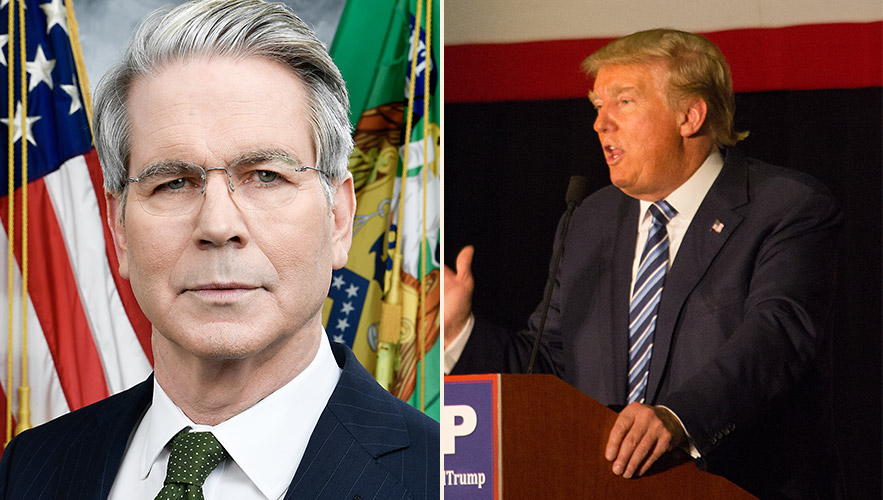
Treasury Secretary Scott Bessent announced the campaign Monday, Aug. 24, as Iran’s war with the United States and Israel approached the six month mark. The new policy raises the risk for companies far beyond Iran, but the rollout contained an important limitation: the most consequential new secondary penalties were threatened rather than immediately imposed.

What Treasury actually changed
Treasury called the campaign Operation Economic Outcast. Its central legal move was to issue five new sectoral determinations under Executive Order 13902, covering digital assets, technology, gold, aviation and shipping. That gives the Office of Foreign Assets Control broader authority to sanction foreign people or companies operating in, or supporting, those areas of Iran’s economy.
At the same time, OFAC sanctioned nearly 60 entities, individuals and vessels in multiple jurisdictions. Treasury said the targets were linked to nuclear and missile procurement, cyber operations and networks that transport Iranian oil and move revenue to the Islamic Revolutionary Guard Corps and other Iranian state actors.
The department also suspended several general licenses that had authorized certain remittance payments to Iran and some Iranian access to U.S. cultural and academic programs. It issued additional guidance warning companies about sanctions risks tied to Iranian demands involving shipping through the Strait of Hormuz.
Those steps are concrete. What did not happen Monday was an immediate blanket sanction on every country, bank or company still dealing with Iran. Treasury instead expanded the categories of conduct that can trigger future penalties and said governments would receive defined timelines to shut down activity Washington has identified.
Why the rollout stops short
Bessent made clear that the administration wants foreign institutions to change behavior before Treasury uses its most disruptive tools. He said the United States would allow a “cure period,” arguing that immediately targeting major institutions could destabilize the global financial system.
That distinction matters because secondary sanctions work differently from direct sanctions on Iranian targets. They pressure non U.S. actors by threatening consequences for specified dealings with sanctioned Iranian sectors or entities. For a foreign bank, one serious risk is losing or facing strict limits on access to U.S. correspondent accounts and the dollar based financial system.
Treasury’s rules also preserve exceptions and authorizations for some humanitarian activity. OFAC says transactions involving food, agricultural commodities, medicine and medical devices generally do not expose non U.S. persons to secondary sanctions under Executive Order 13902 when the applicable conditions are met.
The administration therefore announced a wider enforcement framework, not an instantaneous cutoff of all lawful commerce. The practical effect will depend on which institutions Treasury names next, how quickly it moves after the cure periods expire and whether major trading partners comply.
China is the biggest test
China is the most consequential country in the next phase because it has for years been the largest buyer of Iranian oil. Washington has already sanctioned smaller Chinese “teapot” refineries and companies involved in Iran’s shadow fleet oil trade, but it has generally avoided imposing the harshest penalties on major Chinese banks.
Reuters reported that Monday’s package did not include large Chinese financial institutions suspected of facilitating Iranian oil commerce. Bessent would not identify future targets, although he said no country was beyond the reach of U.S. sanctions.
That restraint comes with a broader economic calculation. Trump and Chinese President Xi Jinping are scheduled to meet in Washington in late September, and sanctions against major Chinese banks could spill into trade negotiations and financial markets. The administration must therefore balance its stated goal of isolating Iran against the potential cost of confrontation with Beijing.
The United Arab Emirates has already moved in the direction Washington wants. The UAE said last week that it would suspend trade, commercial exchanges and financial transactions with Iran until further notice after a reported Iranian missile attack. Bessent said Trump had been calling world leaders with specific requests to curtail ties with Tehran.
Iran’s economy is already strained
The sanctions push arrives as Iran faces a severe economic contraction. The rial reached a record low Monday, trading at about 2.02 million to the U.S. dollar on the market used by many Iranians. The official Central Bank rate was around 1.5 million rial to the dollar.
The International Monetary Fund’s July outlook projects Iran’s real gross domestic product to shrink 5.4% in 2026 and consumer prices to rise 68.9%. The deterioration reflects pressures that predated the war as well as the effects of military conflict, export restrictions and the U.S. naval blockade.
Associated Press reporting from Tehran found that everyday costs have surged since the war began, with rice prices up about 60% and beef prices more than 150% higher. Those increases are not proof that sanctions alone caused the hardship, because wartime disruptions, currency depreciation and supply constraints are also affecting prices.
For Washington, the question is whether additional financial pressure changes the Iranian government’s calculations. Tehran has endured decades of U.S. sanctions, repeatedly building front companies, alternative payment channels and shadow shipping networks to keep trade moving. Treasury’s latest campaign is explicitly designed to attack those workarounds.
Hormuz keeps Tehran leverage
Economic weakness has not eliminated Iran’s strongest source of leverage: the Strait of Hormuz. Before the conflict, roughly one fifth of the world’s traded oil moved through the narrow waterway. Attacks, threats and restrictions have since sharply reduced traffic, helping keep energy prices elevated and spreading the economic cost of the war well beyond Iran.
That creates a difficult feedback loop for Washington. Tougher sanctions may reduce Iranian revenue, but an intensified confrontation can also increase the risk to shipping through the strait. Higher oil and fuel prices then impose costs on U.S. consumers and other economies that the administration is asking to support its pressure campaign.
Treasury has already warned companies about payments or other arrangements made to secure passage through the strait. Earlier sanctions targeted an Iranian entity that Washington described as an IRGC linked mechanism for extracting payments from commercial shipping.
Iranian officials have threatened further retaliation if other countries join the U.S. campaign. Mohsen Rezaei, head of Iran’s national security council, said Tehran would treat participation in what it calls America’s economic war as an act of war. Such statements are threats, not evidence that Iran will carry out every measure it has described, but they increase the stakes for regional governments.
Sanctions have limits
The United States has used sanctions against Iran for decades, targeting oil exports, banking, aviation, weapons procurement, the Revolutionary Guard and a wide range of intermediaries. The Trump administration has intensified that architecture during its second term, repeatedly adding ships, brokers, exchanges and front companies to sanctions lists.
The record shows why enforcement matters as much as announcement. Iran has often responded to restrictions by changing vessel registrations, creating new shell companies, using informal finance and selling crude through networks designed to obscure its origin. New designations can disrupt those channels, but replacement structures can emerge.
Monday’s action tries to raise the cost of that adaptation by widening the number of sectors that can expose foreign partners to U.S. penalties. Digital assets and gold are especially significant because they can provide alternatives when conventional banking channels are blocked, while shipping and aviation can move goods, cash, equipment and personnel.
Still, the administration has not established that financial pressure by itself will produce a political settlement. Bessent presented the campaign as a choice between deeper isolation and reintegration, but Tehran has publicly rejected the premise that Washington can dictate its external economic relationships.
Diplomacy is still moving
The sanctions announcement came alongside renewed regional diplomacy, underscoring that financial pressure is not the only track still active. Pakistan sent a high level delegation to Tehran on Monday, led by army chief Field Marshal Asim Munir, as part of efforts to revive negotiations and reduce tensions.

Reuters reported that Trump spoke with Munir before the visit and urged Pakistan to use its influence with Iran. Pakistan had previously played a role in mediation, including efforts surrounding a 60 day ceasefire earlier in the summer.
Oman, another key intermediary, is also engaged. Foreign Minister Sayyid Badr Albusaidi was scheduled to visit Tehran on Tuesday, Aug. 25, for talks that Iran’s Foreign Ministry said would include security and traffic through the Strait of Hormuz. U.S. officials have said in recent weeks that discussions over the waterway have made progress, but no final agreement has been announced.
Those diplomatic channels matter because the administration’s economic strategy ultimately depends on a political objective. Sanctions can deny revenue, complicate trade and pressure intermediaries, but they do not themselves specify the terms of a settlement over Iran’s nuclear program, the war or shipping access through Hormuz.
What happens next
The clearest near term test is Treasury’s promised follow up. Bessent said he expected a major financial institution to be sanctioned by the end of the week, though he did not identify it. If that action targets a large bank with substantial exposure to the U.S. financial system, it would show how aggressively the administration intends to enforce its new warnings.
Governments and companies will also be watching the length and terms of the cure periods. A warning backed by specific deadlines can cause banks, insurers, shippers and commodity traders to withdraw before formal sanctions are imposed, particularly when access to dollars and U.S. markets is at risk.
But the largest strategic question remains unresolved. Washington wants to cut Iran’s revenue and force a change in behavior without causing a broader financial shock. Tehran, meanwhile, is trying to preserve external trade and leverage over Hormuz while resisting U.S. demands.
For now, Operation Economic Outcast is best understood as an escalation in legal authority, enforcement pressure and diplomatic warning rather than a completed economic blockade. The nearly 60 designations are already in force. The broader threat to third country commerce is now more explicit. Whether it becomes the “economic D Day” the administration promised will depend on who Treasury targets next — and how the rest of the world responds.
Leave a Reply