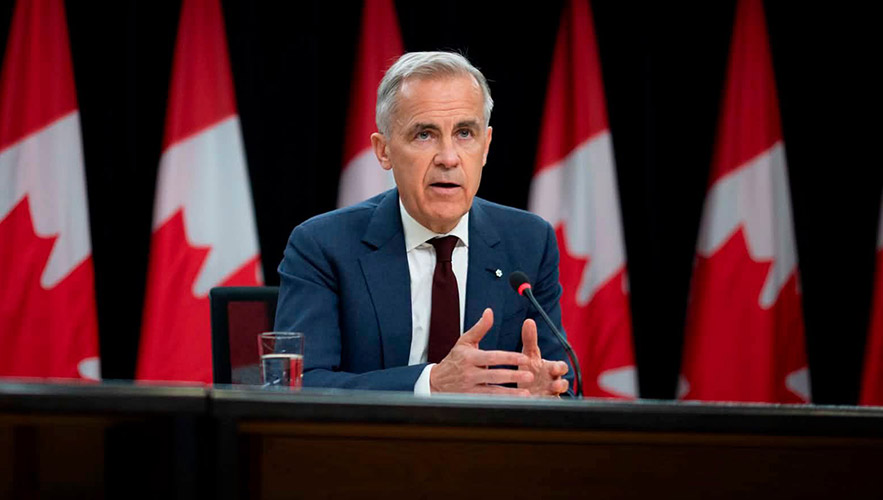
President Donald Trump’s threatened 50% tariff on Canadian autos is only one part of the confrontation. Ontario Premier Doug Ford is now pointing to electricity and critical minerals as possible retaliation, raising a harder question: how much leverage does Canada actually have over U.S. industry?

Ontario Premier Doug Ford has pushed the U.S. Canada trade dispute beyond tariffs on cars and steel. In an Associated Press interview Monday, Ford said “everything is on the table” if Washington keeps targeting Canadian industries, including electricity and critical mineral exports from Ontario.
The warning came as Prime Minister Mark Carney said U.S. negotiating demands confirmed his fear that Washington is trying to erode Canadian auto production. Trump, meanwhile, said Canadian cars, trucks, auto parts and steel would face a 50% tariff beginning Jan. 1, 2027. That future auto threat is separate from 50% U.S. duties on about $20 billion of other Canadian goods that took effect Aug. 22 after trade talks collapsed.
Why Ford’s threat matters
Ford’s comments change the focus of the dispute. His retaliation menu reaches into cross border systems the United States uses every day: electricity grids, mineral supply chains, nuclear fuel processing and inputs needed for advanced manufacturing.
Ford specifically cited high grade nickel and uranium refined in Ontario. He also said Ontario could raise the price of electricity sold to the United States or stop shipments. He suggested Canada consider oil and potash as additional leverage if the conflict worsens.
None of those steps has been announced as policy. Ford is a provincial premier, not the federal government, and he does not control every Canadian export he named. But Ontario is unusually important because it sits at the center of Canada’s auto industry, has major mineral production and processing assets, and is physically connected to U.S. power markets.
The threat therefore matters even before it is implemented. It signals that Canadian retaliation could move from matching tariffs on American goods toward restricting inputs that U.S. factories, utilities and defense related supply chains use.
Electricity is real but local leverage

Ontario has already tested electricity as a trade weapon. In March 2025, the province imposed a 25% surcharge on power exports to Michigan, Minnesota and New York during an earlier tariff confrontation. Ontario said the measure affected electricity used by roughly 1.5 million homes and businesses.
The surcharge did not last. Trump threatened to double tariffs on Canadian steel and aluminum, and Ontario suspended the charge as the two sides stepped back from that round of escalation.
That episode shows both the strength and weakness of the electricity card. Cross border power flows can create political pressure, but they do not give Ontario control over the U.S. electric system.
RBC estimated that all Canadian electricity exports supplied less than 2% of total U.S. generation in 2024. The dependence becomes more meaningful at the state level. RBC estimated Ontario supplied about 6% of Michigan’s electricity needs, while New York relied on Ontario and Quebec for about 6% of its power.
Other states can be more exposed to Canadian supply, but not necessarily to Ontario alone. Ford can influence Ontario exports, while electricity from Quebec, Manitoba and New Brunswick is governed by other provincial utilities and governments.
Cutting power would carry costs
A cutoff would not automatically produce blackouts across the northern United States. Regional grid operators can buy from multiple sources, shift flows and bring other generation online. The impact would depend on weather, demand, transmission constraints, reserve capacity and how long any restriction lasted.
Still, electricity must be balanced in real time, and neighboring grids are interconnected partly because sharing power makes the system more reliable. A sudden political restriction could force utilities to find replacement supply at higher prices or under tighter conditions.
Canada would absorb costs too. Ontario generators earn revenue from exports, and restricting sales could leave the province with excess power at some times while reducing access to a neighboring market that can also send electricity north when needed. RBC noted that the cross border electricity relationship runs in both directions.
Electricity is therefore better understood as targeted leverage than as an easy economic weapon. It can create pressure in particular states, especially during high demand periods, but using it aggressively risks hurting both sides of an integrated grid.
Critical minerals raise security questions
Ford’s reference to critical minerals may be more strategically significant because the Trump administration itself has described imported processed minerals as a national security vulnerability.
In a January 2026 proclamation, the White House said processed critical minerals are essential to defense programs, critical infrastructure and advanced weapons systems. The administration said the United States remains too dependent on foreign sources and directed officials to pursue agreements aimed at securing supply.
Ontario’s critical minerals strategy highlights nickel, cobalt, copper, platinum group elements, uranium and other resources. The province lists nickel among its leading mineral exports and identifies operating nickel mines and refining facilities, including Vale operations in the Sudbury region and Port Colborne.
Ontario also hosts important uranium processing infrastructure. Cameco operates the Blind River Refinery and the Port Hope Conversion Facility, both listed by the province as part of Ontario’s critical mineral processing base.
That does not mean Ford could halt every shipment of nickel or uranium to the United States with a single order. Export controls, contracts, federal jurisdiction and the specific product involved would all matter. But the concentration of processing capacity gives his threat more substance than a purely rhetorical warning.
Washington wants safer mineral supply
The United States has spent years trying to reduce strategic dependence on China and other potentially unreliable suppliers for minerals used in batteries, aerospace, electronics and weapons. Canada has generally been presented as the kind of allied supplier Washington wants more of.
Canada’s federal government has said the country produces more than 60 minerals and metals important to U.S. defense supply chains, including cobalt, graphite, uranium, germanium, titanium and lithium. Ottawa’s critical minerals strategy also identifies nickel, copper and rare earth elements as inputs for advanced manufacturing and national security applications.
Ontario, meanwhile, has been investing in domestic processing rather than simply exporting raw ore. Its current strategy calls for more refining and value added production inside the province and describes critical mineral supply as a matter of economic resilience and sovereignty.
If a tariff war pushes Canada to treat those materials as bargaining chips rather than automatic allied supply, the dispute could undermine one of Washington’s broader goals: building secure North American alternatives to Chinese dominated processing chains.
Autos connect the retaliation story
Ford’s threats are ultimately tied to the industry at the center of the dispute: automobiles.
Canada’s federal industry department says the automotive sector directly employed more than 125,000 people in 2024 and indirectly supported about 427,000 more jobs. Canadian Vehicle Manufacturers’ Association data show 92% of Canadian vehicle exports went to the United States in 2024.
That dependence makes Canada vulnerable to Trump’s threatened 50% rate. But the same supply chain also creates U.S. exposure. Parts, materials and vehicles move through a continental production system built around decades of tariff reduced trade.
A component manufactured in the United States can be installed in a vehicle assembled in Ontario and then return to an American dealership inside the finished product. A Canadian part can likewise feed a U.S. assembly plant. Higher border costs can therefore land on companies and workers on both sides.
The overall relationship is enormous. The Office of the U.S. Trade Representative says two way goods trade with Canada totaled about $715.5 billion in 2025. Canada bought $333.6 billion in U.S. goods that year, making it not simply a supplier but one of the largest customers for American producers.
Retaliation can become self damage
That interdependence is why Ford’s most aggressive options carry risk for Canada as well as the United States.
Restricting minerals could hurt Canadian miners, processors and communities that depend on U.S. customers. Limiting electricity exports could reduce revenue or distort Ontario’s power market. Broadening the fight to oil or potash would involve sectors and provinces outside Ford’s direct authority and could raise costs throughout North America.
Carney has acknowledged the same problem with conventional counter tariffs. Canada plans dollar for dollar retaliation beginning Sept. 8 against the U.S. tariffs that took effect Aug. 22, but retaliatory duties can raise prices and reduce choices for Canadian consumers and businesses too.
That does not make retaliation meaningless. Governments sometimes accept domestic costs to increase bargaining pressure. The key distinction is that Ford’s threats are leverage proposals, not pain free switches Canada can flip without consequences.
Canada’s political unity is unusual
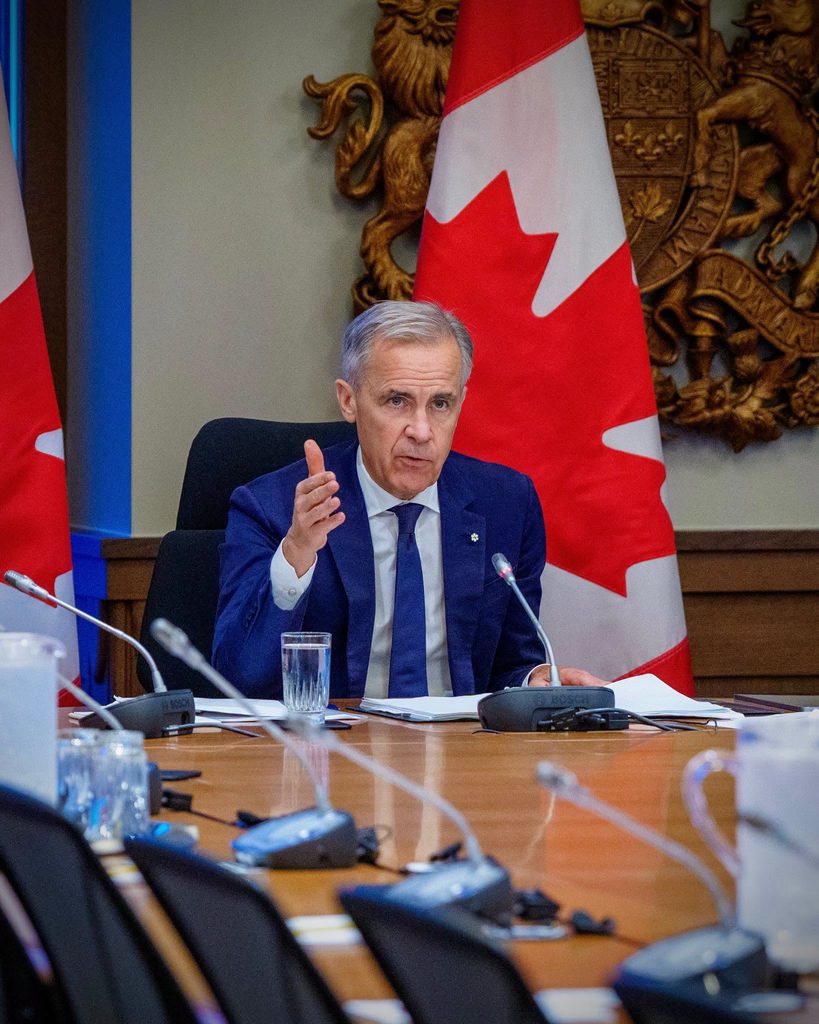
Ford’s language is notable because he and Carney come from different political traditions. Carney leads the federal Liberal government; Ford is a Progressive Conservative premier. Their agreement that Canada should resist U.S. pressure gives the dispute a broader national character.
They do not agree on every tactic. Ford said he opposed the preliminary agreement Carney had been considering before the talks collapsed, including restoring American liquor to Ontario store shelves. He said he was prepared to publicly reject a deal he believed gave Washington too much.
Yet both leaders say negotiations should remain possible. Carney has said Canada will negotiate if the United States treats it as a sovereign partner. Ford told the AP he does not believe in abandoning the table permanently.
That combination — hard retaliation language paired with continued willingness to negotiate — suggests the threats are partly designed to improve Canada’s bargaining position before the next deadline.
The next escalation is not automatic
For now, no Canadian electricity cutoff or critical mineral export ban has been ordered. Trump’s 50% auto tariff is also a future measure scheduled for Jan. 1, not a blanket rate already being collected on every Canadian vehicle and part.
The more immediate date is Sept. 8, when Canada says its new counter tariffs will begin. Ottawa has said those measures will match the value of the U.S. duties that took effect Aug. 22.
The January deadline then creates another negotiating window. Washington could issue additional legal details, modify the tariff plan or return to talks with Ottawa. Canada could also adjust its retaliation depending on what the United States does next.
What Ford has changed is the range of consequences being discussed. The dispute began with tariffs and market access, but it is now touching electricity reliability, mineral security, nuclear supply chains and the structure of North American manufacturing.
That is the larger risk for both countries. The more each side turns integrated systems into leverage, the harder it becomes to confine the damage to the industry being targeted. Canada may be more economically dependent on the United States overall, but Ford’s warning is a reminder that dependence in a deeply connected economy runs in both directions.
Leave a Reply