Author: ArkansasPublicAdvocate Editorial Team

  • Withheld Epstein FBI notes tied to unverified Trump allegation surface online, raising new DOJ questions

    Withheld Epstein FBI notes tied to unverified Trump allegation surface online, raising new DOJ questions

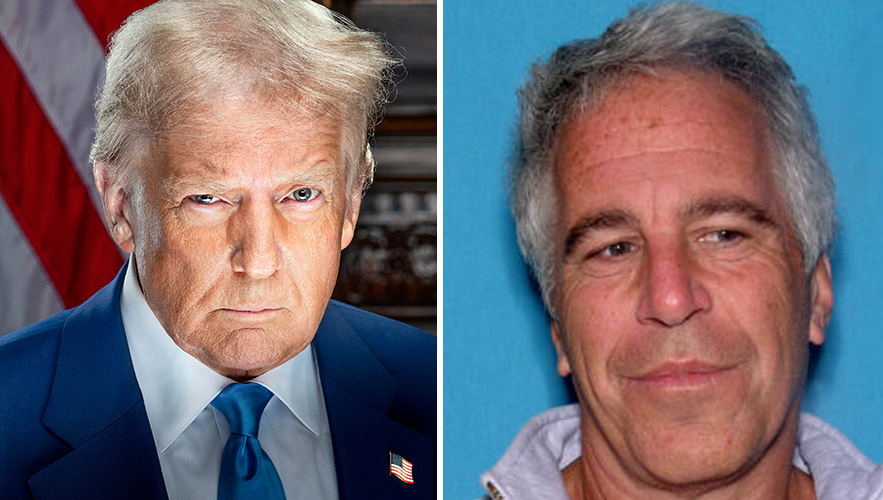
    Florida Department of Corrections, Public domain, Daniel Torok, Public domain, via Wikimedia Commons

    Copies of handwritten FBI interview notes that the Justice Department has not officially released appear to have circulated online for months. Their emergence sharpens questions about the department’s handling of the Epstein files, but it does not authenticate the documents or substantiate the allegations against President Donald Trump.

    A new round of reporting has focused attention on handwritten FBI notes from 2019 interviews with a woman who accused Jeffrey Epstein and Trump of sexually and physically abusing her when she was a teenager. Trump has repeatedly denied wrongdoing related to Epstein, and the woman’s allegations against him have not been corroborated or resulted in criminal charges.

    The immediate development is not a new accusation. It is the apparent discovery of copies of records that journalists, lawmakers and a federal court have been pressing the Justice Department to release. The key questions now concern authenticity, chain of custody, victim privacy and why material described by DOJ as duplicative appears to contain information not included in the public interview summaries.

    What surfaced online

    On Aug. 22, writer and data researcher Rye Howard-Stone reported that two sets of purported FBI interview notes had been posted months earlier to Scribd, a document-sharing site, from an account that he linked to Washington Examiner Justice Department reporter Kaelan Deese.

    Howard-Stone said the account contained 22 pages of the disputed handwritten material and that Deese acknowledged in messages that he operated the account. Howard-Stone also published screenshots of messages in which a person identified as Deese said most of the material had been sent by a source within the Justice Department and later provided a third PDF that had not successfully uploaded to Scribd.

    There are important limits. Howard-Stone explicitly said the screenshots could not be definitively authenticated without further investigation. Amy Gabrielle, the researcher whose searches helped bring the Scribd documents to wider attention, also warned that she could not authenticate the files. She noted formatting differences between material downloaded from Scribd and a separate set later posted to Reddit.

    Howard-Stone reported that Deese removed the Scribd material after an editor at the Washington Examiner was contacted. His article said Deese and the Examiner were asked for comment. The Examiner’s March reporting confirms that Deese had access to senior Justice Department sources, but that fact alone does not prove the provenance of any particular PDF.

    The notes trace to four interviews

    The records at issue stem from four FBI interviews conducted in 2019 after Epstein was arrested on federal sex-trafficking charges. The woman, referred to publicly as “Jane Doe 4,” contacted the FBI and described alleged abuse by Epstein dating to her teenage years. In later interviews, according to FBI summaries released this year, she also accused Trump.

    An FBI Form 302 is an agent’s formal written summary of an interview. It is not a verbatim transcript and is typically prepared from notes and the agent’s recollection. That distinction is why the underlying handwritten notes matter: they can contain names, leads, wording or details that were condensed or omitted from the finished 302.

    The Justice Department’s large Epstein-file release initially included only one of the woman’s four interview summaries. That first interview did not contain the later allegations involving Trump. NPR then used file numbers and gaps in the production to identify records that appeared to be missing from the public database.

    In March, after the omissions drew scrutiny, DOJ published three additional interview summaries. The department said 15 documents had been incorrectly coded as duplicates. It also released an intake record tied to a call from a person who had relayed information about the woman’s claims.

    How the 37-page dispute grew

    NPR reported in March that, even after the additional records were posted, 37 pages associated with the matter still appeared absent from the public database. The remaining gap included underlying interview notes and other records connected to the FBI file.

    That became more significant after journalists reported having seen handwritten notes that the public could not access. The Post and Courier in South Carolina said it reviewed roughly 30 pages of FBI agents’ notes and found names of people the woman identified as possible corroborating witnesses for parts of her account.

    Those potential witnesses are important but easy to overstate. Reporting on the notes has not established that any witness corroborated the alleged encounter with Trump. Some details in the woman’s broader account have been matched to public records or to people and places she described, while other details have been disputed. Corroborating a biographical detail is not the same as corroborating an allegation of sexual abuse.

    The online files now being circulated appear to overlap with the handwritten records at the center of that dispute. But until the FBI or Justice Department publishes the official versions, or the court confirms that the online copies match the records submitted to it, the public cannot reliably treat the PDFs as authenticated government documents.

    What the allegations actually establish

    The FBI summaries already made public show that the woman accused Trump of abusing her after she said Epstein introduced them when she was between 13 and 15 years old. The allegations are serious, but an allegation recorded by the FBI is not a finding that the conduct occurred.

    The FBI interviewed the woman four times. That demonstrates that agents documented and followed up on her account to some degree. It does not, by itself, show that the FBI concluded her accusations against Trump were true. NPR reported in March that the newly released files did not explain how investigators ultimately assessed the claims or why the allegations appeared in an internal Justice Department presentation.

    There is no public record of criminal charges arising from the woman’s accusations, and no public indication that Trump is currently under criminal investigation over them. The Guardian reported in June that the FBI brought no charges against anyone in connection with her allegations and that there was no indication agents continued investigating after the 2019 interviews ended.

    That is the evidentiary line the new online discovery does not cross. If authentic, the notes could clarify what the woman told agents, what follow-up names she supplied and how the 302s were prepared. They would not automatically prove the underlying accusations.

    Trump has denied wrongdoing

    Trump has repeatedly denied wrongdoing connected to Epstein. After the additional FBI interview summaries were released in March, White House press secretary Karoline Leavitt called the accusations “completely baseless” and said the president had been “totally exonerated” by the Epstein-file releases.

    The latter is a White House characterization, not a judicial finding. The released files contain allegations, investigative records and raw tips of varying reliability. The Justice Department and White House have warned that the archive includes material that may contain false or sensational claims.

    Trump and Epstein were socially acquainted for years, a relationship documented through photographs, video and earlier reporting. That established association does not prove the woman’s allegations. The proper standard is narrower: the claims must be assessed on evidence specific to the alleged events, not simply on the fact that Trump and Epstein knew each other.

    The same caution applies in the other direction. The absence of charges is significant, but it is not equivalent to a factual adjudication that every allegation in an investigative file was false. No court has tried the woman’s claims against Trump.

    The court fight changed the stakes

    The handwritten notes are also part of an active federal lawsuit brought by journalist and lawyer Katie Phang against Attorney General Todd Blanche. Phang argues that the Justice Department has failed to comply with the Epstein Files Transparency Act, the law Trump signed in November 2025 requiring broad public release of unclassified Epstein-related records with limited exceptions.

    On June 25, U.S. District Judge Emmet Sullivan granted Phang a preliminary injunction. His opinion ordered the attorney general either to produce specified materials or show cause why they should remain withheld. One category was the underlying FBI interview notes used to prepare the four 302s.

    DOJ later argued that the handwritten notes were properly withheld as duplicative of material already released. Separately, the department has defended redactions intended to protect victims, law-enforcement personnel and identifying information. Victim privacy is a legitimate concern, but the transparency law sharply restricts the grounds for withholding responsive records.

    At an Aug. 13 hearing, Sullivan pressed government lawyers over the handwritten notes, foreign-language records and the department’s redaction explanations. CNN and ABC News reported that the judge warned DOJ attorneys that contempt could become an issue if court orders were not followed and demanded firmer answers about compliance.

    The privacy problem is now larger

    If Howard-Stone’s account is accurate, the newly discovered uploads raise a second issue beyond government transparency: the handling of a victim’s identifying information.

    Howard-Stone said the Scribd versions were unredacted and included the woman’s name, biographical details and names of friends and family members. Those are precisely the kinds of details the Justice Department has sought to protect in its public releases.

    That creates an uncomfortable contrast. The public dispute has centered on whether DOJ can release the notes while protecting victims, yet copies of the purported notes may have been accessible on a public document platform for months without those protections.

    It also complicates responsible reporting. Even when source material is publicly accessible, publication of a sexual-assault accuser’s identity or identifying details can create additional harm and may expose people who never chose to enter a public controversy. The news value lies in the records, their provenance and the government’s compliance with the law—not in amplifying private identifying information.

    What would resolve the dispute

    The simplest way to answer the authenticity question is an official comparison. If DOJ releases properly redacted copies of the underlying notes, reporters and the court can compare page numbers, handwriting, identifiers and content against the versions that circulated online.

    The court process offers another route. Sullivan has already required the department to justify contested withholding and has used private, in-camera review for disputed Epstein materials. That procedure allows a judge to inspect sensitive records without immediately placing protected information in the public record.

    For now, the strongest verified conclusion is narrower than the viral headline. Copies of what appear to be withheld FBI interview notes have surfaced online, and reporting links at least some of them to a document account said to be operated by a Justice Department reporter who allegedly received material from a DOJ source. The documents’ authenticity has not been officially confirmed.

    If authenticated, the notes could undercut a broad claim that the withheld material contains nothing beyond what is already public. They could also illuminate why investigators recorded certain leads and how the formal summaries were produced. What they cannot do on their own is convert an uncorroborated accusation into a proven fact.
  • Trump faces a White House staffing test as key aides head for exits before midterms

    Trump faces a White House staffing test as key aides head for exits before midterms

    The departures of James Braid and Karoline Leavitt remove two trusted operators just as the White House approaches a difficult post-midterm phase. But the exits do not amount to a collapse: some roles already have successors, and others remain open as Trump reshapes his team.

    White House Office of the Press Secretary, Public domain, via Wikimedia Commons

    President Donald Trump is heading toward the 2026 midterms with several important personnel changes underway across the White House and Justice Department, including departures from the offices that manage congressional relations, press strategy and legal work.

    The timing is politically sensitive. Republicans still control both chambers of Congress, but their House majority is thin and a number of Senate contests have become competitive. A Democratic House would gain committee gavels and subpoena power, while the administration is also dealing with an unresolved conflict with Iran and the long transition toward the 2028 Republican presidential race.

    Departures cluster before the midterms

    White House legislative affairs director James Braid is set to leave in September after helping the administration shepherd major legislation, nominations and funding fights through Congress. Trump publicly confirmed the departure on Aug. 20 and praised Braid’s work. The president did not name a replacement.

    Braid’s exit followed Leavitt’s announcement that she would step down as White House press secretary at the end of August. Leavitt said the demands of the job were no longer compatible with the time and attention she wanted to give her two young children after the birth of her second child.

    Her departure is not a break with Trump’s political operation. Leavitt said she plans to return to MAGA Inc., the pro-Trump super PAC where she previously worked, and Trump has said she will remain an outside adviser. As of Aug. 23, he had publicly mentioned CNN commentator Scott Jennings and longtime aide Margo Martin as possible replacements but had not announced a final choice.

    The personnel changes extend beyond the communications and legislative shops. White House counsel David Warrington is leaving for the private sector, although that transition is more settled: Trump has named staff secretary Will Scharf to succeed him as White House counsel beginning Sept. 1.

    Braid leaves a key Hill bridge

    The legislative affairs director is not usually one of the most visible people in a White House, but the office becomes especially important when a president’s party has little room for defections. Braid served as the administration’s day-to-day bridge to lawmakers and had deep relationships on Capitol Hill, including from his earlier work for then-Sen. JD Vance.

    Roll Call reported that Braid helped the White House navigate Trump’s large 2025 tax-and-spending package, Cabinet confirmations and two government shutdowns. His successor will inherit a compressed pre-election session, with government funding and other unfinished legislative priorities competing for attention.

    That makes the vacancy operationally significant even if staff turnover itself is normal. A new legislative director must quickly learn which members can be moved, which promises have already been made and where the administration has leverage. Those relationships can be harder to replace than the formal authority attached to the title.

    There is also an important factual distinction in the reporting about Braid’s departure date. Trump has said only that Braid will leave in September, and Roll Call reported that the White House had not publicly fixed his final day. POLITICO, citing a person familiar with his plans, reported Sept. 30. The exact date therefore remains reported rather than formally announced.

    Leavitt shifts outside the West Wing

    Leavitt’s exit has a different effect because the press secretary is both an internal strategist and the administration’s most recognizable daily messenger. Trump relied on her not only to brief reporters but also to defend his agenda on television and across newer media platforms favored by the White House.

    At 28, Leavitt became the youngest White House press secretary in U.S. history. Her tenure also reflected Trump’s broader approach to presidential communications: fewer traditional briefings than some predecessors, more direct presidential engagement with reporters, and greater access for conservative and digital outlets.

    The replacement search matters because the job is unusually tied to the president’s personal style. Trump has long regarded himself as his own most important communicator, meaning a press secretary must be able to amplify his message without becoming a competing center of attention. Familiarity, loyalty and television skill can matter as much as mastery of the briefing room.

    For now, Leavitt’s move to MAGA Inc. suggests continuity rather than disappearance. She is leaving a government post with round-the-clock demands but remaining connected to the political organization that will be heavily involved in the midterms and, eventually, the fight over the 2028 Republican nomination.

    The legal bench is changing too

    The legal turnover needs to be separated into different institutions. Warrington is a White House official, and his replacement, Scharf, has already been selected. Ed Martin, by contrast, has been serving as U.S. pardon attorney at the Justice Department, not as a member of the White House counsel’s office.

    Trump announced Friday that Martin would leave the Justice Department to work in the private sector on election-related legal fights involving the 2026 midterms and the 2028 presidential election. The Associated Press reported that Martin had held several roles during Trump’s second term, including pardon attorney, after an earlier stint as interim U.S. attorney in Washington.

    Those moves matter because legal staffing is likely to become more important if Congress changes hands. The White House counsel’s office handles legal questions surrounding presidential actions, congressional demands and executive privilege, while the Justice Department represents the federal government in a wide range of disputes.

    Scharf therefore arrives with a clear assignment date and no immediate vacancy in the counsel’s office once the handoff occurs. That makes the legal transition different from the open searches for Braid’s and Leavitt’s successors.

    Democratic oversight is possible, not guaranteed

    The strongest reason the departures are attracting attention is the possibility that Democrats could win the House in November. Republicans currently hold 218 seats to 213 for Democrats after Aisha Wahab won an Aug. 18 California special election, leaving the majority exceptionally narrow.

    A change in control would give Democrats the power to chair House committees, set hearing agendas and issue subpoenas under committee rules. Reuters reported earlier this month that Democratic lawmakers and staff are preparing possible investigations involving Trump-linked financial interests, administration donors, federal contracts and companies with ties to the president or his government.

    That does not mean a Democratic House could simply obtain every document it demands. Congressional oversight disputes can trigger negotiations, privilege claims and litigation. On Aug. 10, the Justice Department’s Office of Legal Counsel issued an opinion saying executive privilege can extend to confidential communications between the president and private advisers when they concern official presidential decision-making.

    The opinion is the executive branch’s legal position, not a court ruling resolving future subpoena fights. It nevertheless signals that the administration is already thinking about how it would resist or narrow some congressional demands if Democrats gain investigative power.

    Turnover is rising, but context matters

    The latest exits are notable partly because Trump’s second White House initially looked more stable than his first. Brookings scholar Kathryn Dunn Tenpas found that roughly 29% of Trump’s senior “A Team” positions turned over during the first year of his second term, lower than the comparable rate in 2017.

    By Aug. 12, however, Brookings put second-term “A Team” turnover at 53%. The tracker counts the first departure from each influential Executive Office of the President position and excludes Cabinet secretaries from that measure, so it should not be read as saying that half of the current White House staff has just quit.

    The comparison with Trump’s first term is still instructive. Brookings calculated that 92% of the first administration’s “A Team” positions experienced turnover by January 2021, with repeated changes in several high-profile jobs. The second-term operation has so far avoided that same degree of serial churn.

    That is why the current moment is better described as a staffing test than an exodus that has already crippled the presidency. Braid and Leavitt are consequential departures, but Leavitt is remaining politically aligned with Trump, Warrington has a named successor, and presidential administrations commonly experience significant turnover as aides reassess their plans around election cycles.

    The midterms raise the stakes

    What makes these changes more consequential is what the next staff will face. Republicans hold a 53-seat Senate majority, but the 2026 map has become more competitive. Several traditionally Republican-held seats are now drawing serious Democratic challenges, with Texas and Iowa among the races rated as toss-ups by the Cook Political Report.

    The House is even more immediately precarious because the GOP margin is so small. Losing control would sharply reduce Trump’s ability to rely on party leaders to move legislation through both chambers and would give Democrats far greater authority to investigate his administration.

    The foreign-policy environment adds another layer. The U.S.-Iran conflict that began earlier this year has not produced a durable settlement. Reuters reported on Aug. 22 that major hostilities had paused but that no peace negotiations were underway, while Iran and the United States remained at odds over sanctions and the Strait of Hormuz. On Aug. 23, Iran’s president publicly defended diplomacy as the best path out of the stalled war.

    A new legislative director or press secretary would therefore be stepping into jobs that combine campaign-year politics with the possibility of divided government and an unresolved international crisis. That is a demanding mix even for experienced Washington hands.

    What the next team inherits

    The departures do not prove that senior aides expect Trump’s political position to collapse. Leavitt gave a specific family reason for leaving and is moving into a pro-Trump political role. Braid has been widely reported as heading toward the private sector. Warrington’s transition is structured, with Scharf already designated to replace him.

    Still, personnel choices can shape how effectively a presidency absorbs pressure. Legislative affairs determines how the White House works Congress. The press shop manages public explanations when policy, politics and crisis collide. The counsel’s office helps define the administration’s response when oversight turns into a legal confrontation.

    The next few weeks will show whether Trump fills the open jobs with established insiders who can preserve continuity or brings in new figures who must build trust under election-year pressure. That choice could matter more after Nov. 3, when voters determine whether Republicans retain the congressional majorities that have helped carry much of Trump’s second-term agenda.

    For now, the clearest conclusion is narrower than the “writing on the wall” metaphor suggests. Trump is not facing an empty West Wing, but he is losing several experienced and trusted operatives at nearly the same time. Their replacements will inherit a presidency moving from its legislative opening phase into a more defensive, uncertain and potentially adversarial one.

  • Democrats’ path to Senate control widens as red-state races tighten

    Democrats’ path to Senate control widens as red-state races tighten

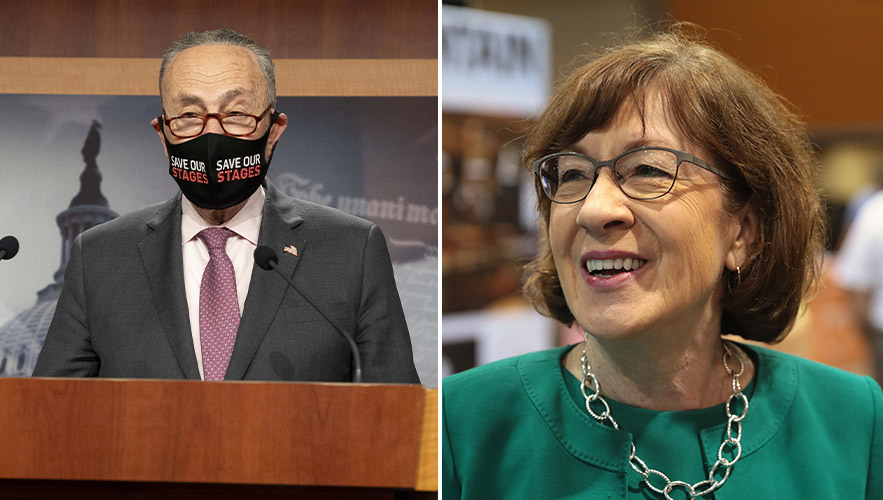
    Senate Democrats, CC BY 2.0 | Gage Skidmore, CC BY-SA 3.0 via Wikimedia Commons

    Democrats still need a net gain of four seats to control the Senate in 2027, an unforgiving target. But a late-summer expansion of the battleground into Iowa, Texas and Alaska has created more plausible pickup routes than the party appeared to have earlier in the cycle.

    The fight for the Senate is no longer confined to a handful of familiar swing states. With the November 3 election approaching, Democrats are trying to defend vulnerable seats in Michigan, Georgia and New Hampshire while challenging Republicans across a wider stretch of the map.

    That expansion is the main reason the majority remains genuinely in play. The Cook Political Report moved Iowa and Texas into its toss-up category on August 20, leaving six Senate contests rated toss-ups: Alaska, Iowa, Maine, Michigan, Ohio and Texas. Five of those seats are Republican-held; Michigan is the lone Democratic-held seat in that group.

    The four-seat math remains harsh

    Republicans currently hold 53 Senate seats. Democrats hold 45, while two independents caucus with them, giving the Democratic side 47 seats for organizational purposes. Because Democrats must get beyond a 50-50 split under a Republican administration, they need to reach 51 seats — a net gain of four.

    Defense is therefore as important as offense. If Democrats retain every seat they already control or caucus with, they need four Republican-held seats. North Carolina, where Republican Sen. Thom Tillis is retiring, is central to that equation because Cook currently rates the open race Lean Democratic.

    If former Democratic Gov. Roy Cooper wins North Carolina, Democrats would still need three more Republican-held seats while protecting Michigan, Georgia and New Hampshire. Maine, Ohio and Alaska are obvious targets, but Iowa and Texas now provide alternatives. A loss in Michigan would raise the price to five Republican pickups.

    That arithmetic explains why the wider map matters. It does not make Democrats’ target smaller. It gives them more possible combinations for getting there.

    Maine is still a pivotal target

    Maine remains one of Democrats’ clearest opportunities to defeat a Republican incumbent, but the race was disrupted in July when Graham Platner, who had won the Democratic primary, withdrew after a sexual-assault allegation that he denied. The state party then overwhelmingly selected former Maine Senate President Troy Jackson as its replacement nominee.

    Jackson, a longtime legislator and former logger from northern Maine, now faces Sen. Susan Collins, who has represented the state in the Senate since 1997. A Fox News poll conducted August 12 showed Jackson at 48% and Collins at 46%, while a July University of New Hampshire survey also put Jackson ahead by three points.

    Those margins are narrow, and Collins has outperformed polling before. In 2020, she won reelection by more than eight points after many surveys suggested a much closer contest. Her campaign is again emphasizing her seniority and her role as chair of the Senate Appropriations Committee.

    For Democrats, the case for Jackson is now rooted in his state-level experience and labor background. The party needs him to keep the campaign centered on economics and Collins’s record rather than the controversies that consumed Platner’s candidacy.

    Michigan is the key Democratic defense

    Michigan is the toss-up Democrats can least afford to lose. The seat is open because Democratic Sen. Gary Peters is retiring, and former public-health official Abdul El-Sayed narrowly defeated Rep. Haley Stevens in the August 4 Democratic primary.

    El-Sayed won 48.48% to Stevens’s 47.51%, overcoming a large spending disadvantage and opposition from much of the party establishment. He now faces Republican Mike Rogers, a former House Intelligence Committee chairman who also ran for Senate in 2024.

    The contest creates a different problem from Maine. In Michigan, Democrats are defending a seat they already have. Every Democratic loss changes the national arithmetic before any pickup is counted.

    Republicans are expected to portray El-Sayed as too progressive for a closely divided state, focusing in part on positions including Medicare for All and his approach to U.S. policy toward Israel. El-Sayed, meanwhile, is trying to convert the movement energy that carried him through the primary into a broader general-election coalition.

    Cook still rates Michigan a toss-up. A Rogers victory would force Democrats to compensate by winning an additional Republican-held seat somewhere else.

    North Carolina and Georgia help

    Two Southern states have become stabilizers for Democrats rather than the liabilities many expected at the start of the cycle.

    In North Carolina, Cooper has led former Republican National Committee chairman Michael Whatley in a series of public surveys. An Elon University poll released August 12 found Cooper ahead 53% to 42% among likely voters. A Carolina Journal survey conducted August 9-10 showed Cooper at 51.5% and Whatley at 39%.

    Polling is not a forecast, but the pattern has been consistent enough for Cook to rate the seat Lean Democratic. Because the seat is Republican-held, a Cooper victory would provide one of the four net pickups Democrats need.

    Georgia has moved from a top Republican opportunity toward a seat Democrats currently appear better positioned to defend. Sen. Jon Ossoff faces Republican Rep. Mike Collins and reported more than $42 million in cash on hand after raising about $20 million in the second quarter. Collins reported roughly $2.2 million on hand.

    Cook rates Georgia Lean Democratic. The state remains competitive, but as long as Ossoff holds an advantage, Republicans have fewer obvious places to offset Democratic gains elsewhere.

    Alaska and Ohio widen the map

    Alaska produced one of the most striking late-summer results. In the August 18 open primary, former Democratic Rep. Mary Peltola finished first with about 48% of the vote, while Republican Sen. Dan Sullivan was second with roughly 43% in results reported by the Associated Press.

    The result does not mean Peltola is favored in November. Alaska uses a top-four system followed by ranked-choice voting, so the general election includes additional candidates and a different electorate. Still, finishing ahead of a two-term incumbent showed that Peltola is a serious challenger in a state Republicans ordinarily expect to hold.

    Ohio offers another possible route. Former Democratic Sen. Sherrod Brown is trying to return to the chamber in a special election against Republican Sen. Jon Husted, who was appointed to the seat vacated when JD Vance became vice president. Public polling has been close, and Cook rates the race a toss-up.

    Brown lost his other Ohio Senate seat in 2024, when Republican Bernie Moreno defeated him. His 2026 campaign tests whether a Democrat with a strong personal brand can run ahead of the national party in a state that has shifted Republican in presidential elections.

    Iowa and Texas change the strategy

    The August 20 Cook ratings shift was significant because Iowa and Texas had previously been treated as Republican-leaning races. Cook moved both to toss-up status, saying public and private polling had become too competitive to justify a Republican advantage.

    In Iowa, Republican Rep. Ashley Hinson faces Democratic state Rep. Josh Turek for the open seat being vacated by Sen. Joni Ernst. An early-August Emerson College poll had Hinson ahead 48% to 45%, while other surveys have shown a tighter race. Iowa has not elected a Democratic senator since 2008.

    Texas is similarly difficult by historical standards. Republican Attorney General Ken Paxton faces Democratic state Rep. James Talarico for the open seat. Recent surveys have repeatedly shown the contest within a few points, with some giving Talarico a narrow advantage and an August 9-10 Emerson poll putting Paxton ahead by one.

    No Democrat has won a Texas Senate race since 1988. That remains an important baseline. But national handicappers now view both Texas and Iowa as competitive enough that Republicans cannot assume those seats will stay out of the fight.

    The national climate favors competition

    The broader environment is giving Democrats reasons to believe redder states can be competitive. A Pew Research Center survey conducted July 6-12 found Democrats leading Republicans 43% to 37% among registered voters on the generic congressional ballot.

    Pew also found an engagement gap. Seventy percent of Democrats and Democratic-leaning independents said it “really matters” which party controls Congress, compared with 60% of Republicans and Republican leaners. Thirty-nine percent of Democrats said they had thought a lot about the midterms, versus 22% of Republicans.

    President Donald Trump is another factor. Pew measured his job approval at 34%, with 64% disapproving. Among registered voters, 42% said they viewed their congressional vote as a vote against Trump, while 22% saw it as a vote for him.

    Economic dissatisfaction is reinforcing that pressure. Only 24% of Americans in the Pew survey rated national economic conditions excellent or good, and 60% said Trump’s economic policies had made conditions worse. Concern about gasoline prices rose sharply from January.

    The administration this week moved to end summer-blend gasoline requirements early as pump prices remained elevated during the Iran war. Reuters reported the national average at about $4.10 a gallon, compared with $3.13 a year earlier, illustrating how foreign-policy developments have fed directly into a cost-of-living issue voters can see every time they fill a tank.

    Republicans have a counterargument to that national mood. Their strongest candidates can run on state-specific records rather than on Trump alone, and GOP strategists expect the party’s financial network to spend heavily once the fall campaign fully engages. They also argue that Democratic nominees can be defined by positions less popular than the party’s economic message.

    The absence of Trump from the ballot cuts both ways. It may reduce participation among some infrequent voters who turn out primarily for him, but it also gives Republican Senate candidates more space to establish political identities distinct from the president.

    Those national indicators do not determine Senate outcomes. Candidate quality, state partisanship, turnout and late events still matter. But they help explain why states Trump won comfortably in 2024 are now being treated as competitive.

    The majority still requires near perfection

    The most favorable Democratic scenario is straightforward and difficult: hold Michigan, Georgia and New Hampshire; win North Carolina; then take three more Republican-held seats from Maine, Ohio, Alaska, Iowa and Texas.

    Lose Michigan, and Democrats would need North Carolina plus four of those five Republican toss-ups. Lose Georgia or New Hampshire as well, and the number of required pickups rises again.

    New Hampshire remains worth watching even though Cook rates it Lean Democratic. Democratic Rep. Chris Pappas is positioned for the nomination, while former Sen. John Sununu is the leading Republican contender ahead of the September 8 primary. A late-August RealClearPolitics average showed Pappas ahead of Sununu by 3.3 points.

    The Senate contest is therefore balanced between two realities. Republicans begin with the structural advantage of a 53-seat majority and can afford to lose some ground. Democrats now have more credible targets than they did earlier in the cycle and a national environment that has made several normally Republican states competitive.

    That is why the Senate is still within reach for Democrats — and why “within reach” should not be confused with “likely.” Their path is broader, but it still depends on holding nearly every vulnerable seat they already have while winning multiple races on Republican terrain.

  • Ohio Guard contingent is home, but Trump’s D.C. mission now stretches toward 2029

    Ohio Guard contingent is home, but Trump’s D.C. mission now stretches toward 2029

    Ohio’s 150-member National Guard mission in Washington ended in February 2026, months after several Guard members privately questioned the purpose of domestic deployments. Their concerns never amounted to a force-wide revolt, but the debate they reflected has outlasted Ohio’s participation as the capital mission has expanded and been extended through January 2029.

    When NPR reported in November 2025 that several members of one Ohio National Guard unit were discussing President Donald Trump’s domestic troop deployments in a Signal chat, the story captured something narrower than military rebellion. Three members, identified only by initials, described uncertainty, frustration and concern about the missions being offered to their unit.

    The factual landscape has changed substantially since then. Ohio’s contingent has returned home, disputed deployments in Los Angeles, Chicago and Portland were curtailed or abandoned after court fights, and Washington has become the administration’s durable exception: thousands of Guard members remain there, with the Pentagon saying the mission can continue until Jan. 20, 2029, unless Trump ends it sooner.

    What the Ohio members said

    NPR reported on Nov. 10, 2025, that a Signal chat among members of one Ohio Guard unit had grown to roughly a dozen participants. Three members — identified as J, A and C because they were not authorized to speak publicly — described conversations about Trump’s use of the Guard in Los Angeles, Washington and other cities.

    U.S. Air National Guard photo by Staff Sgt. Natalie Filzen, Public domain, via Wikimedia Commons

    Their account did not show an organized refusal to obey orders. The three said a voluntary directive for Washington had reached their unit, and none accepted it. They focused instead on what they considered unusually vague information about the assignment, including what they would be doing, how long conditions might last and what leave would look like.

    That distinction remains essential. A service member can question a mission, criticize policy privately or decline a voluntary assignment without committing insubordination. NPR’s reporting documented anxiety inside one unit and broader contacts with an advocacy group, not representative evidence that the National Guard or active-duty military as a whole opposed Trump’s policy.

    About Face, an organization of current service members and post-9/11 veterans, told NPR at the time that more than 100 active-duty personnel had contacted it in recent weeks. That figure showed that some troops were seeking advice or support, but it was not a scientific survey and could not establish how widespread dissent was across the armed forces.

    Ohio’s Washington mission ended

    Ohio Gov. Mike DeWine agreed in August 2025 to send 150 military police members to Washington after a request from the secretary of the Army. DeWine said they would conduct presence patrols and provide added security, and he specified that none of the selected members was then working as a law enforcement officer in Ohio.

    The assignment was repeatedly extended. Ohio initially expected its troops to leave in the fall, then kept 150 Guard members in Washington through Nov. 30. In November, DeWine agreed to another extension through Feb. 28, 2026, with personnel rotating so volunteers could return to jobs and families while the state maintained its authorized strength.

    By early February, DeWine said Ohio would not participate beyond the end of that month. The Ohio National Guard later confirmed that its soldiers had served with Joint Task Force–District of Columbia from August 2025 through February 2026, and reporting on March 2 said all 150 Ohio troops had returned home.

    That matters when reading the original dissent story today. The Ohio members’ questions arose during a live decision about whether they might join the Washington mission. Ohio no longer has troops assigned to that operation, so their concerns should not be presented as evidence of an ongoing Ohio deployment or a current refusal by Ohio soldiers to serve.

    The D.C. mission kept expanding

    The broader Washington operation did not end with Ohio’s departure. Trump initially mobilized the D.C. National Guard in August 2025 as part of what his administration called a crime emergency, while Republican-led states also sent Guard personnel to the capital. The mission has since grown far beyond its original scale and duration.

    In July 2026, the Pentagon confirmed that the deployment could continue through Inauguration Day, Jan. 20, 2029, unless Trump terminates it earlier. The force approached 5,000 during a summer surge involving personnel from more than 20 states; by mid-August, Reuters reported roughly 4,500 Guard members were still patrolling Washington.

    The financial commitment is also larger than it appeared in 2025. A Defense Department estimate provided to Congress projected roughly $1.4 billion in costs for fiscal years 2027 through 2029, based on an assumed average force of about 2,500 members — below the temporary summer peak.

    The administration argues that the Guard supports public safety, protects federal functions and works alongside law enforcement. A Reuters review published Aug. 19 found Guard members were cited in about 1.3% of criminal cases filed in D.C. Superior Court during the deployment, while troops also performed presence patrols and other support duties. That measure does not, by itself, prove or disprove a broader deterrent effect.

    Courts narrowed other deployments

    Outside Washington, the administration encountered significantly greater legal resistance. In Los Angeles, a federal judge in December 2025 ordered an end to the extended federalization of California Guard members. After the Supreme Court acted in the separate Illinois dispute, the administration withdrew its effort to keep the California troops under federal control, allowing the lower-court order to take effect.

    Portland followed a similar path. A federal judge ruled in November 2025 that the administration lacked a lawful basis for the Oregon deployment and issued a permanent injunction. The administration later moved to demobilize the troops, and the Ninth Circuit granted the government’s request to dismiss its appeals in February 2026.

    Chicago produced the most important Supreme Court development. On Dec. 23, 2025, the justices denied the administration’s request to stay an order blocking deployment of federalized Guard troops in Illinois. The Court said, at that preliminary stage, the government had not shown that 10 U.S.C. §12406(3) authorized the deployment on the theory it had presented.

    The decision did not announce a universal ban on domestic Guard deployments. It addressed a specific statutory route and an emergency stay request, and Justice Brett Kavanaugh wrote separately to emphasize narrower reasoning. Still, the ruling materially weakened the administration’s attempt to use that provision over a governor’s objections in circumstances like those presented in Illinois.

    Washington is legally different

    Washington’s status makes its case distinct. The D.C. National Guard does not answer to a governor; the president serves as its commander in chief. Guard units sent by states may also operate under legal arrangements different from troops who have been federalized into Title 10 service.

    Those distinctions affect the Posse Comitatus Act, which generally limits use of federal military forces to execute civilian law. Congressional Research Service materials note that Guard members in federal service are covered by those restrictions, while Guard members operating under state control generally are not. Other statutes and constitutional authorities can create exceptions or permit forms of military support.

    The D.C. deployment is nevertheless being challenged in court. U.S. District Judge Jia Cobb issued a preliminary injunction in November 2025 after concluding that the administration likely lacked statutory authority for the D.C. Guard and out-of-state deployments as structured. She stayed her own order briefly to allow an appeal.

    On Dec. 17, a three-judge D.C. Circuit panel granted the administration a stay pending appeal, preventing Cobb’s injunction from taking effect. As of August 2026, the merits appeal in District of Columbia v. Trump remained unresolved. The legal question in Washington is therefore not settled merely because troops are still on the streets.

    Mission clarity still matters

    The Ohio members’ most durable point was not a definitive legal judgment. It was a practical complaint about mission clarity. One member told NPR that earlier Guard assignments came with clearer explanations of purpose and expectations. The Washington offer, in their telling, left important questions unanswered.

    That issue has become more consequential as the D.C. operation has evolved. Guard members have performed visible patrols, protected federal facilities, supported police, assisted with civic projects and carried out other tasks. A mission that shifts among security, deterrence, law-enforcement support and public works can be lawful while still creating uncertainty about training, command relationships and day-to-day expectations.

    Military organizations routinely limit operational information for legitimate reasons, and not every unanswered question is evidence of mismanagement. But clarity matters because Guard members are citizen-soldiers whose military obligations interact with civilian jobs, families and state commitments. Long, repeatedly extended domestic assignments can impose strains very different from short emergency activations.

    Dissent is not disobedience

    The oath and order structure are often compressed in political debate. U.S. service members swear to support and defend the Constitution, but they also operate within a chain of command and are generally required to obey lawful orders. Questions about legality are handled through military advice, command channels, inspectors general, courts and other established processes, not by treating every personal objection as a license to refuse duty.

    Nothing in the original NPR account established that the three Ohio Guard members had been given a mandatory lawful order and refused it. They discussed boundaries, conscience and what they would do if future assignments crossed lines they considered unacceptable. That is evidence of personal concern, not proof of mutiny, coordinated resistance or a breakdown in military discipline.

    The same caution applies in the other direction. The absence of mass refusal does not make the underlying policy debate trivial. Courts have blocked or constrained several contested deployments, governors have objected to federal control of their Guard units, and the administration has continued a far larger mission in Washington under a different legal framework.

    What the updated record shows

    The strongest update is therefore more complicated than the original headline. A small group of Ohio Guard members did question Trump’s domestic deployments, but Ohio’s own Washington mission ended months ago. The broader policy survived and expanded in the capital even as major deployment efforts in California, Illinois and Oregon were stopped or abandoned.

    Washington now carries the long-term test. The Pentagon has authorized a mission running potentially through the end of Trump’s term, the administration says the Guard contributes to public safety, and critics continue to challenge the cost, effectiveness and implications for civilian governance. The D.C. Circuit still has a live appeal over the legal foundation for the deployment.

    For Guard members, the central questions remain concrete rather than rhetorical: what authority governs the mission, who controls the troops, what duties they may perform and how long the assignment will last. For the public, the evidence supports concern about an expanding domestic military role — but not a claim that the armed forces are broadly in revolt against the president.

  • Alex Palou starts on pole as Trump’s Freedom 250 brings IndyCar to Washington streets

    Alex Palou starts on pole as Trump’s Freedom 250 brings IndyCar to Washington streets

    Brycenrichter, CC0, via Wikimedia Commons

    The first IndyCar street race in the nation’s capital is set for 147 laps around the National Mall, with President Donald Trump scheduled for a ceremonial motorcade lap and green-flag duties. Championship leader Alex Palou will start first after dominating qualifying, while a bumpy new circuit has already tested drivers.

    Washington’s downtown streets are no longer behaving like ordinary city streets. On Sunday, a temporary seven-turn IndyCar circuit around the National Mall is scheduled to send 25 cars past federal buildings, museums and monuments at racing speeds on roads that ordinarily carry commuters, buses and tourists.

    The final warmup Sunday morning offered the last technical check before the race. Two-time series champion Josef Newgarden was fastest, Palou was second and there were no incidents. Crews had worked overnight to grind down some of the most troublesome pavement at the exit of Turn 1 and the entry to Turn 6.

    A new circuit around the Mall

    IndyCar lists the temporary Washington circuit at 1.7 miles, with Sunday’s race covering 147 laps and 249.9 miles. The route runs through streets near the National Mall and places the U.S. Capitol, Pennsylvania Avenue, the National Archives and Smithsonian museums inside a setting normally associated with civic ceremonies rather than professional motorsports.

    Organizers have said cars could approach 180 to 185 mph on the fastest portions of the course. That is a dramatic change for streets where the ordinary speed limit can be 25 mph, but the track is not simply a high-speed straightaway. Its seven turns, braking zones and uneven pavement make it a technical street circuit as well.

    The course’s length changed during planning. IndyCar initially publicized a 125-lap race, then extended it to 147 laps so the event would cover roughly 250 miles, matching the Freedom 250 branding and the nation’s 250th-anniversary theme.

    The race is scheduled to begin shortly after 1 p.m. Eastern, following a prerace program on Fox. President Trump and first lady Melania Trump are scheduled to attend. Trump is expected to take a ceremonial lap in the presidential motorcade and wave the green flag.

    Palou arrives with another advantage

    The sporting story begins with Alex Palou. The Chip Ganassi Racing driver earned pole Saturday with a 56.8993-second lap, his seventh pole of the 2026 season and the 19th of his IndyCar career. He enters the race with a 133-point championship lead over Kyle Kirkwood with four races remaining.

    Kirkwood qualified second, followed by Scott McLaughlin, Christian Rasmussen, Marcus Armstrong and David Malukas. That puts the two leading drivers in the championship on the front row, even though Palou’s advantage is large enough that Kirkwood needs a strong finish and help elsewhere to keep the title fight alive deep into the final weeks.

    Palou has also looked comfortable on the new circuit. He finished in the top two in every session through Sunday morning’s warmup, including the fastest time in Saturday’s second practice. Newgarden’s warmup-leading run gave Chevrolet its first session-leading performance of the weekend, but he will start farther back in the field.

    Several grid positions changed because of engine penalties. IndyCar said Nolan Siegel and Marcus Ericsson received six-place penalties for unauthorized engine changes, helping move Newgarden from 16th to 14th on the starting grid. Ericsson, who qualified 15th, is set to start 21st.

    The bumps became an early test

    The biggest unknown was never the view of the Capitol. It was the pavement.

    Drivers found significant bumps in several braking zones during Saturday practice. The most troublesome area was near Turn 6, where Rahal Letterman Lanigan Racing teammates Graham Rahal and Louis Foster both hit the wall after their cars were unsettled over the surface.

    Rahal’s car struck the outside barrier after hitting the bumps, while Foster lost control under braking and hit the inside wall with the front of his car. The incidents underscored the defining feature of temporary street circuits: ordinary public roads become racetracks, but they do not become purpose-built racing surfaces.

    Teams responded by adjusting ride heights and setups, while organizers addressed some of the pavement overnight. IndyCar said Sunday’s 30-minute warmup ran without incidents after crews ground down sections near Turns 1 and 6.

    That does not eliminate the challenge. Tire choice is expected to matter over nearly 250 miles. The top six starters are set to begin on softer, faster alternate tires, while drivers starting seventh through 11th opted for the harder primary compound, creating different strategic possibilities from the opening laps.

    Trump put the race in motion

    The Freedom 250 exists because of a presidential directive as much as a racing calendar.

    Trump signed Executive Order 14381 on Jan. 30, directing the Interior and Transportation departments to designate a suitable route through Washington and move necessary permits and approvals forward. The order described the event as a celebration of American motorsports and the 250th anniversary of U.S. independence.

    The order also authorized the Transportation Department to use available funds to help facilitate the event, consistent with law, and directed coordination with the Federal Aviation Administration on aerial coverage. It required federal officials to work with the District as needed to ensure roads and related infrastructure used by the course were suitable.

    IndyCar and Penske Corporation then had roughly seven months to turn the concept into an operating street race. That work included concrete barriers, fencing, grandstands and hospitality structures, as well as the less glamorous details that make city racing possible, such as securing manhole covers and adapting traffic patterns around the course.

    Trump has remained publicly involved. In July, he hosted Palou, Felix Rosenqvist and David Malukas at the White House for a race preview that included a pit-stop demonstration. Sunday’s ceremonial lap and green-flag role make the president part of the event’s presentation as well as the political force behind its creation.

    A celebration with a large footprint

    The race is free for general-admission ticket holders, but access is controlled. Organizers used a ticket drawing earlier in the summer, and District officials said all free general-admission tickets had been assigned before race weekend. Organizers projected roughly 140,000 attendees per day.

    Mayor Muriel Bowser’s office has promoted the weekend as another opportunity to showcase Washington as a destination for major sporting events. At the same time, District agencies have repeatedly urged residents and visitors to use public transit and plan around extensive closures.

    Those closures began well before race day. D.C. traffic advisories listed restrictions affecting Pennsylvania Avenue, Constitution Avenue, Independence Avenue and numerous connecting streets. Some closures extend beyond the weekend because track equipment and event infrastructure cannot disappear as quickly as the cars will.

    The security footprint is also substantial. D.C. officials said Metropolitan Police would be fully activated, while federal law enforcement agencies and other partners are involved around the National Mall and presidential movements. The result is a sporting event layered onto one of the most security-sensitive urban areas in the country.

    Businesses absorbed the disruption

    The economic promise of a major event is difficult to measure before the crowds have gone home, and the effect is not uniform.

    Some restaurants inside or near the secured area reported a slowdown during the buildout because regular customers could not reach them as easily. The Washington Post reported that Fogo de Chão’s manager described the week before the race as unusually slow, while other businesses faced similar access and parking problems.

    BASIS DC, a public charter school near the race area, shifted to remote learning Friday as preparations intensified. Those disruptions do not establish the race’s overall economic impact, but they show how the benefits of a large downtown event can coexist with immediate costs for people working inside the security zone.

    Most of the race infrastructure is temporary. Penske Corporation President Bud Denker, who has led planning for the event, has said the course itself will come down quickly after the weekend, although some hospitality structures will take longer to remove.

    Penske is responsible for most race-production costs. Denker said Washington costs more than Penske’s roughly $20 million Detroit street race, with government security costs handled separately.

    Museums prepared for vibration concerns

    Putting racecars beside national cultural institutions produced another unusual question: what happens to art and artifacts when high-powered cars repeatedly pass nearby?

    The National Gallery of Art conducted a vibration study before the event and implemented precautions. A gallery spokesman said the study did not identify a structural risk to its buildings, though the institution adopted protective measures for staff, visitors, collections and facilities.

    The Smithsonian reached a different operational conclusion. An official said the race was not expected to threaten objects in its collections and that no special precautions were required, although conditions would be monitored.

    Preservation advocates nevertheless raised concerns about vibration and sound, particularly for historic buildings and fragile artwork. Those concerns are not proof that damage will occur. They instead reflect the unusual combination of a temporary street race and a corridor containing museums, government buildings and collections that were never designed around an IndyCar event.

    Street racing does have precedents near major museums. IndyCar races on public roads in cities including Long Beach, Detroit and St. Petersburg, while Formula One operates temporary circuits in places such as Monaco, Singapore and Las Vegas. Washington’s combination of monuments, federal property and national collections, however, makes this version unusually sensitive.

    One race, at least for now

    Organizers have consistently described the Freedom 250 as a one-time event tied to the United States’ semiquincentennial. There is no confirmed annual Washington race on IndyCar’s future calendar.

    That gives Sunday a different character from established street events. Teams are learning the circuit in real time, the city is testing the logistics only once, and the infrastructure was built for a race whose commemorative purpose expires with the anniversary year.

    Whether the event ultimately becomes remembered for the spectacle, the racing, the disruption or some combination will depend on what happens after the green flag. The early sessions have already shown both sides of the experiment: a striking racing backdrop and a surface demanding enough to punish small mistakes.

    For Palou, the objective is simpler. He starts from pole with another championship within reach. For Kirkwood and the rest of the field, the new circuit represents a rare chance to interrupt that march on a course no driver had raced before this weekend.

    For Washington, the Freedom 250 is a temporary remaking of familiar streets into something they have never been before. By Sunday evening, the National Mall will again be on its way back toward ordinary civic life. Before that happens, IndyCar has 147 laps to complete around the capital.

  • USS Abraham Lincoln heads home as families reject Trump, Hegseth account of shipboard conditions

    USS Abraham Lincoln heads home as families reject Trump, Hegseth account of shipboard conditions

    The carrier is finally leaving the Middle East after a deployment stretched by the Iran war. But for families who describe missed milestones, supply problems and mounting stress, the relief comes with anger over senior officials’ public dismissal of their concerns.

    The USS Abraham Lincoln is leaving the Middle East after a nine-month deployment that became one of the most closely scrutinized Navy missions of the Iran war. The USS George Washington has arrived in the region to relieve it, and a U.S. official told CBS News the Lincoln’s sailors and Marines are heading home.

    That answers the question families had asked for months — when their loved ones would return — but it does not settle the dispute over conditions aboard the carrier. Relatives interviewed by USA TODAY say the prolonged deployment carried a physical and emotional cost that government leaders too often minimized.

    Relief has finally arrived

    The Lincoln left San Diego on Nov. 21, 2025. By Aug. 14, Acting Navy Secretary Hung Cao said it had been deployed for 266 days, including 200 days in a combat zone, and had launched more than 10,000 sorties while expending 1.5 million pounds of ordnance. The Iran war turned a conventional deployment into a longer, higher-tempo mission.

    The carrier also went more than 250 days without a port call, according to USNI News, a punishing stretch that limited sailors’ time off the ship and complicated resupply and maintenance. Operations continued while the crew lived in a confined environment under wartime restrictions.

    The George Washington entered the U.S. Central Command area in mid-August and was operating in the Arabian Sea by Aug. 20. CBS News reported that the Lincoln was leaving the Middle East and could take roughly three weeks to reach San Diego.

    For relatives, the change in carriers means an end is finally visible after months of changed expectations, missed family events and uncertain return dates.

    Families describe the personal cost

    Tameka Kyles told USA TODAY that her sister, a senior machinist aboard the Lincoln, expected to be home in time for her son’s graduation from Morehouse College. Instead, the sailor was still at sea as the ceremony approached, worried unreliable internet might prevent her from even seeing photographs.

    Kyles said her sister had joined the military in part to build a better life for her son. Missing his graduation therefore was not simply another inconvenience of deployment. It was the loss of a milestone that had helped give years of service and sacrifice a personal purpose.

    Cristi McGarey described a similar disruption. Her 22-year-old son, who has worked as a cook and later in the carrier’s shipping department, expected to return in time for his sister’s June wedding in Colorado. The family kept hoping he might somehow appear. He did not.

    Those missed events explain why some families reacted so sharply to President Donald Trump’s comments. The argument was not merely over whether sailors could continue performing their missions. It was also over whether the costs borne by sailors and relatives were being acknowledged.

    Reports focused on daily conditions

    Family accounts gathered by USA TODAY and reports from military publications described problems ranging from food quality and unreliable package delivery to shortages of hygiene items, broken plumbing and limited communication with home. Kyles said her sister lost roughly 10 to 15 pounds and at times ran out of soap or laundry detergent.

    McGarey said her son described periods without hot water and toilets that remained broken too long. She also said he discouraged her from sending packages because mail was taking so long to arrive. Sen. Richard Blumenthal, D-Conn., later cited reports of food, clean-water, hygiene and mail problems while seeking answers from Pentagon leaders.

    Not every allegation has been independently established, and the Navy has disputed the broadest descriptions of a ship in crisis. Family testimony documents what relatives say sailors told them and what they observed in messages, calls and photographs; it does not prove every reported problem was shipwide or continuous.

    Still, the Navy’s own statements acknowledge unusual strain. Cao said meal plans were adjusted when fresh resupply was unavailable and calls home were limited when the operational threat was too high.

    Trump and Hegseth pushed back

    Pentagon chief Pete Hegseth said on Aug. 13 that reports about deteriorating conditions had been “completely misrepresented.” Speaking during a trip to Panama, he said military leaders try to provide every ship and crew with what they need, while noting that some deployments are longer and more austere than others.

    Trump went further the next day. Asked about family concerns over conditions aboard the Lincoln, he rejected the premise. Asked whether the deployment had gone on too long, he said, “No. Not nearly long enough.” Reuters and the Associated Press both reported the remarks.

    For families already tracking missed weddings, graduations, delayed packages and irregular calls, those comments landed as a denial of lived experience. Kyles told USA TODAY that her immediate reaction was to ask how administration leaders would feel if their own families were aboard the carrier.

    The White House, responding to USA TODAY, did not directly address relatives’ individual accounts. Spokesperson Anna Kelly said Trump had restored a focus on readiness and supporting warfighters and was ensuring service members had the resources needed for the mission against Iran.

    Navy leaders acknowledge strain

    NAVCENT Public Affairs, Public domain, via Wikimedia Commons

    The official response has not been a claim that nothing was difficult. Cao’s Aug. 14 statement defended the deployment while saying the Lincoln’s sailors and Marines had been “pushed to their limits” and were “rightly tired.” He framed that hardship as part of combat operations rather than evidence the crew had been abandoned.

    Cao said no meals had been missed despite adjustments in fresh-food availability and that a small number of mental-health cases had been treated with no loss of life. He rejected coverage that, in his view, portrayed the crew as victims instead of recognizing its performance.

    Adm. Brad Cooper, head of U.S. Central Command, visited the carrier and praised the crew’s resilience. Reuters reported that Cooper said the Lincoln had the lowest number of mental-health cases among the Navy’s 11 active aircraft carriers.

    Those claims are important context, but they do not necessarily resolve the families’ complaints. A carrier can remain operational, complete combat missions and post favorable aggregate statistics while individual sailors still experience shortages, stress, family separation or deteriorating morale.

    Mental-health claims remain disputed

    The most serious disagreement concerns reports that sailors had tried to go overboard. Military publications reported multiple incidents or attempts, raising alarm about mental health on the ship. U.S. Central Command pushed back, saying one sailor fell overboard on Aug. 3 and was quickly and safely recovered.

    CENTCOM also said no service member aboard the carrier had died and criticized what it called rampant misreporting. The Navy has said it did not see an increase in reported suicide attempts or suicidal ideation aboard the Lincoln and was investigating the Aug. 3 incident.

    That leaves a gap between some accounts from sailors and families and what military officials say their records show. The evidence supports reporting the dispute, not turning it into certainty that multiple suicide attempts occurred or certainty that every family concern was unfounded.

    The broader issue is less disputed. Even Navy leadership has acknowledged extraordinary fatigue and stress. Months in a combat zone, repeated extensions, limited port access and uncertain communication create conditions in which resilience and strain can exist at the same time.

    Congress wants a fuller accounting

    The controversy has moved beyond family group chats and military news coverage. Blumenthal, a member of the Senate Armed Services Committee, asked Hegseth and Cao for a formal accounting of conditions aboard the ship, including fatigue, morale, supply problems, water and plumbing issues, mail disruptions and mental-health resources.

    A larger group of Democratic senators, joined by independent Sen. Angus King of Maine, also sought answers and requested permission for a bipartisan congressional delegation to visit the carrier. Their questions include how the Navy measures crew well-being during extended deployments and how it plans to prevent similar problems.

    The Pentagon and Navy say the Lincoln’s extension was driven by wartime requirements and that the George Washington’s relief mission was part of a planned rotation. That explains why the carrier remained in theater, but lawmakers are also asking whether the Navy had enough logistical and personnel capacity to sustain the mission without excessive strain.

    That question reaches beyond one ship. Carriers can be replenished underway, but prolonged combat operations without normal port access increase pressure on food supply, maintenance, communications, medical support and crews.

    The next carrier inherits the mission

    The George Washington’s arrival solves one immediate problem: it allows the Lincoln to leave. It does not end U.S. carrier operations tied to the Iran conflict, and families and lawmakers are already asking whether the replacement crew could face similar pressures if the mission remains prolonged.

    USNI News reported that the George Washington moved from the Indo-Pacific into the Central Command theater with accompanying warships. Its arrival shows the Navy rotating forces rather than leaving the Lincoln in place indefinitely, but it also demonstrates how a long conflict can create demands across multiple fleets.

    Blumenthal told USA TODAY he was not yet convinced the Navy had substantially improved the supply routes and support systems that would serve the George Washington. That concern is prospective, not proof the replacement carrier will experience the same conditions.

    The test will be whether the Navy can preserve operational readiness while giving the new crew more predictable resupply, maintenance, communication and relief.

    Homecoming will not end questions

    For the Lincoln’s crew, the most important development is straightforward: the carrier is heading home. After more than nine months away, the sailors and Marines who carried out thousands of combat sorties are finally moving toward San Diego and their families.

    But the homecoming is likely to sharpen, rather than erase, questions about the deployment. Families will be able to hear fuller accounts from sailors outside the constraints of unreliable communications and an active combat mission. Lawmakers will continue pressing the Pentagon for records and explanations.

    The administration’s position is that the crew remained effective, was supplied sufficiently to perform its mission and has been unfairly portrayed as broken. Families speaking publicly are making a different point: mission accomplishment does not cancel out hardship, and acknowledging hardship does not diminish the sailors who endured it.

    That is why Trump’s and Hegseth’s words became such a large part of the story. The dispute was never only about how many days a carrier can remain at sea. It was about what leaders owe service members when those days stretch into months — and whether families who watched the toll from home felt heard.

    The Lincoln’s departure closes the longest chapter of that deployment. The argument over what happened aboard it, how the Navy handled the strain and what should change before another crew faces the same test is only beginning.

  • Trump warned Republicans he’d be impeached if they lose the House. Democrats are planning investigations first

    Trump warned Republicans he’d be impeached if they lose the House. Democrats are planning investigations first

    Donald Trump has repeatedly tied Republican control of the House to his protection from another impeachment. But with the 2026 midterms approaching, senior Democrats are signaling that investigations and subpoenas—not an immediate impeachment vote—would be their first move if they win the chamber.

    President Donald Trump’s January warning to House Republicans remains one of his clearest arguments for keeping the GOP in control of Congress: lose the midterms, he said, and Democrats will impeach him again. Seven months later, the political stakes are sharper, but the outcome Trump predicted is still far from automatic.

    The November 3 election will decide all 435 House seats and roughly one-third of the Senate. A Democratic House majority would give the party control of committees, investigative agendas and subpoena power. It would also give Democrats the votes needed to impeach Trump if a majority backed specific articles. None of those powers, however, guarantees either impeachment or removal.

    Trump made the warning in January

    Trump delivered the warning on January 6 at a House Republican retreat in Washington. “You got to win the midterms,” he told lawmakers, adding that if Republicans lost, Democrats would “find a reason to impeach me.” He then predicted: “I’ll get impeached.”

    The comment was framed as a political forecast, not as a description of an active House proceeding. At the time, Republicans controlled both chambers, and Democratic leaders were not organizing an immediate third impeachment. Trump’s point was that a change in House control would remove the most important institutional barrier to another impeachment vote.

    Trump has kept returning to the same possibility. In an August 6 interview with Punchbowl News, he was asked whether a Democratic House might investigate and impeach him. Trump called the prospect “a very unfair thing” and defended his record, while stopping short of making a new claim that impeachment was certain.

    That distinction matters. Trump’s campaign message is that Democratic control creates a serious impeachment risk. The evidence available in August supports the first half of that argument more strongly than the second: Democrats would gain the power to investigate and initiate impeachment, but their current planning does not point to an automatic Day One vote.

    Democrats are signaling a different first move

    Reuters reported on August 8 that senior House Democrats and committee aides were building plans for broad investigations if the party wins the House. According to four people familiar with those discussions, the strategy centers on hearings, document requests and subpoenas aimed at companies, contractors and financial entities connected to the administration and Trump’s business orbit.

    The report said the planners favor gathering evidence before considering impeachment. A senior Democratic aide told Reuters, “We’re not going into this to impeach,” while also leaving open the possibility that evidence uncovered later could meet an impeachment threshold. No final list of investigative targets had been established, and no such majority-backed investigations have begun.

    That approach is consistent with public comments from prominent Democrats. Rep. Robert Garcia of California, the top Democrat on the House Oversight Committee, has said impeachment should not be removed from consideration but that investigations should come first. Rep. Jamie Raskin of Maryland, the ranking Democrat on Judiciary, has similarly emphasized oversight rather than making impeachment the centerpiece of the party’s midterm message.

    This is not a promise that Democrats would never impeach Trump. It is evidence that the party’s current plans are more conditional than Trump’s January warning suggested. A future House majority could change course if new facts emerged, if members introduced privileged resolutions, or if party leaders concluded that alleged conduct warranted articles of impeachment.

    A House majority changes oversight power

    Oren Rozen, CC BY-SA 4.0, via Wikimedia Commons

    The Constitution gives the House of Representatives the “sole Power of Impeachment.” In practice, that means the House decides whether to approve formal charges against a president or another impeachable federal official. A simple majority is sufficient to adopt an article of impeachment.

    Majority control matters even before an impeachment vote. The party that organizes the House chooses committee chairs, sets much of the floor agenda and controls committee subpoena authority under House rules and procedures. That is why recent Democratic planning has focused heavily on oversight: winning the chamber would turn requests that can now be ignored into demands backed by committee power. Reuters reported that Democrats are already sending letters seeking records that could become the basis for subpoenas next year.

    Republicans currently hold a narrow House majority. Following the August special election in California’s 14th District, Democrat Aisha Wahab was projected to fill the seat once sworn in, bringing Democrats to 213 seats while Republicans held 218, according to Reuters. Other vacancies and special elections can still alter the working margin before November.

    The general election itself is scheduled for November 3. All House seats are on the ballot because representatives serve two-year terms. Whichever party reaches a majority in the next Congress will gain the institutional leverage that comes with controlling the chamber.

    Impeachment and removal are separate

    Impeachment is often described as if it removes a president, but the Constitution divides the process between the House and Senate. The House has the sole power to impeach. The Senate has the sole power to conduct the trial. When the president is tried, the chief justice presides, and conviction requires two-thirds of senators present.

    That means a Democratic House could impeach Trump without ending his presidency. Removal would occur only after a Senate conviction. If all 100 senators participated, 67 guilty votes would be required. The exact partisan composition of the Senate in a hypothetical 2027 trial cannot be known before the midterm results are certified.

    The current Senate has 53 Republicans, 45 Democrats and two independents who caucus with Democrats. Even if the next House were to impeach Trump, the Senate threshold would remain a separate and much higher barrier than the simple-majority vote needed in the House.

    The constitutional sequence is therefore important to Trump’s wording. Saying he could “get impeached” after a Democratic House victory is procedurally plausible. Saying a Democratic House victory would remove him from office would not be. The midterms can change who controls the impeachment power, but they cannot themselves produce a Senate conviction.

    Trump has already been impeached twice

    Trump is the only U.S. president to have been impeached twice. The House first impeached him on December 18, 2019, on articles charging abuse of power and obstruction of Congress. The case centered on his dealings with Ukraine and his administration’s resistance to the House investigation.

    The Senate acquitted him on February 5, 2020. The vote was 48 guilty to 52 not guilty on abuse of power and 47 guilty to 53 not guilty on obstruction of Congress. Neither article came close to the two-thirds threshold required for conviction.

    The House impeached Trump a second time on January 13, 2021, charging incitement of insurrection after the January 6 attack on the Capitol. The Senate trial occurred after Trump had left office. Seven Republicans joined Democrats and the two independents in voting guilty, producing a 57-43 tally—again short of the two-thirds needed for conviction.

    Those two cases explain why impeachment is such a potent part of Trump’s 2026 campaign argument. Democrats won the House in the 2018 midterms, then used their majority to conduct investigations and, eventually, to impeach him. But that history also shows why a House majority alone does not determine the final outcome.

    Second-term efforts have already surfaced

    Trump’s January warning did not arise in a vacuum. Democratic lawmakers have already introduced impeachment resolutions during his second term, although none has resulted in a third impeachment.

    Rep. Shri Thanedar of Michigan introduced H.Res. 353 in April 2025, setting out seven proposed articles. He later moved toward forcing floor consideration but backed away after strong opposition from fellow Democrats and party leaders. The resolution remained introduced rather than adopted.

    Rep. Al Green of Texas separately brought H.Res. 537 to the floor in June 2025. The House voted 344-79 to table it, ending that attempt. In December, Green brought H.Res. 939, another impeachment resolution. The House tabled that measure 237-140, with 47 members voting present.

    Those votes demonstrate two things at once. Some Democratic members have already sought impeachment, so the possibility is not merely hypothetical. But Democratic support has also been far from uniform, and past attempts during this Congress did not command a House majority. That record undercuts any claim that a Democratic victory by itself would mechanically trigger impeachment.

    The Senate remains the harder barrier

    Even a successful House impeachment would open a new political and constitutional fight rather than settle one. The Senate’s two-thirds requirement was designed as a high threshold, and presidential impeachment trials have repeatedly ended without conviction despite House votes to impeach.

    Trump’s two trials illustrate the gap. His second trial produced 57 votes for conviction, including seven Republicans, which was historically significant but still 10 votes short of the 67 that would have been needed if all senators voted. The first trial produced even smaller guilty totals.

    The 2026 Senate elections could change the partisan math, but they do not change the constitutional rule. Roughly one-third of Senate seats are contested each two-year cycle. Voters may therefore reshape both chambers in November, yet a future conviction would still require a coalition large enough to reach two-thirds of senators present.

    November decides leverage, not impeachment

    As the midterms approach, Trump’s warning is best understood as a political argument built around a real constitutional consequence. If Democrats win the House, they would gain investigative tools, committee control and the legal authority to approve articles of impeachment without Republican votes if their majority stayed united.

    What has changed since January is the evidence about how Democrats say they would use that power. Current planning reported by Reuters points first to oversight—subpoenas, hearings and document collection—while leaving impeachment available if investigations uncover conduct lawmakers believe meets the constitutional standard.

    That makes the most accurate version of Trump’s warning narrower than the campaign shorthand. A Republican loss could make another impeachment possible. It would not make impeachment inevitable, and it would not make removal automatic.

    The November 3 vote will determine who controls the House and help determine the Senate’s next composition. Any impeachment decision would come afterward, through separate votes based on whatever allegations, evidence and political judgments members of the next Congress choose to act on. Until then, Trump’s prediction remains exactly that: a prediction about how Democrats might use power they do not yet have.

  • Cattle groups warn Trump’s 90-day beef import plan could slow U.S. herd rebuilding

    Cattle groups warn Trump’s 90-day beef import plan could slow U.S. herd rebuilding

    President Donald Trump says temporary tariff relief on imported beef will help lower ground-beef prices. Major cattle groups argue the move could weaken the market signals ranchers need to expand a herd still near historic lows, while economists question how much shoppers will ultimately save.

    President Donald Trump announced Aug. 21 that the United States would allow up to 300,000 metric tons of lean beef trimmings for ground-beef production to enter over 90 days without the higher out-of-quota tariff. He also said foreign exporters had committed to selling that beef at 25% below current market prices.

    The announcement is not yet the same as a fully implemented trade rule. A White House spokesperson told Fortune that Trump planned to sign an executive order within two weeks. That left key implementation details pending as of Aug. 23.

    Ranchers object to the timing

    The National Cattlemen’s Beef Association responded unusually sharply. The group, which represents more than 175,000 cattle producers and feeders, accused the administration of prioritizing a short-term political message over the long investment cycle required to rebuild cattle numbers.

    Quintin Soloviev, CC BY 4.0, via Wikimedia Commons

    NCBA said encouraging additional imports “undermines America’s producers” just as ranchers are deciding whether to retain more heifers and expand breeding herds. CEO Colin Woodall said the policy and other market interventions “throw cold water on the prospect of herd expansion,” arguing that producers need predictable conditions before committing capital for years.

    The United States Cattlemen’s Association also opposed the move. Its president, Justin Tupper, said the policy would weaken domestic cattle markets. Republican lawmakers from major cattle states, including Sens. Tim Sheehy of Montana, Deb Fischer of Nebraska and Pete Ricketts of Nebraska, raised objections as well.

    The administration is trying to solve two problems at once: high grocery prices now and a domestic cattle shortage that can only be corrected slowly. The dispute is whether cheaper imports help consumers without discouraging investment in future U.S. supply.

    What the tariff change means

    Trump’s wording is narrower than saying all imported beef will become tariff-free. The United States uses tariff-rate quotas for beef from many suppliers. Imports above allotted quantities can face a much higher duty.

    For several important suppliers, the standard out-of-quota tariff is 26.4%. USDA has explained that foreign beef also must come from countries approved for animal-health reasons and from food-safety systems that the Food Safety and Inspection Service recognizes as equivalent to U.S. requirements.

    The White House told Fortune that the new relief would apply to lean beef trimmings used to make ground beef. Those trimmings are commonly blended with fattier domestic beef to produce hamburger with a desired lean-to-fat ratio. The policy therefore targets a specific part of the beef market, not every steak, roast or retail beef item.

    Important details remain undisclosed. Trump did not identify the foreign exporters or countries involved in the 25%-below-market commitment, and the administration has not publicly explained how that discount would be measured, enforced or passed through processors, distributors and retailers to shoppers.

    Beef prices remain unusually high

    The consumer problem is real. Bureau of Labor Statistics data show the U.S. city average price for regular 100% ground beef reached $6.885 per pound in July 2026, up from $6.254 a year earlier. The broader measure for all uncooked ground beef averaged $7.116 per pound.

    Beef prices have been pushed by a combination of tight cattle supplies and resilient demand. The national herd entered 2026 at 86.2 million cattle and calves, the smallest Jan. 1 inventory since 1951. USDA counted 27.6 million beef cows, down 1% from the previous year, while the 2025 calf crop fell 2%.

    There has been a modest sign of stabilization. USDA’s July survey counted 94.2 million cattle and calves on U.S. farms as of July 1, slightly above the comparable 2025 figure. But beef cows were still down 1% from a year earlier, and the 2026 calf crop was estimated at 32.5 million head, 2% below 2025.

    USDA’s latest market outlook, updated Aug. 19, said calf supplies remain tight heading into late 2026 and early 2027. It also lowered its forecast for 2026 beef production while raising its beef-import outlook, underscoring how heavily the market is already leaning on foreign supply.

    Rebuilding cattle takes years

    Cattle production does not respond to price signals as quickly as poultry or many manufactured goods. A rancher who decides to expand must keep a young female out of the slaughter stream, breed her, wait through gestation and then raise the resulting calf long enough for it to move through the beef supply chain.

    That creates a basic short-term tradeoff. Holding back more heifers can reduce near-term beef production even though it is necessary to create a larger breeding herd. Strong cattle prices can encourage expansion, but ranchers also weigh pasture conditions, feed costs, interest rates, drought risk and expected future returns.

    The recent contraction followed years of difficult conditions. Drought forced some producers to reduce herds, while higher operating and financing costs made expansion harder. The New World screwworm threat also disrupted live-cattle flows from Mexico, tightening feeder supplies.

    USDA is scheduled to reopen the Douglas, Arizona, port of entry for Mexican cattle on Aug. 24, subject to animal-health conditions. That step could improve feeder supply, but it does not erase the structural shortage in the U.S. breeding herd.

    This is why ranch groups are focused less on a 90-day import window than on what the policy signals. Their argument is that producers considering herd expansion need confidence that future cattle prices will justify the cost and risk of retaining breeding animals rather than selling them into today’s strong market.

    The import volume has limits

    Three hundred thousand metric tons sounds enormous. It equals roughly 661 million pounds of beef. Yet the relevant comparison depends on whether the question is total U.S. consumption, domestic production or existing imports.

    Agricultural economists interviewed by the Associated Press said the proposed volume amounts to only about 3% of what Americans consume in a year. Kansas State University economist Glynn Tonsor therefore said his initial assessment was that the policy would not have a large effect on retail prices.

    The amount is more significant relative to imports. Before Trump’s announcement, USDA was already projecting record or near-record beef imports in 2026 as domestic supply tightened. Its July forecast was about 6.06 billion pounds, and the agency raised the outlook again in August.

    There is also a logistical question. Texas A&M agricultural economist David Anderson told the AP he was skeptical that exporting countries could redirect the full 300,000 metric tons to the United States in only three months. Available supply, existing contracts, shipping capacity and regulatory eligibility all constrain how quickly trade can shift.

    Removing a 26.4% out-of-quota tariff can materially change the economics of affected shipments. But a lower import cost is not the same thing as a guaranteed 25% decline in supermarket ground-beef prices.

    A 25% discount is not guaranteed

    Trump said the administration has a commitment for the imported beef to be sold at 25% below current market prices. A White House official told ABC News that foreign exporters had agreed to the discount and that it would be passed along to American consumers.

    The public details do not yet establish what the retail impact will be. Ground-beef prices include more than the cost of imported lean trimmings. Processing, transportation, labor, packaging, retail margins and the cost of the domestic beef blended into hamburger all affect the final shelf price.

    Competition could still push prices lower if additional imported trimmings reduce processors’ raw-material costs. But the size and speed of any retail decline will depend on how much beef actually arrives, what price benchmark the promised discount uses and how savings move through the supply chain.

    The administration has announced a mechanism to lower one important input cost. It has not demonstrated that average retail ground-beef prices will fall 25%.

    The politics are difficult to separate

    The timing gives the fight an unavoidable political dimension. The 2026 midterm elections are Nov. 3, and affordability remains one of the most important issues for voters. A Reuters/Ipsos poll conducted July 29 through Aug. 3 found that 48% of Americans said the cost of living would be their most important factor in deciding how to vote if the midterms were held then.

    Pew Research Center similarly found in July that economic issues were the subject registered voters most wanted congressional candidates to discuss, with cost of living and affordability the largest single economic response.

    NCBA explicitly tied the announcement to the election calendar, saying it viewed the plan as being about the remaining days before the midterms rather than a producer-focused policy. That is the association’s political interpretation, not an established motive. The administration says its objective is to reduce prices while giving the domestic herd room to recover.

    The criticism nevertheless creates an awkward coalition problem for Trump. The White House is trying to answer consumer anger about food costs while some ranchers and Republican politicians from cattle-producing states say the chosen tool disadvantages a constituency that has generally supported his trade agenda.

    What happens next

    The first thing to watch is the formal directive. Until the administration publishes the executive action and implementation details, questions remain about the exact tariff treatment, eligible supplying countries, product specifications, timing and administration of the 300,000-metric-ton allowance.

    The second test will be physical trade flows. If exporters cannot assemble and ship close to the permitted volume, the practical effect will be smaller than the headline number suggests. If large quantities do arrive quickly, cattle markets, processing margins and wholesale ground-beef inputs should provide early evidence of the policy’s impact.

    Retail prices will take longer to judge. BLS monthly average-price data can show whether ground beef becomes cheaper, but even a decline would not by itself prove the import policy caused it; cattle prices, energy costs, demand and other supply changes move at the same time.

    For ranchers, the longer test is whether breeding inventories begin to expand. USDA’s July data showed a 3% year-over-year increase in beef replacement heifers, a potential early sign of rebuilding, even as beef cow numbers remained lower. Policies that change expected cattle returns could influence whether that tentative shift continues.

    Trump’s plan is therefore best understood as a temporary consumer-price intervention layered onto a much slower cattle-cycle problem. It may make some imported grinding beef cheaper. Whether it meaningfully lowers grocery bills without discouraging the herd expansion the administration also says it wants is the unresolved question at the center of the fight.

  • Zelensky and Netanyahu Show Why Graham’s Funeral Reached Beyond Washington

    Zelensky and Netanyahu Show Why Graham’s Funeral Reached Beyond Washington

    The Tuesday service honored Graham’s decades in the Senate, but the guest list and side conversations made clear how much of his influence ran through Ukraine, Israel and the Republican foreign-policy fight.

    The most telling seats at Lindsey Graham’s funeral were not only the ones held by longtime Senate colleagues. On Tuesday at Washington National Cathedral, Ukrainian President Volodymyr Zelensky and Israeli Prime Minister Benjamin Netanyahu joined Donald Trump, Vice President JD Vance and other Trump administration figures to mourn the South Carolina Republican, according to the BBC.

    Trump supplied the central eulogy. He remembered Graham, who died earlier this month at 71, as a giant of the U.S. Senate and a true American original, but the international presence around the service showed why the late senator’s career was measured in more than state lines.

    A farewell with diplomatic weight

    Zelensky and Netanyahu were not incidental guests. Graham had been a major supporter of Ukraine and Israel, two countries at the center of current U.S. foreign-policy debates.

    The BBC reported that Zelensky and Trump discussed Kyiv’s hopes that the U.S. would help strengthen Ukraine’s air defenses. No formal commitment was announced, leaving the conversation notable but unresolved.

    Netanyahu, meanwhile, told Israeli media after meeting Trump that they had an understanding of a shared goal to ensure Iran does not obtain nuclear weapons, along with other goals. Graham had been a strong backer of Israel and, according to the BBC, supported the U.S. war with Iran before his death.

    Those meetings gave the memorial a political dimension without changing its purpose. A funeral for one senator also became a reminder of the conflicts and alliances that had defined much of his public work.

    The private loss was part of the public service

    The ceremony also centered on Graham’s family story. His sister, Darline Graham, sat in a front pew, and Fox News host Sean Hannity addressed her directly, saying she was Graham’s life, the BBC reported.

    The siblings’ bond was shaped by early loss. Their parents died within 15 months of each other when Lindsey Graham was young, and he later adopted Darline.

    Darline Graham has been appointed to fill her brother’s South Carolina U.S. Senate seat, according to the BBC. That made the transition both personal and institutional: Graham’s death leaves a family absence and a vacancy in a chamber where individual senators can shape foreign policy, judicial nominations and party strategy.

    Washington National Cathedral has hosted many of the country’s most prominent memorials, including services associated with presidents and national tragedy. Graham’s service was described as more intimate than a presidential funeral, but the range of attendees reflected influence that reached well beyond one Senate seat.

    Trump framed an old rivalry as friendship

    Trump’s remarks were personal, humorous and political. The BBC said he largely stayed to prepared remarks during a speech of about 15 minutes, touching on golf, Graham’s energy, his personality and his devotion to foreign policy.

    The eulogy also revisited a bruising chapter from the 2016 Republican presidential race. Graham and Trump clashed sharply during that campaign, and Trump recalled the episode in which he publicly shared Graham’s phone number after Graham insulted him.

    At the cathedral, Trump used the story to describe how conflict became a durable alliance. He joked that Graham’s phone exploded for one day, but that Graham kept calling him for the next decade.

    Trump also said Graham gave America the full measure of his heart. The line carried added weight because Graham died of an aortic dissection, a tear in the heart’s main artery, after recently returning from Kyiv, where he had met with Zelensky, according to the BBC.

    Graham’s Senate identity was built abroad

    Graham was first elected to the U.S. Senate in 2002 and represented South Carolina until his death. Over more than two decades in the chamber, he became one of its most visible foreign-policy hawks.

    Supporters saw his foreign trips and national-security focus as central to his role. Trump told mourners that Graham died doing the work he was born to do.

    That worldview was also contested inside his own party. Graham argued for an assertive American role overseas, while other Republicans, especially in the Trump era, have questioned open-ended commitments and pushed for a more restrained approach.

    The funeral’s guest list captured that tension. Trump honored a close ally and friend, while the presence of Zelensky and Netanyahu pointed to the interventionist instincts that made Graham both influential and debated.

    The service did not settle his legacy

    Funerals often soften political edges, and Tuesday’s remembrance did that for Graham. Trump emphasized loyalty, humor and affection. Hannity remembered him as a force of nature and a true original, according to the BBC.

    What remains less settled is how Graham’s brand of Republican foreign policy survives without him. His allies will likely remember him as a senator who refused to treat distant wars as distant concerns. Skeptics will see his legacy as part of an older interventionist tradition that many voters now question.

    For Trump, the eulogy marked a relationship that moved from rivalry to alliance. For the Senate, it marked the loss of one of its loudest foreign-policy voices. For Washington, the service showed that Graham’s political world extended from South Carolina to foreign capitals and back again.

  • Hello world!

    Welcome to WordPress. This is your first post. Edit or delete it, then start writing!