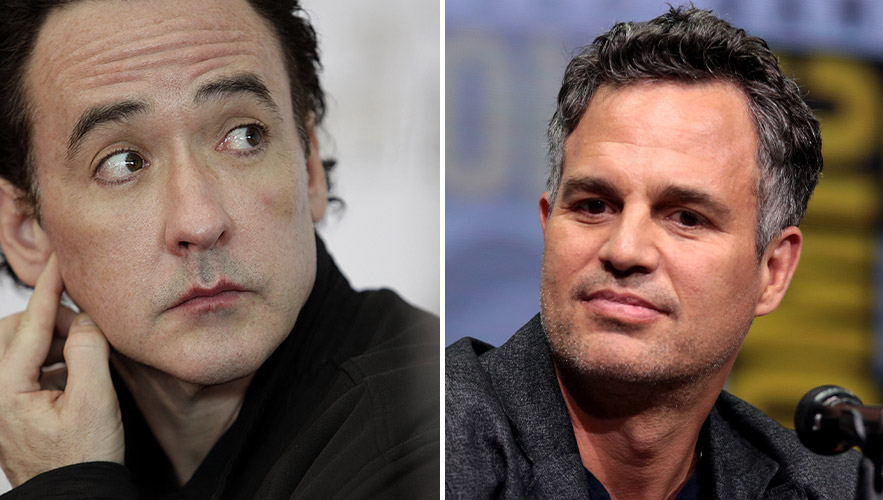
John Cusack has publicly sided with Mark Ruffalo after Paramount said Ruffalo invoked antisemitic tropes while attacking the Ellison family and Oracle. The celebrity dispute is unfolding inside a much larger fight over Paramount’s proposed Warner Bros. acquisition, which remains blocked by litigation and fresh settlement turmoil.
John Cusack offered a terse but unmistakable show of support for Mark Ruffalo over the weekend, writing “Solidarity — well said” after Ruffalo rejected Paramount’s characterization of his criticism as antisemitic. The exchange turned a Hollywood merger fight into a broader argument over Israel, corporate power, technology and the line between political criticism and antisemitism.
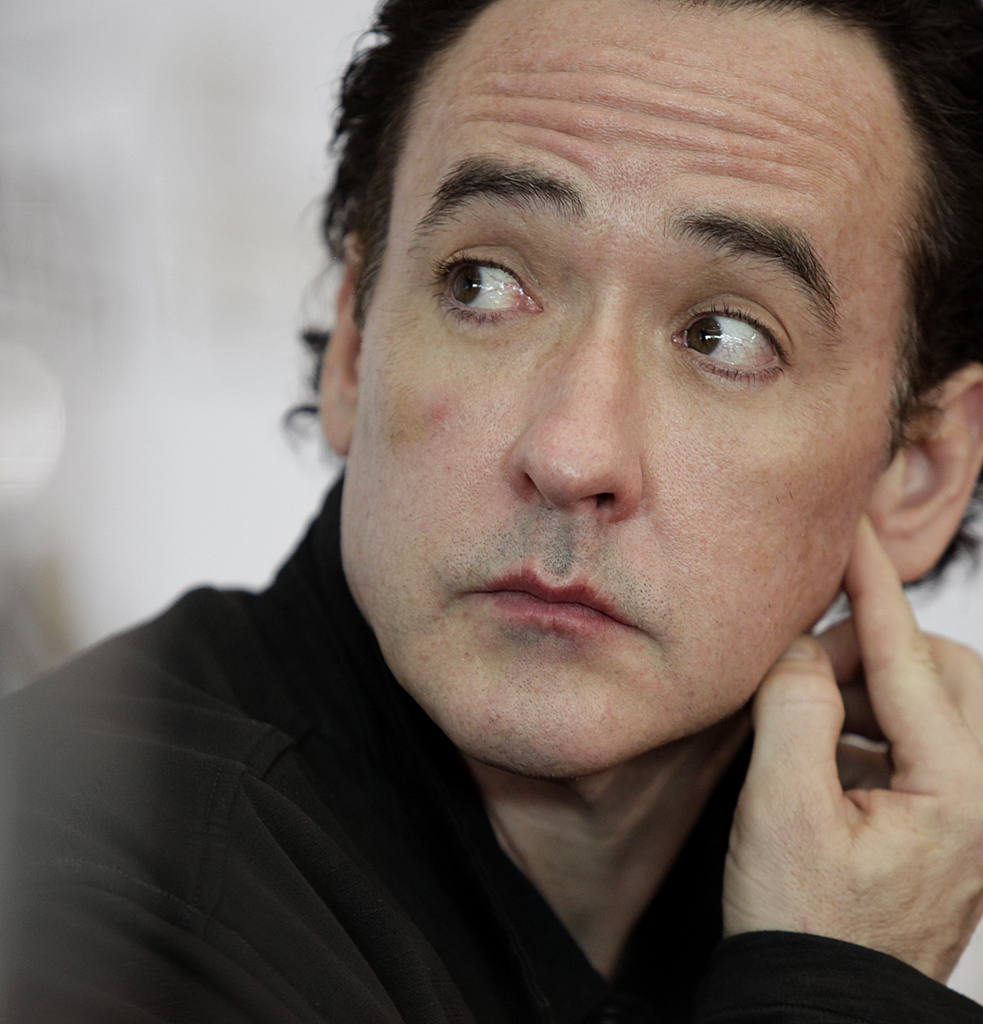

Ruffalo’s response came after Paramount said it was troubled by the use of “antisemitic tropes” in what the company described as a business dispute. Ruffalo denied hostility toward Jewish people and argued that criticism of Israel’s government, military technology contracts and corporate executives should not be conflated with antisemitism.
Cusack joins Ruffalo’s defense
Cusack did not offer a lengthy argument of his own. His post was essentially an endorsement of Ruffalo’s defense, making him one of the most recognizable actors to publicly stand with Ruffalo after Paramount’s unusually pointed corporate statement. Entertainment Weekly reported the exchange Monday as the controversy continued to spread beyond the original merger debate.
Ruffalo, meanwhile, framed the issue as one of political speech and corporate scrutiny. In his Saturday response, he called the accusation against him “appalling and fundamentally dishonest,” while stressing that his views came from his political convictions and should not be read as hostility toward Jewish people. He also emphasized the influence Jewish friends and colleagues have had on his life and work.
His defense did not retreat from the substance of his earlier criticism. Instead, Ruffalo returned to the proposed Paramount-Warner Bros. combination and argued that the public should examine the Ellison family’s wealth, Oracle’s government and surveillance businesses, and the consequences of concentrating major entertainment and news assets under one corporate structure.
What Ruffalo actually argued

_(cropped).jpg)
The confrontation began after Ruffalo shared a 2024 video clip of Safra Catz, Oracle’s former chief executive and current executive vice chair, discussing technology the company made available to support Israel after the Oct. 7, 2023 Hamas attacks. In the clip, Catz referred to some Oracle technology as “profoundly scary,” while saying there were details she could not discuss publicly.
Ruffalo used the clip to connect Oracle’s relationship with Israel to the financing and power surrounding Paramount’s Warner Bros. bid. He described Israel’s actions in Gaza as “genocide” and invoked “apartheid,” while portraying Larry Ellison and the companies around him as part of a broader concentration of economic, technological and media power. Those descriptions were Ruffalo’s political characterizations, not findings made in the merger litigation.
He also warned that technology associated with Oracle could ultimately sit alongside a much larger media empire if the Warner Bros. transaction closes. That argument blended several distinct issues — military technology, corporate finance, media ownership and editorial influence — that Paramount said should not be collapsed into an accusation against the company or its leaders.
Paramount’s response drew a line
Paramount answered Ruffalo with language that went beyond a standard merger rebuttal. A spokesperson said the company was troubled when “antisemitic tropes” were invoked in service of a business dispute and argued that the words “genocide” and “apartheid,” when applied in this context, were wrong and diminished the suffering those terms are meant to describe.
The company also said it did not tolerate prejudice against anyone. Paramount’s statement did not establish that Ruffalo holds antisemitic beliefs; it asserted that his rhetoric invoked antisemitic tropes. Ruffalo, in turn, treated that characterization as an accusation of antisemitism and rejected it directly. That distinction matters because the dispute is about the meaning and implications of his words, not a formal adjudication of his motives.
The argument has since drawn responses from Jewish advocacy organizations. Variety reported Monday that the Simon Wiesenthal Center praised Paramount for drawing a line against what it viewed as antisemitic messaging, while Creative Community for Peace also criticized Ruffalo’s rhetoric. Their statements add a significant counterweight to Cusack’s public support.
Oracle’s role needs precision
One detail in the public debate is easy to overstate. Oracle is not simply a private company “owned” by Larry Ellison. It is a publicly traded corporation. Ellison co-founded Oracle, serves as its executive chairman and chief technology officer, and remains deeply associated with the company, but Oracle and Ellison’s personal finances are not interchangeable.
That distinction also matters for the Warner Bros. deal. Securities filings show that the transaction is supported by a massive equity investment involving the Ellison family and RedBird Capital Partners. Earlier deal materials also described personal guarantees and financing commitments tied to Larry Ellison and the Ellison trust. The filings do not describe Oracle Corporation itself as the buyer of Warner Bros.
Catz’s position has changed as well. She stopped serving as Oracle’s CEO in 2025 and is now executive vice chair of Oracle’s board. She also serves on Paramount’s board, which helps explain why Ruffalo highlighted her remarks, but it is more accurate to describe her current roles than to present her as Oracle’s sitting chief executive.
That does not make Oracle irrelevant to the story. Larry Ellison’s fortune and influence are closely associated with the company he founded, and Catz bridges the two corporate worlds through her Oracle and Paramount board roles. But a connection between people and companies is different from evidence that Oracle itself is financing, buying or controlling Warner Bros.; the deal documents identify Paramount as the buyer.
Why the Warner deal matters
Paramount and Warner Bros. Discovery announced a definitive merger agreement in February. The companies valued Warner Bros. Discovery at about $110 billion on an enterprise-value basis, with Paramount agreeing to pay $31 per share in cash. The proposed combination would bring major film, television, streaming and news properties under the same corporate umbrella.
That scale is why the transaction has become a political and labor flash point independent of Ruffalo’s activism. California and 11 other states sued in July to block the deal, arguing that combining two of Hollywood’s five major film distributors and two major owners of basic cable channels would reduce competition. The states say the result could mean higher prices, fewer choices and weaker bargaining conditions for workers.
Paramount disputes that case and has argued that the combined company would be better positioned to compete with larger technology and streaming rivals. The federal Justice Department has already cleared the merger, and reports indicate it has also received major international approvals. But federal clearance did not end the matter because state attorneys general can bring their own antitrust challenge in court.
That means two statements can be true at once: the transaction has passed important regulatory reviews, and it still cannot close. The states are asking a federal court to block the combination under antitrust law. Their case is not an appeal from the Justice Department’s decision; it is a separate enforcement action seeking its own judicial remedy.
The merger is already stalled
The current legal status is more concrete than Ruffalo’s suggestion that regulators have simply failed to provide an answer. California Attorney General Rob Bonta’s office says Paramount and Warner Bros. agreed in July not to close the merger before June 1, 2027, or until after a court decision on the states’ claims, whichever comes first. A trial is expected in March 2027.
That pause creates real financial pressure. The merger agreement provides for additional payments to Warner Bros. shareholders if the transaction remains unclosed after Sept. 30. Reporting on the current dispute has estimated those “ticking” costs at roughly $650 million per quarter, giving Paramount a strong incentive to resolve the state litigation sooner rather than later.
The conflict intensified Monday when Bonta canceled a planned meeting with Paramount that had been intended to explore a possible settlement. Bonta accused the company of leaking and misrepresenting details from preliminary discussions and said his office would be willing to meet again when Paramount engaged sincerely. Paramount had not immediately commented on that accusation in Reuters’ report.
The July standstill agreement also clarifies what the current pause does and does not mean. It prevents the companies from completing the merger while the states’ challenge proceeds, but it is not a final ruling that the merger is unlawful. California said that if the states prevail, the deal would remain blocked pending an appeal; otherwise the litigation can continue toward a merits decision.
The politics now overlap
Ruffalo has been a visible opponent of the merger, but the court case does not depend on his objections. The states’ lawsuit advances antitrust claims about competition in film distribution and cable television. Those claims will rise or fall on evidence about markets, concentration and competitive effects, not on whether Ruffalo or Paramount wins the public argument over his posts.
Still, the timing has fused the two controversies. Ruffalo’s attack on Oracle and the Ellisons landed just as Paramount and California were maneuvering over settlement. The canceled meeting now underscores how combustible the broader dispute has become, even though Bonta’s stated reason for calling off talks concerned alleged leaks and negotiating conduct rather than Ruffalo’s comments.
That separation is important. It would be misleading to suggest that Cusack’s support, Paramount’s antisemitism allegation or the advocacy-group responses determine whether the acquisition violates antitrust law. They do, however, shape the public fight over who should control some of the country’s most influential entertainment and news brands.
What happens next
For Ruffalo, the immediate question is whether the dispute remains a social-media clash or produces consequences in his professional relationships. So far, the central verified development is rhetorical: Paramount condemned his language, Ruffalo rejected the charge, Cusack backed him, and Jewish advocacy groups have publicly criticized him. None of that by itself establishes an employment, contractual or legal sanction against the actor.
For Paramount, the higher-stakes issue remains the merger. The company still faces the 12-state lawsuit and a scheduled 2027 trial unless the parties reach another resolution. Reports say California has been considering structural remedies, including potential cable-channel divestitures and measures to preserve separation between major studio operations, but no settlement has been announced.
Cusack’s four-word intervention therefore matters less for its length than for what it signals: the fight is no longer confined to boardrooms, regulators and merger lawyers. It has become a public argument about Israel, antisemitism, corporate concentration and political speech, with Hollywood figures choosing sides while the transaction itself remains legally unresolved.
The clearest facts are narrower than the rhetoric. Paramount says Ruffalo invoked antisemitic tropes; Ruffalo denies antisemitism and says he is criticizing governments, contracts and executives; Cusack has publicly supported that defense. Meanwhile, the proposed Paramount-Warner Bros. merger has not closed, and the latest attempt to open settlement talks in California has fallen apart before it formally began.
Leave a Reply