
Mike Lindell did not submit the $825,000 required to launch a discretionary hand recount after his 45,401 vote loss to Lisa Demuth. His campaign says Minnesota unlawfully narrowed the recount, while state election rules expressly distinguish candidates who are and are not “subject of the recount.”
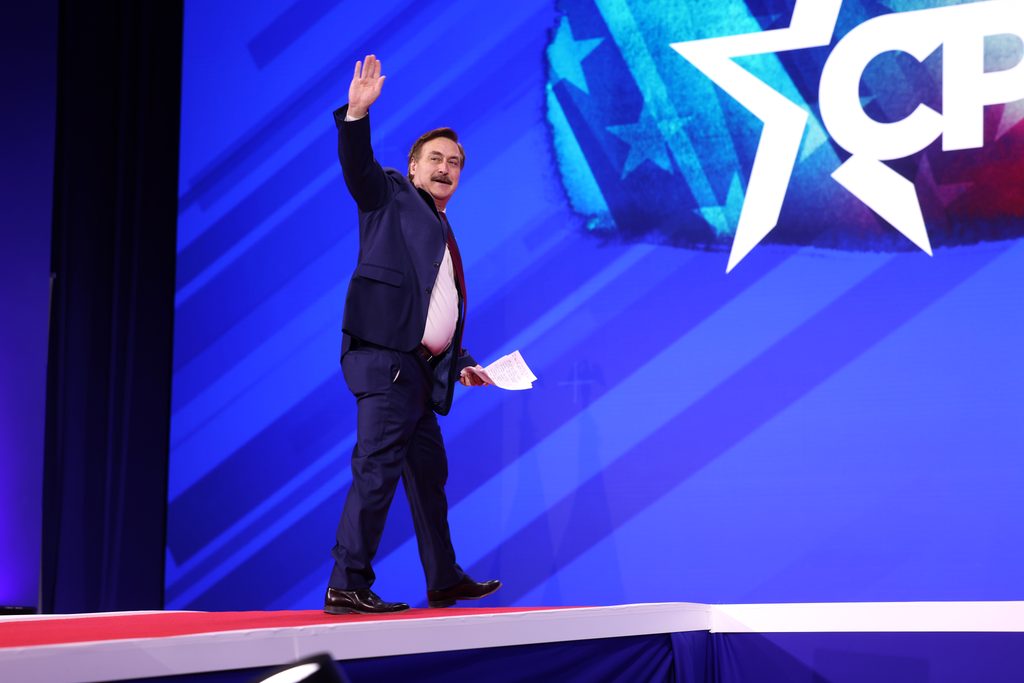
The deadline for Mike Lindell’s proposed Minnesota Republican gubernatorial recount has now passed without the payment state election officials said was required to begin it, turning what had been a planned statewide hand count into a dispute over election law and procedure.
Lindell’s campaign said Monday that the money was ready but was being withheld because it objects to the Secretary of State’s proposed recount scope. The campaign said it would seek court intervention and asked the state to suspend the deadline while the dispute is resolved. Minnesota officials maintain that their plan follows state law and long established recount procedures.
The deadline has now passed
Lindell announced on Aug. 19 that he intended to personally finance a statewide hand recount after losing the Aug. 11 Republican primary to Minnesota House Speaker Lisa Demuth. At the time, the Secretary of State’s Office estimated the process would cost roughly $825,000 and told him that both a formal request and the required financial security had to arrive by Monday, Aug. 24.
That requirement matters because Lindell’s defeat was nowhere close to Minnesota’s threshold for a taxpayer funded recount. State law provides public funding for certain state wide primary recounts when the margin is less than one quarter of 1% of the total votes counted for the nomination. Lindell’s deficit was nearly 11 percentage points.
The state’s posted results show Demuth and running mate Ryan Wilson with 179,683 votes, or 43.44%, compared with 134,282 votes, or 32.47%, for Lindell and Phillip C. Parrish. Kendall Qualls finished third with 88,413 votes. All 87 counties and all 4,105 precincts were reporting.
Because the gap was so large, Lindell’s only recount route was discretionary: Minnesota permits an apparent losing candidate to request another count at the candidate’s expense even when the result falls outside the automatic recount range.
Why Lindell rejected the plan
The new dispute is not primarily about whether Lindell can pay. His campaign says the $825,000 was available and ready to be transferred. Instead, it objected to how the Secretary of State’s Office said ballots would be classified during the recount.
According to Lindell’s campaign, state officials planned to separately tally votes for Demuth and Lindell while treating votes for the other Republican candidates differently. Lindell argues that because state law describes a recount as determining the votes validly cast “for the office or question to be recounted,” every gubernatorial primary candidate should receive a separate recount tally.
His campaign has gone further, arguing that ballots from the Democratic Farmer Labor gubernatorial primary should also be examined because they appeared on the same ballot form. It says its concerns involve patterns in election night reporting across multiple candidates rather than a discrepancy confined to the Demuth Lindell matchup. Those assertions remain campaign allegations, not findings by state election authorities.
The Secretary of State’s Office rejects the claim that it changed the rules improperly. Spokesperson Cassondra Knudson said the contingent plan was provided to Lindell after approval by the State Canvassing Board on Aug. 18 and described it as consistent with Minnesota law, administrative rules and recount plans used for roughly two decades.
What Minnesota law actually says
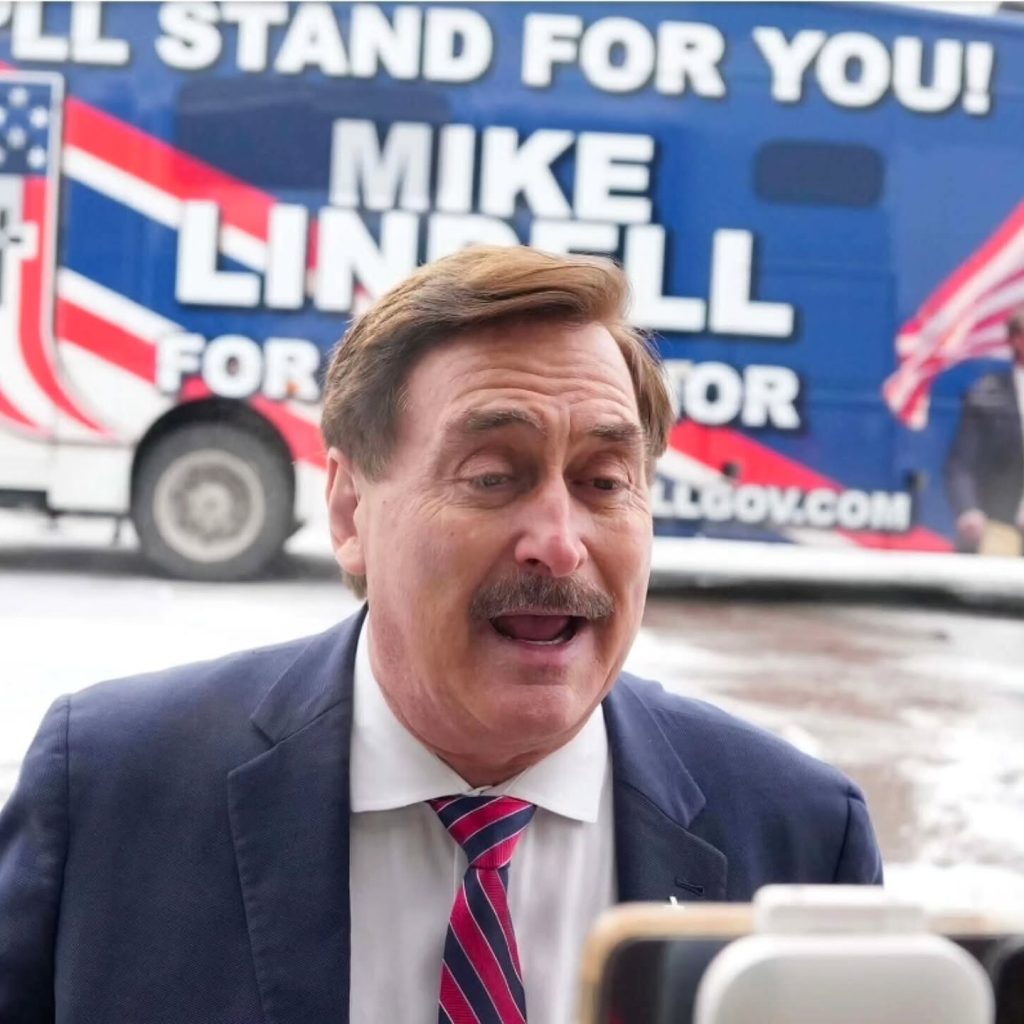
Minnesota Statute 204C.35 creates the discretionary recount process. A losing candidate in a state wide race may request a recount at the candidate’s own expense when the margin is too large to qualify for public funding. The candidate must also provide a bond, cash or surety in an amount set by the filing officer to cover recount expenses.
The statute then defines the recount’s scope. It says the process is limited to determining the number of votes validly cast for the office or question being recounted. It also restricts what may be considered to the ballots cast in the election and precinct summary statements certified by election judges.
Lindell’s argument emphasizes the phrase “for the office,” contending that a gubernatorial recount therefore must separately account for every candidate for that office.
But the statute does not stand alone. Minnesota’s administrative rules spell out how recount officials actually sort ballots, and that language is central to the state’s position.
Those rules instruct officials to create one pile for each candidate who is “the subject of the recount” and another pile containing all other ballots, including votes for other candidates, overvotes and undervotes.
That provision does not itself resolve any lawsuit Lindell may bring. It does, however, show why state officials say a recount can focus on particular candidates without separately tabulating every other candidate on the ballot.
A recount is not a broad audit
The distinction between a recount and an audit is also important because Lindell has frequently described the proposed effort using both terms.
Under Minnesota’s recount statute and rules, the process is tightly defined. Officials open secured ballot containers in public view, review ballots precinct by precinct and determine voter intent according to state counting standards. Candidates and their representatives may observe the sorting and challenge particular ballots under specified procedures.
The rules require the recount official to prepare results by precinct, and the proceedings must be accessible to the public. Candidates may station representatives where ballots are sorted and counted, but neither candidates nor members of the public may handle the election materials themselves.
What the process does not automatically become is an unrestricted forensic investigation of election systems, computer software or every fluctuation that appeared on an election night results website.
The statute specifically confines a recount to ballots and certified summary statements. Broader allegations about reporting systems or election administration may require a different legal vehicle, such as an election contest, rather than simply expanding the statutory recount beyond its defined boundaries.
Why the payment was required
Minnesota law puts the financial burden on candidates seeking discretionary recounts because their races fall outside the margins where the state automatically pays.
The requesting candidate is responsible for expenses including election officials and other personnel, supplies, travel, canvassing board costs and certain legal expenses associated with the recount. If the recount changes the winner, the jurisdiction conducting it assumes the cost instead. State law also provides another reimbursement mechanism when a manual recount uncovers a sufficiently large discrepancy from the reported count.
The Secretary of State’s general counsel estimated Lindell’s statewide recount at about $825,000. The office had already prepared a contingency plan naming Minnesota Elections Director Paul Linnell as the state recount official and allowing him to designate deputies and assistants for recount locations around Minnesota. The plan contemplated public and media access.
State recount guidance says an apparent losing candidate seeking a discretionary primary recount must submit the request and funds within five days of the canvass. Minnesota’s election contest statute likewise gives primary contestants five days after completion of the canvass to serve and file a notice of contest.
The anomaly claims remain unproven
Lindell began questioning the primary result on election night, saying he wanted time to investigate what he called anomalies. He did not provide evidence at that point demonstrating that fraudulent ballots, erroneous counts or other irregularities had changed the result.
His campaign now says it detected unusual patterns in electronic election night reporting across the Republican field and argues that examining only votes attributed to Lindell and Demuth would be insufficient to test those concerns.
That remains a claim by the campaign. No Minnesota election authority has announced a finding of fraud or a material counting irregularity in the gubernatorial primary, and no evidence cited publicly so far establishes that the 45,401 vote difference between Demuth and Lindell resulted from an inaccurate ballot count.
A hand recount could answer a narrower factual question: how the preserved paper ballots should be counted under Minnesota law. It would not necessarily validate every theory about temporary changes in election night reporting because the statutory process is not designed as a general investigation of every data system involved in publishing preliminary results.
That distinction is especially relevant here because Lindell has made eliminating electronic voting systems a broader political cause. The legal recount procedure, by contrast, is concerned with the ballots and election records Minnesota law identifies.
Demuth remains the GOP nominee
Nothing in Lindell’s announcement that he would seek court relief has displaced Demuth as the Republican nominee.
Minnesota law explicitly says that a discretionary recount of a primary must not delay delivery of the notice of nomination to the winning candidate. That means even a properly initiated candidate funded recount is not designed to freeze the remainder of the election calendar while the ballots are counted again.
Demuth is therefore moving toward the Nov. 3 general election against Democratic U.S. Sen. Amy Klobuchar, who overwhelmingly won the DFL gubernatorial primary. The state’s posted results show Klobuchar and running mate Ben Schierer receiving 615,040 votes, or 89.69%, in that contest.
The race is for an open governorship. Democratic Gov. Tim Walz announced in January that he would not seek a third term, creating a statewide contest without an incumbent governor on the November ballot.
For Lindell, the immediate issue is therefore no longer simply whether he wants a recount. The deadline passed without the payment Minnesota said was necessary to start one.
What happens next
Lindell’s campaign has said it is seeking a temporary restraining order or similar emergency relief to stop the missed payment deadline from ending his recount effort and to obtain a judicial ruling on the permissible scope.
A temporary restraining order, if requested, would be interim relief rather than a final decision that Lindell’s interpretation of recount law is correct. A court would still have to address the legal and procedural questions presented and determine what relief, if any, is available after the deadline.
The core dispute is unusually specific. Lindell says the statutory reference to votes cast for an “office” requires separate counting across a wider field. Minnesota officials point to recount rules that explicitly distinguish candidates who are subjects of a recount from “other candidates” whose ballots may be placed in a separate pile.
Until a court says otherwise or the state accepts a recount request under different terms, there is no active state wide Lindell recount underway. The development since his original announcement is therefore material: what was presented last week as a candidate funded hand count has become a legal fight over whether that count can still occur at all, and on what terms.
Leave a Reply