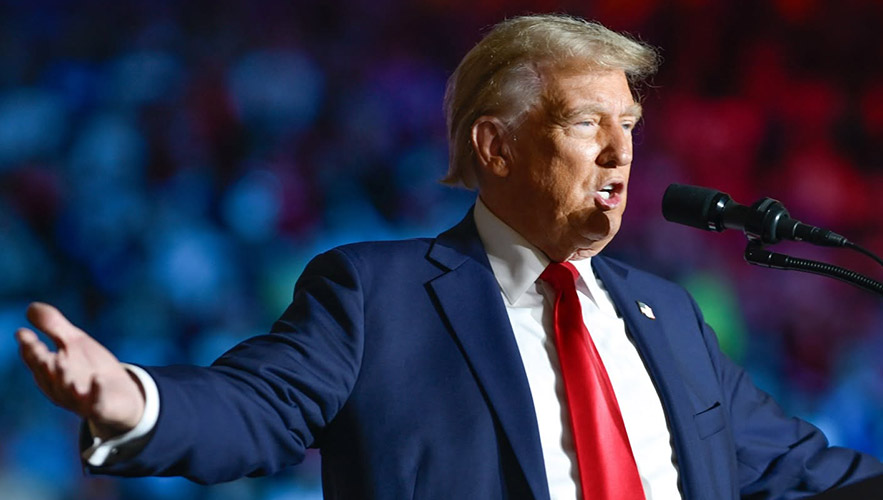
Texas Rep. Al Green’s H.Res. 1486 accuses President Donald Trump of abusing presidential power through immigration enforcement and shielding federal officers after four fatal encounters. The measure has been referred to the House Judiciary Committee; it is an impeachment allegation, not a House finding, and no vote has yet occurred.
Rep. Al Green of Texas filed a new article of impeachment against President Donald Trump on Aug. 24, centering his case on the administration’s use of Immigration and Customs Enforcement and Customs and Border Protection and on four fatal encounters involving federal immigration officers in 2026.
The filing gives Green another opportunity to press a cause he has pursued repeatedly across Trump’s two presidencies. But its immediate effect is limited: H.Res. 1486 has been referred to the House Judiciary Committee, and Green would still need the House to approve the article before Trump could be impeached on it.
What Green’s resolution alleges
The 27 page resolution contains a single article of impeachment. It argues that Trump violated his presidential oath by turning ICE and CBP into what Green calls unaccountable “paramilitary police forces,” and it accuses the administration of enabling constitutional violations, suppressing scrutiny and protecting officers involved in fatal encounters.
Green specifically names Renée Good, Alex Pretti, Lorenzo Salgado Araujo and Johan Sebastián Durán Guerrero. He characterizes their deaths as unjustified killings and says the administration participated in coverups by defending officers, disputing critics’ accounts and limiting access to evidence.
Those are Green’s allegations. The resolution itself does not establish criminal liability, and Congress does not need a criminal conviction to consider impeachment. The constitutional phrase “high Crimes and Misdemeanors” has historically encompassed alleged abuses of public office that are not necessarily defined as ordinary crimes.
The filing also broadens the argument beyond the four deaths. It accuses the administration of permitting masked enforcement, unlawful searches and detentions, attacks on speech rights and resistance to judicial oversight. In Green’s framing, the shootings are the most severe examples of a larger abuse of power case.
Why the shootings matter
The four deaths cited by Green have generated sharply disputed accounts, investigations and demands for additional evidence. That makes the wording important: describing all four as conclusively “unjustified killings” goes further than the publicly established status of every case.
Renée Good, a 37 year old U.S. citizen, was shot and killed by an ICE officer in Minneapolis on Jan. 7. Reuters’ analysis of available video found that the officer fired three shots and that the first was fired as Good’s SUV moved past him. The administration said the officer acted in self defense, while the shooting prompted intense scrutiny from lawmakers and civil rights advocates.
Alex Pretti, a 37 year old intensive care nurse, was killed by federal immigration officers in Minneapolis on Jan. 24. Video reviewed by Reuters showed Pretti holding a phone before officers pinned him down; federal officials said he was armed and resisted efforts to disarm him. His family continues to seek accountability while a federal civil rights investigation remains underway.
The significance of both cases for Green’s resolution is not simply that officers used deadly force. He argues that senior administration officials prejudged the events in public statements and then failed to provide the level of independent scrutiny that, in his view, the Constitution requires.
Houston case remains contested
Green’s resolution devotes substantial attention to the July 7 killing of Lorenzo Salgado Araujo in Houston, where the factual dispute is especially clear.
DHS initially said ICE officers were conducting a targeted enforcement operation and alleged that Salgado Araujo ignored commands, rammed an ICE vehicle and tried to run over an officer, prompting the officer to fire in self defence. The department later acknowledged that Salgado Araujo was not the person officers had originally been looking for.
Passengers in the van gave a different account. They said federal vehicles struck or boxed in the van and that the officer who fired was not directly in its path. Publicly available surveillance video did not resolve the exact moment of the shooting, and local officials pressed for access to more evidence.
The Harris County District Attorney’s Office has been investigating. Certifications issued in connection with two witnesses’ immigration applications identified them as victims of qualifying alleged crimes, but local reporting stressed that those certifications were not a final determination that an ICE agent committed murder or manslaughter.
That unresolved status is central to evaluating Green’s language. His impeachment article treats the killing as unjustified and the federal response as a coverup; the federal government has maintained a self defense account. An impeachment resolution can advance that accusation, but the accusation is not the same thing as a completed criminal or judicial finding.
Maine shooting adds scrutiny
Green also cites the July 13 death of Johan Sebastián Durán Guerrero in Biddeford, Maine. Associated Press reporting in August said Durán Guerrero, a 25 year old Colombian national, was not the subject of a removal order and had a pending asylum case and valid work authorization.
DHS said officers had been conducting surveillance connected to a person with a final removal order and that an officer fired after fearing for public safety. Rep. Chellie Pingree said information presented at an August hearing indicated agents were actually looking for Durán Guerrero’s roommate, not Durán Guerrero himself.
The Maine attorney general’s office has been investigating the shooting. As with the Houston case, that continuing investigation matters: Green’s resolution states a conclusion about the lawfulness of the shooting, while the official investigative process has not been presented as complete.
Taken together, the four cases give Green a factual basis for demanding congressional scrutiny of use of force policy, transparency and federal cooperation with outside investigators. Whether those facts support impeachment of the president is a separate constitutional and political judgment for the House.
Filing is not impeachment
The Constitution gives the House the sole power to impeach. In practice, the House must approve one or more articles by a simple majority. Only then is a president impeached and subject to a Senate trial. Conviction and removal require two thirds of senators present.
H.Res. 1486 has not crossed that threshold. Its latest listed action is referral to the House Judiciary Committee. That means Trump has not been impeached a third time by Green’s filing, and the resolution does not itself trigger a Senate trial.
Green has indicated that he wants more than a committee referral. In a July 16 House floor speech, he said articles would be brought “to a vote, not just filed.” He could seek to force House action through procedures he has used in earlier impeachment efforts, but whether and when that happens is not yet established.
The distinction is especially important because Republicans retain control of the House, albeit with a narrow majority, and Green’s previous second term efforts have fallen well short of adoption. The political obstacle is not merely a future Senate trial; it begins with assembling a House majority willing to impeach.
Green has tried repeatedly
The claim that this is Green’s ninth impeachment attempt is not supported by the clearest available chronology. A Houston Chronicle review in December 2025 counted six unsuccessful Green efforts through that point: three during Trump’s first term and three during the opening year of his second. Under that counting, the Aug. 24 filing is his seventh distinct effort.
During Trump’s first term, Green forced impeachment related House votes in December 2017, January 2018 and July 2019. Those resolutions were tabled or otherwise rejected. They were separate from the two impeachments that the full House later approved in 2019 and 2021.
Green resumed his campaign after Trump returned to office. He filed H.Res. 415 in May 2025 over alleged attacks on judicial independence and due process. In June, he brought H.Res. 537 over Trump’s military strikes on Iran without prior congressional authorization; the House voted 344 79 to table it, with 128 Democrats joining Republicans.
In December 2025, Green tried again with allegations involving threats toward lawmakers and pressure on federal judges. The House tabled that resolution 237 140, while 47 Democrats voted present. Democratic leaders at the time argued that impeachment should follow a fuller investigative process rather than an immediate floor confrontation.
A lame duck lawmaker’s last months
Green’s latest filing also comes after voters effectively set an end date for his congressional career.
The 78 year old lawmaker has represented a Houston area seat since 2005. Texas’ mid decade redistricting reshaped his long time 9th District and pushed him into a Democratic primary contest in the newly drawn 18th District against Rep. Christian Menefee, who had entered Congress after winning a special election.
Menefee defeated Green decisively in the May 26 Democratic runoff. Final Texas results show Menefee with 33,957 votes to Green’s 15,001. Green remains a sitting member of the 119th Congress through the end of his term, so losing the primary does not limit his power to introduce resolutions or participate in House proceedings during the remaining months.
His recent clashes with Republican leaders have made him one of the most visible Democratic protesters in the chamber. The House censured him 224 198 2 in March 2025 after he repeatedly interrupted Trump’s address to a joint session. In February 2026, he was escorted from the State of the Union after holding a sign reading “BLACK PEOPLE AREN’T APES!”
Those episodes are politically relevant to Green’s profile, but they do not determine the merits of H.Res. 1486. The new resolution must be judged on its claims, evidence and constitutional theory, not on whether lawmakers approve of Green’s protest tactics.
What happens next
As of Aug. 25, the immediate status is straightforward: Green has introduced H.Res. 1486, the measure has been referred to Judiciary, and the House has not voted to impeach Trump on it.
The more consequential question is whether Green will convert the filing into another privileged floor challenge. If he does, lawmakers could move to table it, refer it or allow a direct vote. His recent history suggests a tabling motion would be the most likely early test, but that outcome has not yet occurred.
The resolution also lands as Democrats debate how aggressively to investigate Trump if they gain control of the House after the 2026 midterms. Recent reporting indicates senior Democrats are emphasizing investigations and subpoenas before any new impeachment push, while some lawmakers want impeachment kept available if future evidence warrants it.
Green’s filing therefore matters in two different ways. Procedurally, it is a long shot resolution from a lame duck member in a Republican controlled House. Substantively, it puts four fatal immigration enforcement encounters, disputed official narratives and federal accountability at the centre of an impeachment argument that could outlast Green’s remaining months in Congress.
For now, however, the legal and political status should not be overstated. Green has accused the president of impeachable abuse of power. The House has not agreed with that accusation, the Senate is not considering a trial, and several of the underlying use of force cases remain contested or under investigation.
Leave a Reply