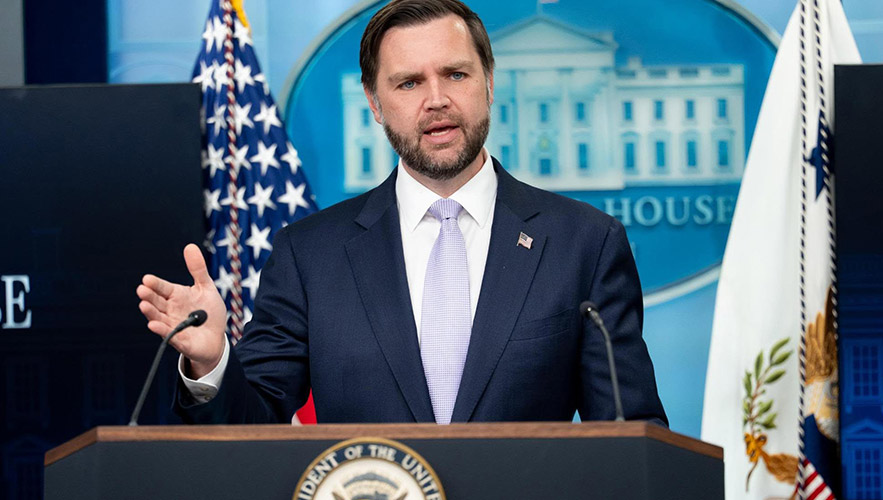
Vance immediately said calling Canada a “state” was an accident, but the remark landed amid President Donald Trump’s repeated sovereignty taunting rhetoric. A day later, Ottawa detailed retaliatory tariffs on C$27.6 billion of U.S. goods, pushing the dispute beyond verbal sparring.
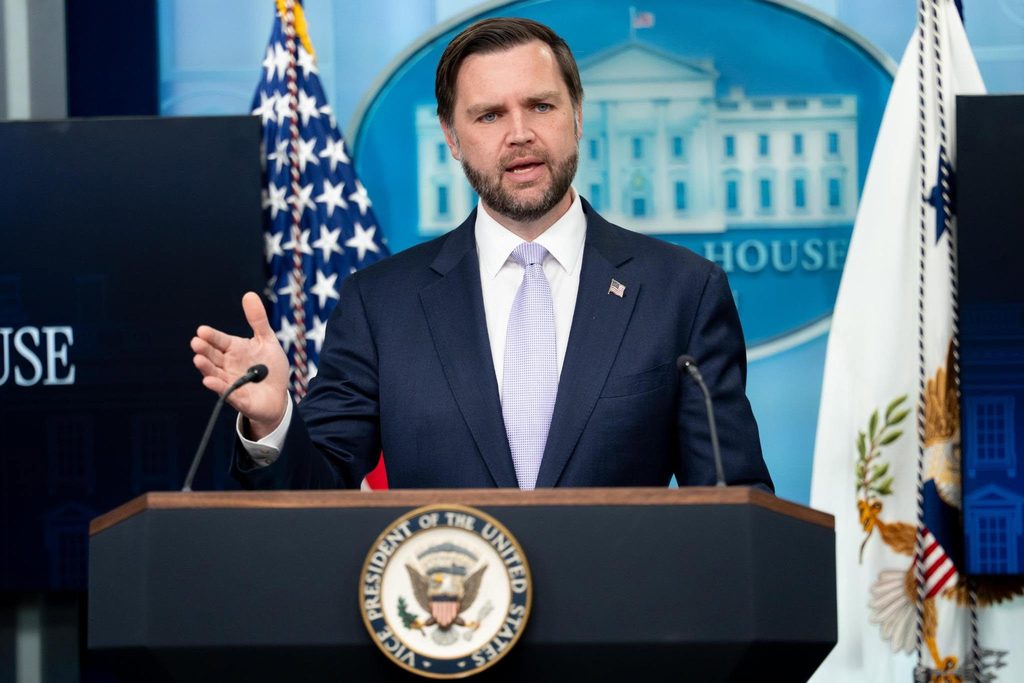
Vice President JD Vance briefly called Canada a “state” during an Aug. 24 campaign event in Brewer, Maine, then corrected himself as the audience laughed. “Sorry. Freudian slip,” he said, before adding that the wording had been accidental and that Canada is a country.
The exchange would normally be a fleeting verbal mistake. In the current U.S. Canada relationship, it carried more weight because Trump has repeatedly suggested Canada could become the 51st state, while the two governments are now imposing new tariffs after another round of negotiations collapsed.
What Vance actually said
Vance’s remark came during questions after a political rally where he urged voters to send former Maine Gov. Paul LePage to Congress. The vice president had spent much of the event promoting the Trump administration’s economic and anti fraud agenda and praising Republican Sen. Susan Collins, before a question turned to Canada.
He argued that Canada and China had been among the worst countries for U.S. trade policy, then said, “We have to remember, Canada is a state.” He corrected himself almost immediately, called it a “Freudian slip,” and said it was “actually an accident.”
Vance then returned to his substantive case against Ottawa. He accused Canada of imposing unfair tariff and non tariff barriers on Maine products, serving as a “backdoor” for Chinese goods and bringing what he called unreasonable demands into the final stage of trade talks. He said he had believed the two sides were close to a deal.
Those assertions are the Trump administration’s account of the negotiations, not jointly established findings. Canada has offered a sharply different version, saying Washington changed its terms and sought concessions Ottawa considered incompatible with its economic interests and sovereignty.
Why the slip carried weight
Vance’s correction matters: there is no basis to treat the mistaken word itself as proof that the administration has adopted a formal policy to annex Canada. The significance comes from the political context surrounding it, not from pretending a verbal stumble changed Canada’s legal status or U.S. policy.
Trump repeatedly raised the idea of Canada becoming a U.S. state after returning to office in 2025. When Prime Minister Mark Carney visited the White House in May 2025, Carney said Canada was not for sale. Trump answered, “Never say never,” keeping the sovereignty dispute alive even during a formal bilateral meeting.

The rhetoric became politically consequential inside Canada. In the April 2025 federal election, Carney’s Liberals won 168 seats and formed a minority government, while the Conservatives won 144. Conservative leader Pierre Poilievre also lost his Carleton seat. Reuters reported that backlash to Trump’s tariffs and 51st state comments helped fuel the Liberal comeback.
That does not mean Trump alone determined the Canadian election; campaigns turn on multiple issues, candidates and regional dynamics. But the sovereignty debate became a central part of the political environment, which is why Vance’s one word mistake was more combustible than an ordinary speaking error.
The tariff fight is now concrete
The dispute has also moved beyond rhetoric. In July, the Trump administration invoked Section 338 of the Tariff Act of 1930 to impose additional duties of 50% on nearly $20 billion in Canadian imports, citing what U.S. officials described as discriminatory Canadian treatment of American vehicles, alcohol and dairy products.
The White House briefly delayed the new duties for three days while negotiators tried to finish an agreement. That pause expired, and the tariffs took effect Aug. 22 after talks failed. Canada then suspended negotiations and promised a dollar for dollar response.
Section 338 is an old trade law tool that allows a president, after finding discriminatory treatment of U.S. commerce, to impose additional duties of as much as 50%. The administration used it here through separate actions involving vehicles, alcoholic beverages and dairy. Its revival adds a distinct legal mechanism to a dispute already layered with other sectoral tariffs and uncertain North American trade rules.
On Aug. 25, Ottawa supplied the details. Canada said it will impose tariffs of 15%, 25% and 50% on U.S. products covering C$27.6 billion in imports, about US$20 billion. The measures begin Sept. 8 and include steel, dairy, appliances, agricultural equipment, pulp and paper, electronics, seafood, furniture and clothing.
Canada also announced C$7.5 billion in new and enhanced support for affected workers and businesses. Existing Canadian counter tariffs, including measures on autos, remain in place. That announcement materially changes the story from a threatened retaliation to a scheduled, itemized policy response.
Both governments blame the other
Vance told the Maine audience that Canada had introduced “a bunch of unreasonable last minute demands” after the sides had come close to an agreement. U.S. Trade Representative Jamieson Greer has likewise accused Canada of maintaining discriminatory barriers that disadvantage American exporters.
Carney has framed the breakdown in almost opposite terms. In an Aug. 21 statement, he said Canada had sought to preserve broad tariff free access, reduce U.S. tariffs on strategic industries and protect its freedom to set its own economic policy. He said the latest U.S. terms asked too much while offering too little.
The public record confirms that intensive negotiations occurred and that no deal was reached. It does not, by itself, settle every claim about who changed which position at the last moment. Those details remain competing accounts from the parties to the negotiation and should be described that way.
What is no longer uncertain is the immediate policy result: the U.S. tariffs are in force, Canada has published its countermeasures, and the Canadian tariffs are scheduled to begin Sept. 8 unless the governments alter course before then.
Maine sits near the fault line
Brewer was a particularly pointed place for Vance to make the administration’s trade case. Canada is Maine’s largest goods export market. U.S. Trade Representative data show Maine exported about $1.3 billion in goods to Canada in 2025, representing roughly 41% of the state’s total goods exports.
Collins has warned that tariffs can cut in both directions for her state. After the talks broke down, she said Maine imports about $2 billion in non petroleum products from Canada each year and argued that tariffs could raise costs for families and businesses that lack easy domestic substitutes.
Canada’s new list adds another layer of exposure because it includes tariffs on categories such as seafood, steel, paper related goods and other products important to cross border commerce. The precise effect will depend on individual tariff codes, sourcing decisions, exemptions and whether businesses can reroute supply chains.
The politics are equally immediate. LePage, a former two term governor, is the Republican nominee for Maine’s open 2nd Congressional District seat. He faces Democrat Matt Dunlap after Democratic Rep. Jared Golden decided not to seek re-election. Republicans view the district as a major pickup opportunity in the November midterms.
Vance’s defense claim needs context
Vance also said Canada had “underinvested” in its military and argued that the country would be vulnerable without the U.S. security umbrella. The first part reflects a long running American complaint about allied burden sharing, but Canada’s current spending position is different from where it stood only a few years ago.
Canada’s Department of National Defence says the country reached NATO’s benchmark of spending 2% of gross domestic product on defence in fiscal 2025 26, with more than C$63 billion in defence related spending. Canada and other NATO allies have also committed to a broader 5% defence and security investment target by 2035.
The security relationship is also more integrated than a simple protector client description suggests. Canada and the United States jointly operate the North American Aerospace Défense Command, or NORAD, a binational command established in 1958 for aerospace warning, aerospace control and maritime warning across North America.
That does not erase the enormous imbalance in military size and capability between the two countries, nor does it invalidate arguments over whether Canada should spend more. It does mean Vance’s claim is best understood as political criticism of burden sharing rather than a complete description of how continental defense actually works.
Trade fairness is more complicated
Vance used dairy as a concrete example, contrasting duty free Canadian products entering Maine with Canadian tariffs that can rise above 200% on some U.S. dairy goods. Canada does maintain very high over quota dairy tariffs under its supply management system, while current trade agreements also provide specific quantities of preferential dairy access.
But tariff rate quotas matter. Canadian government guidance explains that imports within those quotas face zero or low rates up to a specified quantity, while imports beyond that access level face higher rates. Treating the maximum over quota tariff as the rate paid on every American dairy shipment would oversimplify the system.
The broader trade relationship is similarly hard to reduce to one tariff number. USTR data show U.S. goods and services trade with Canada totaled about $872.3 billion in 2025. The United States ran a goods deficit with Canada but a services surplus, reflecting the scale and integration of the relationship.
That interconnectedness is why retaliation can affect firms far from the negotiating table. Tariffs are collected from importers in the country imposing them, and those costs can be absorbed, passed through to customers or redistributed along a supply chain. The eventual burden varies by product and market conditions.
The next move matters more
The most important development after Vance’s “state” remark is therefore not the gaffe itself. It is that the diplomatic language and the tariff policy are escalating at the same time, with both governments tying trade demands to larger questions about sovereignty, fairness and the future shape of the bilateral relationship.
Carney’s government has now moved from promising retaliation to publishing it. Trump, meanwhile, continued the rhetorical pressure on Aug. 25 by saying he was considering renaming Lake Ontario “Lake America,” another remark that Canadian officials could hardly separate from the broader sovereignty dispute.
For Maine, the stakes are practical as well as symbolic: its largest export market sits across the border, and its political candidates are fighting over how Washington’s tariff strategy will affect workers, producers and household costs. For Canada, the dispute is increasingly framed as a test of whether economic integration can continue without sacrificing policy independence.
Vance said his description of Canada as a state was accidental, and the evidence supports reporting it as a corrected verbal slip rather than an official declaration. What makes the moment consequential is everything around it: a history of 51st state rhetoric, failed negotiations, tariffs already in effect and Canadian retaliation now set for Sept. 8.
Leave a Reply