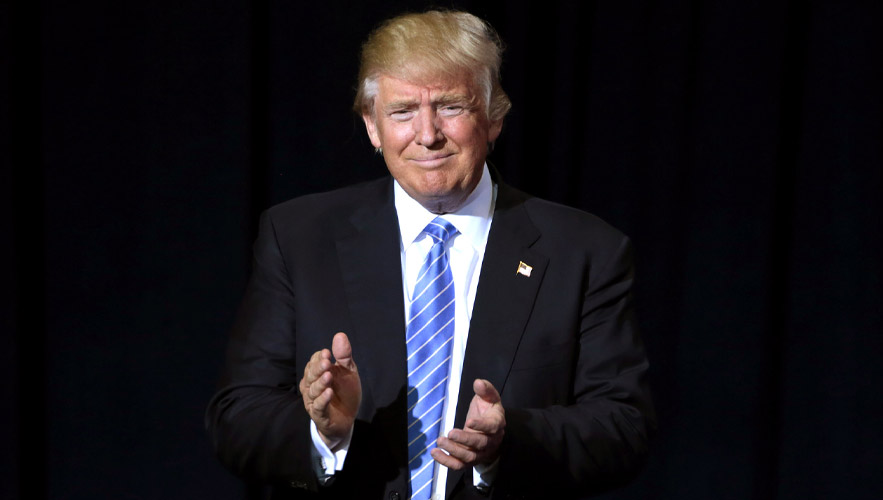
President Donald Trump has long described himself as a short sleeper, but the public evidence is older than many recent headlines imply. Sleep research supports concern about chronic short sleep in most adults, yet it does not establish that Trump currently sleeps four hours or is experiencing accelerated aging.

Donald Trump’s reputation for sleeping only a few hours a night dates to his first term. In a February 2017 Fox News interview, he said he worked until midnight or 1 a.m. and got up at 5. The following year, White House physician Ronny Jackson estimated that Trump slept “four to five hours a night,” while acknowledging that he had not directly asked him and could be wrong.
That history has renewed interest now that Trump is 80, an age at which sleep quality, cardiovascular health and cognitive function receive closer scrutiny. But an important limitation comes first: Trump’s May 2026 medical report did not disclose his current bedtime, wake time, total sleep duration, sleep quality or whether he has insomnia or sleep apnea. It therefore cannot confirm that his 2017 pattern continues today.
Four hours is below guidance
For most adults, four or five hours of sleep is well below the amount recommended by major health organizations. The American Academy of Sleep Medicine and Sleep Research Society recommend at least seven hours a night on a regular basis for healthy adults, while the National Institute on Aging says older adults generally need about seven to nine hours.
Age does not eliminate the need for sleep. Older adults often experience lighter sleep, earlier sleep timing, more awakenings and a higher prevalence of conditions that can disrupt sleep, but the National Institute on Aging explicitly rejects the idea that people simply need dramatically less sleep as they get older.
The reason is broader than feeling rested the next morning. Sleep helps regulate attention, memory, metabolism, immune function, blood pressure and cardiovascular repair. The National Heart, Lung, and Blood Institute says chronic sleep deficiency is linked with heart disease, high blood pressure, diabetes, stroke, obesity and depression.
Those associations do not mean that every person who sleeps five hours will develop those conditions, or that sleep duration alone determines an individual’s health. Diet, exercise, genetics, medications, medical conditions, stress, sleep quality and sleep disorders all matter. Still, a persistent four hour schedule would put most adults well outside the range considered optimal.
Trump’s current health report matters
Any discussion of Trump’s sleep has to be reconciled with what his current physicians have actually reported. On May 26, 2026, Trump underwent an annual medical examination at Walter Reed National Military Medical Center. The White House released the physician’s summary three days later. At the time of the exam, Trump was 79; he turned 80 on June 14.
The report listed a blood pressure of 105/71, a resting heart rate of 73 and a weight of 238 pounds. It said coronary CT angiography showed no arterial obstruction or structural heart abnormality, an echocardiogram was normal, laboratory testing was within stated reference ranges, and a neurological examination found normal mental status, strength, sensation, gait and balance. Trump scored 30 out of 30 on the Montreal Cognitive Assessment.
His physician, Navy Capt. Sean Barbabella, concluded that Trump remained in “excellent health” and was fully fit to carry out presidential duties. The report also noted slight lower leg swelling that had improved from the previous year and hand bruising attributed to frequent handshaking while taking aspirin.
None of those findings proves that very short sleep would be harmless for Trump. But they do make it inappropriate to claim, from his old sleep comments alone, that he is currently suffering cardiovascular injury, cognitive decline or accelerated aging. A population level risk is not the same thing as a diagnosis in one person.
“Accelerated aging” needs context
The phrase “accelerated aging” sounds more definitive than the science usually allows. Researchers can estimate biological aging through measures such as DNA methylation patterns, telomere length and other molecular markers. These tools are useful for studying groups, but they are not equivalent to a clinical verdict that an individual is aging faster because of one habit.
There is evidence connecting short or disturbed sleep with some aging biomarkers. A study of nearly 3,800 adults ages 56 to 100 found that sleeping less than six hours was associated with acceleration on one epigenetic aging measure, GrimAge. Insomnia was also associated with a smaller increase. The study was observational, which means it could identify associations but not prove that short sleep caused the molecular differences.
Experimental research adds some biological plausibility. In a small study of adults ages 61 to 86, one night of partial sleep deprivation changed gene expression patterns related to DNA damage responses and cellular senescence. More recently, a randomized crossover trial in 60 healthy adults found that six weeks of mild sleep restriction was associated with changes in DNA methylation, including in circadian genes, although the authors said replication was needed.
The responsible takeaway is narrower than “four hours causes accelerated aging.” Chronic inadequate sleep may contribute to biological processes associated with aging, and several studies link poor sleep with aging related biomarkers. That does not establish that Trump has those changes, nor does it quantify what four hours would do to him personally.
Heart risk is better established
The cardiovascular evidence is more mature. The American Heart Association now includes sleep among its Life’s Essential 8 measures of cardiovascular health and recommends that adults aim for seven to nine hours a night. Its 2025 scientific guidance also emphasizes that sleep health is multidimensional: duration, regularity, timing, quality, efficiency and sleep disorders all matter.
The National Heart, Lung, and Blood Institute says insufficient sleep can affect blood pressure, glucose regulation, appetite hormones, immune function and the repair of the heart and blood vessels. Over time, sleep deficiency is associated with higher risks of hypertension, heart disease, obesity, diabetes and stroke.
That framework is especially relevant for an older adult because baseline cardiovascular risk rises with age. Even so, Trump’s latest disclosed cardiac testing was reassuring. The scientific evidence supports saying that chronic short sleep is a cardiovascular risk factor in general; it does not support saying that his past sleep schedule has already damaged his heart.
A risk factor raises probability across populations; it does not establish disease in a particular person.
Natural short sleepers do exist
There is a genuine exception to standard sleep duration patterns: familial natural short sleepers. Researchers have identified rare variants in genes including BHLHE41, also known as DEC2, as well as ADRB1, NPSR1 and GRM1 in families whose members naturally sleep less than average without the usual signs of sleep deprivation.
The original DEC2 work described a mutation associated with a human short sleep phenotype. Later research found another BHLHE41 variant in a twin who slept less, needed less recovery sleep after deprivation and showed fewer performance lapses than the noncarrier twin. These findings helped establish that sleep need has a genetic component.
But “natural short sleeper” is not a label that can be assigned simply because someone says they function well on little sleep. A large 2022 population study involving more than 190,000 people found that previously reported rare sleep related variants were often not strongly associated with the extreme sleep traits when identified incidentally in the general population. The genetics are more complicated than a single mutation guaranteeing a four hour requirement.
There is no public evidence that Trump has undergone genetic testing showing a natural short sleep variant. Jackson’s 2018 remark that Trump seemed to be someone who did not require much sleep was an observation, not a genetic or sleep medicine diagnosis.
Performance can hide sleep debt
Another complication is that people are not always good judges of how sleep loss affects them. The NHLBI notes that a common myth is that people can train themselves to get by on very little sleep without consequences. Repeated sleep deficiency can impair focus, reaction time, learning and decision making even when the person feels accustomed to the schedule.
That does not justify speculating about Trump’s behavior, judgment or cognition from afar. His 2026 physician’s report described normal neurological findings and a perfect score on a cognitive screening test. A sleep schedule alone cannot establish cognitive impairment, and the Montreal Cognitive Assessment is not a measurement of sleep need.
The more useful point is general: high performance in a demanding job does not prove that unusually short sleep is biologically optimal. Some people tolerate sleep loss better than others, and rare people may naturally require less. For most adults, however, sustained sleep restriction carries measurable performance and health costs.
Sleep “hacks” are not substitutes
The popular phrase “sleep hacking” can make sleep sound like a system that can be compressed through clever routines, technology or breathing tricks. Sleep specialists generally focus instead on adequate opportunity for sleep, regular timing, good sleep quality and identifying disorders such as insomnia or obstructive sleep apnea.
Evidence backed habits are comparatively unglamorous. The National Institute on Aging recommends a regular sleep schedule, limiting late day naps, reducing screens in the bedroom, exercising regularly while avoiding late intense activity, and avoiding caffeine, alcohol and large meals late in the day. A quiet, comfortable sleeping environment also helps.
Some online trends deserve more caution. Mouth taping, for example, has been promoted as a way to encourage nasal breathing. A 2025 systematic review found only 10 eligible studies involving 213 patients and concluded that indiscriminate mouth taping could pose serious risks, particularly when nasal obstruction is present. The evidence was too limited to support it as a routine sleep remedy.
For persistent snoring, gasping, daytime sleepiness, insomnia or unexplained fatigue, the more evidence based approach is medical evaluation rather than trying to force the body into needing less sleep.
What can actually be concluded
Trump’s old comments make him an unusually visible example of a common question: can some people thrive on far less sleep than everyone else? Science says yes, probably, for a small subset of natural short sleepers. It also says most adults should not assume they belong to that group.
What is publicly known about Trump is limited. He said in 2017 that he sometimes worked until around midnight or 1 a.m. and rose at 5. Jackson estimated in 2018 that he slept four to five hours. The most recent detailed White House physical, released in May 2026, reported strong cardiac, pulmonary, neurological and cognitive findings but did not provide a current sleep history.
So the strongest defensible conclusion is not that Trump’s nighttime routine is accelerating his aging. It is that if an 80 year old—or almost any adult—regularly sleeps only four or five hours without being a true natural short sleeper, that pattern falls below established guidance and is associated with meaningful long term health risks.
The science supports concern about chronic short sleep. It does not support diagnosing the president from a decade old bedtime anecdote.
Leave a Reply