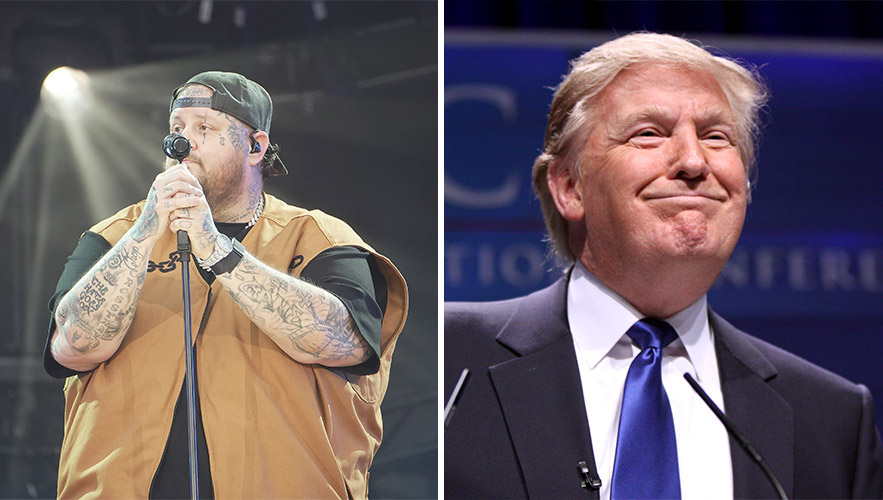
Jelly Roll used his first night guest hosting Jimmy Kimmel’s show to unload on President Donald Trump with jokes about an IndyCar appearance, weight and polling. The surprise among some viewers says as much about assumptions surrounding the country star’s politics as it does about the monologue itself.
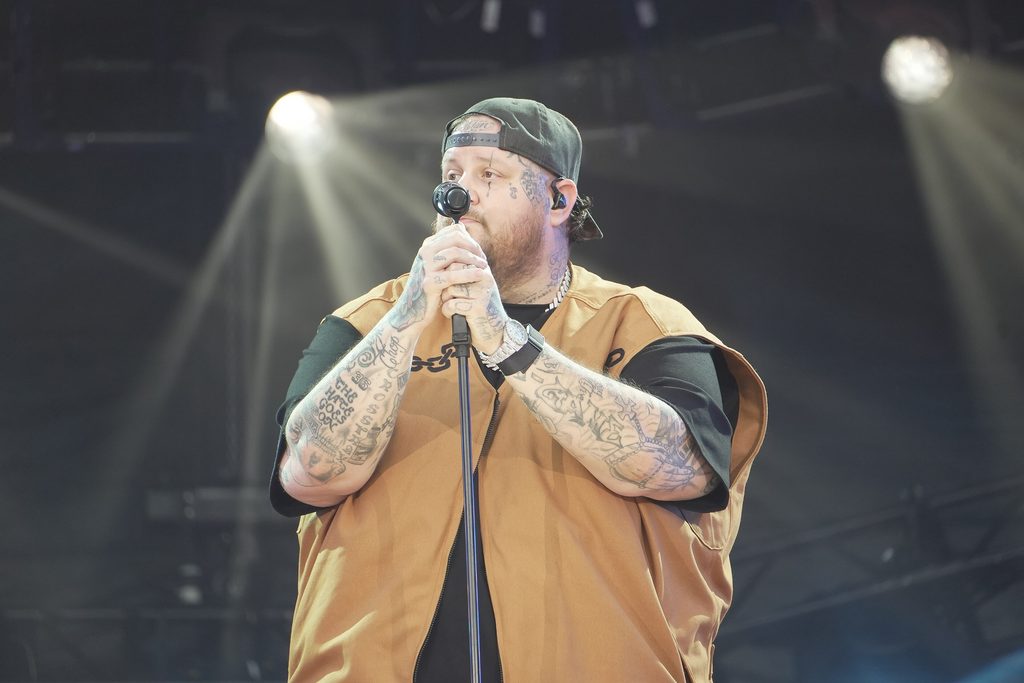
Jelly Roll did not ease into politics when he returned to guest host Jimmy Kimmel Live! on Monday, August 24. The country singer opened a run of four scheduled nights in Kimmel’s chair with jokes aimed directly at Trump, turning footage from the president’s Freedom 250 Grand Prix appearance into material about race, fitness and public approval.
The performance drew attention because it collided with an image that has followed Jelly Roll for nearly two years: that he is sympathetic to Trump or at least comfortable in Trump aligned cultural spaces. That impression has been fueled by a friendly 2024 encounter with Trump and his participation in the Kid Rock linked Rock the Country festival. But Jelly Roll has repeatedly resisted being assigned a party label.
The monologue went straight at Trump
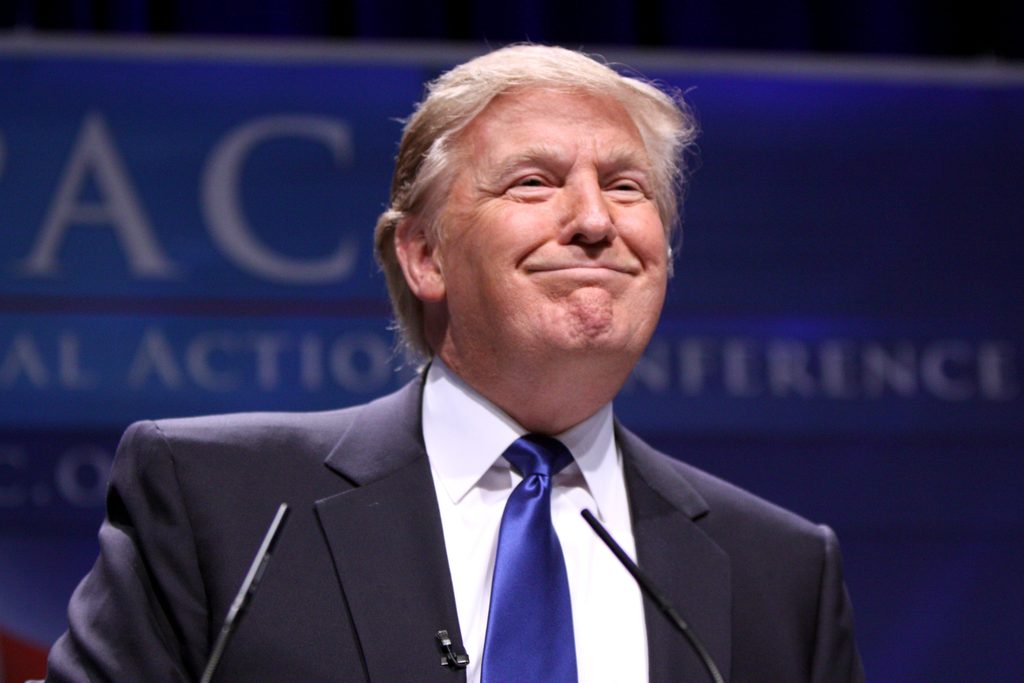
ABC had announced Jelly Roll as guest host for Monday through Thursday while Kimmel remained away. In the official Jimmy Kimmel Live! video, Jelly Roll first joked about his own unfamiliarity with wearing a suit, then pivoted to what he called the weekend’s “main event”: the inaugural IndyCar race through Washington, D.C.
He mocked Trump’s flag waving, played on the word “race” and joked about the president’s ceremonial motorcade lap. Then he shifted to Trump’s weight, comparing the president’s reported figure with his own dramatic weight loss and using both as the setup for a polling punchline.
The sequence ended with a montage of past clips showing Trump insulting other people’s weight. Jelly Roll used that contrast for the segment’s harshest line, describing himself and Trump in similarly self deprecating terms before making an explicit joke about physical fitness.
The setting matters. This was an opening monologue on a professionally produced late night comedy show, not an unscripted campaign speech or formal endorsement. The jokes were unmistakably hostile to Trump, but the performance alone does not establish that Jelly Roll has adopted a particular party affiliation.
The IndyCar setup was real
Trump attended the Freedom 250 Grand Prix in Washington on Sunday, August 23, an event created as part of the United States’ 250th anniversary celebrations. IndyCar lists it as a 2026 race on the Streets of Washington, and Trump had directed planning for it through an executive order earlier in the year.
The White House published photographs of Trump and first lady Melania Trump greeting drivers and taking a ceremonial motorcade lap. IndyCar separately posted video of the president waving the green flag to start the race. The Associated Press likewise reported that the Trumps completed the slow ceremonial lap in the presidential limousine.
That made the weekend spectacle ready made late night material. Jelly Roll’s “lap of honor” joke was built around an actual ceremonial feature of the event rather than an invented anecdote. The punchlines were comedy; the presidential appearance and lap were documented facts.
Trump’s weight gain was documented
The monologue’s weight premise also had a factual basis, though the comedy exaggerated its meaning. Trump’s May 26 physical at Walter Reed National Military Medical Center listed him at 238 pounds and 75 inches tall, 14 pounds above the 224 pounds recorded at his April 2025 physical.
The May 2026 report from physician to the president Capt. Sean Barbabella said Trump remained in “excellent health” and was fully fit to perform presidential duties. It also said preventive counseling included guidance on diet, increased physical activity and continued weight loss. At the listed height and weight, Trump’s body mass index is about 29.7, just below the standard threshold of 30 for obesity.
Jelly Roll turned those numbers into a joke by saying Trump was nearing 240 pounds and contrasting that with his own transformation. The singer has publicly discussed losing close to 300 pounds; when he appeared on Jimmy Kimmel Live! in May, the show described him as having lost “almost 300 pounds.”
The distinction is important. Trump’s 238 pound weight and 14 pound increase came from a White House medical report. The suggestion that doctors broadly fear for his health was more interpretive: his physician gave lifestyle guidance while simultaneously declaring his overall health excellent.
The polling joke had fresh context
Jelly Roll also joked that after losing the equivalent of “an entire Donald Trump,” much of the country appeared to want to do the same based on the president’s approval ratings. That was a punchline, not a statistical claim, but it landed during a genuinely weak period for Trump in national polling.
A Reuters/Ipsos poll conducted August 21 through 24 found 33% of U.S. adults approved of Trump’s job performance while 64% disapproved. Reuters said the 33% figure matched the lowest level it had recorded for Trump across either of his presidencies. The survey included 1,215 adults and had a margin of error of about three percentage points.
No single survey is a complete measure of the electorate. Pew Research Center, for example, reported 34% approval in a July survey and described Trump’s rating as low by historical standards for that stage of a presidency.
That context makes the line recognizable as topical comedy built on real polling weakness. It does not mean “most of the country” literally wants to remove Trump from office, and an approval poll is not an election result.
Why some viewers assumed MAGA ties
The surprise online was not invented out of nowhere. Jelly Roll has appeared in settings many fans associate with Trump’s political coalition, and those appearances have repeatedly generated speculation about his beliefs.
The most prominent example came in November 2024, when Jelly Roll met Trump at UFC 309 at Madison Square Garden shortly after Trump won the election. Video and photographs showed the singer smiling, shaking Trump’s hand and speaking with him. Some viewers interpreted the warmth as political support.
Jelly Roll pushed back on that interpretation during a December 2024 appearance on Bunnie Xo’s Dumb Blonde podcast. He said meeting a president elect was an honor and explained that he would also have stopped what he was doing to meet then President Joe Biden. His point was that the office, not party agreement, explained his reaction.
A second round of backlash came in early 2026 after Jelly Roll was announced for Rock the Country, a touring festival co founded by Kid Rock, one of Trump’s most vocal celebrity supporters. The lineup included several performers publicly identified with Trump, and some fans treated Jelly Roll’s participation as further evidence of MAGA alignment.
But sharing a festival bill is not the same as making a political endorsement. Rock the Country’s current 2026 listings show Jelly Roll among performers at selected stops, while his public comments about party identity have remained more cautious.
Jelly Roll has rejected party labels
The clearest evidence of Jelly Roll’s stated political identity came in January 2024, when he testified before the Senate Banking Committee at a hearing on fentanyl. He described himself as having “no political alliance,” said he was neither a Democrat nor a Republican, and argued that fentanyl deaths transcended party ideology.
That statement came in a formal congressional setting. Jelly Roll, whose legal name is Jason DeFord, was appearing as an artist and philanthropist to discuss addiction, drug trafficking and his own history with the criminal justice system.
His December 2024 podcast comments were consistent with that testimony. He said he did not know enough about politics to pretend he understood every candidate’s policy positions and described his family as one that taught respect for the president without creating a strong voting culture.
Those comments do not reveal every private preference or prevent him from changing his mind. They do make it inaccurate to present “Jelly Roll is MAGA” as an established fact. The public record supports a narrower description: some fans have perceived him as Trump aligned, while Jelly Roll has repeatedly rejected a formal partisan identity.
The Grammys added another layer
That ambiguity remained visible after the 2026 Grammy Awards. Jelly Roll won three Grammys, including Best Contemporary Country Album for Beautifully Broken, and used part of his acceptance speech to say that Jesus did not belong to one political party.
Backstage, when asked about the state of the country, he again resisted offering a developed political position. He called himself a “dumb redneck,” said he had become disconnected from current events and tied that distance to growing up in a household shaped by addiction and later spending time in jail.
His response drew criticism because other artists had made pointed political statements that night. Yet it was broadly consistent with his earlier explanation that he did not feel informed enough to present himself as a political authority. He also said he had more to say and suggested people would eventually hear it clearly.
Monday’s monologue therefore stands out not because Jelly Roll had publicly declared allegiance to Trump and suddenly reversed himself. It stands out because he had repeatedly avoided broad partisan commentary, then stepped onto one of late night’s most politically combative stages and delivered several direct jokes at Trump’s expense.
A roast is not an endorsement
There is a temptation to treat celebrity jokes as political declarations, especially when a performer already carries an assumed partisan identity. Jelly Roll’s monologue proves one narrower point: on August 24, he was willing to make unusually aggressive jokes about Trump on national television.
It does not show that he is a Democrat, that he has endorsed Trump’s opponents, or that he has abandoned a previously declared MAGA identity. No such prior declaration is established by the public statements reviewed here.
The “MAGA backlash” framing is better understood as a story about audience perception. Some fans connected his Trump meeting, his association with Kid Rock and his place in country music culture into a political identity that Jelly Roll himself did not publicly claim. His Kimmel appearance violated that expectation.
The more precise development is this: a performer who has spent years insisting he is politically unaffiliated used a late night comedy platform to ridicule the president, and the reaction exposed how firmly many viewers had already placed him in a partisan box.
He has more nights in Kimmel’s chair
ABC’s published schedule has Jelly Roll guest hosting again Tuesday, Wednesday and Thursday. Henry Winkler, Leanne Morgan and Stevie Nicks are among Tuesday’s guests, with Nathan Fillion, Juicy J, Project Pat, Lecrae, Leslie Mann and Bert Kreischer scheduled later in the week.
That means Monday’s monologue may not be the last time politics enters his guest host run. It also means any attempt to define his politics from a single night should remain provisional until he chooses to state a clearer position himself.
For now, the evidence is straightforward. Jelly Roll mocked Trump sharply, and several jokes were built around verifiable current facts: the Washington IndyCar appearance, the president’s documented weight gain and weak recent approval polling. The broader claim — that a known MAGA supporter suddenly broke ranks — is not nearly as well supported.
Leave a Reply