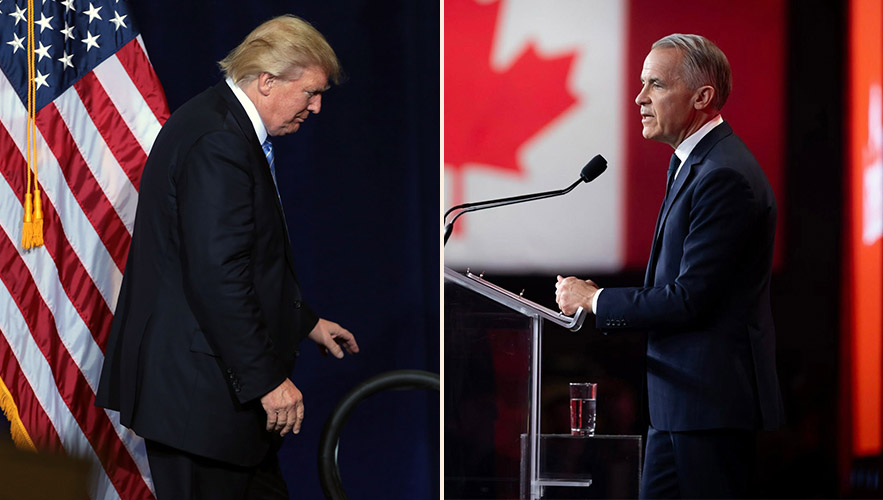
President Donald Trump says Canadian cars, trucks and auto parts will face a 50% U.S. tariff starting Jan. 1, 2027, but the increase has not yet been detailed in a new presidential proclamation. The threat raises the stakes after separate 50% duties took effect Aug. 22.

President Donald Trump escalated the United States’ trade confrontation with Canada on Monday, saying tariffs on Canadian cars, trucks and automotive parts would rise to 50% on Jan. 1, 2027. The announcement came in a Truth Social post three days after negotiations collapsed and two days after a separate package of U.S. tariffs took effect.
Trump also said steel tariffs would be increased to 50%. That part of the announcement is less straightforward: most steel articles were already subject to a 50% Section 232 tariff under earlier presidential actions, with different rates applying to some derivative products and certain trading partners.
What Trump announced Monday
Trump accused Canada of imposing unfair barriers on U.S. agricultural exports and said companies could avoid the threatened auto duties by manufacturing in the United States. His post described the new rate as applying to “all Cars, Trucks, both large and small, Automotive Parts, and Steel” beginning Jan 1.
The timing matters. Trump’s social media announcement sets a future effective date more than four months away, and the White House had not published a new proclamation Monday laying out how the 50% auto rate would interact with existing tariffs, U.S. content exemptions or the U.S. Mexico Canada Agreement. The Washington Post reported that Trump offered no additional details.
That means the cleanest description is that Trump has threatened or announced a planned increase, not that a new 50% auto tariff is already being collected. The current automobile regime was created under Section 232 of the Trade Expansion Act and imposes a 25% tariff on imported passenger vehicles, light trucks and certain parts, subject to special treatment for USMCA compliant goods.
The current auto tariff is narrower
Under the 2025 automobile proclamation, importers of USMCA compliant vehicles from Canada or Mexico may certify U.S. content, and the 25% duty applies only to the value of non U.S. content. USMCA compliant auto parts were initially allowed to remain tariff free until the Commerce Department and Customs and Border Protection established a system for taxing non U.S. content.
Canada’s government says that framework has meant Canadian made vehicles face a 25% U.S. tariff on their non U.S. content while U.S. content in qualifying vehicles is exempt. That distinction is especially important in an industry where a car assembled in Ontario can contain engines, electronics, steel, software and other components sourced from both sides of the border.
Trump’s Monday post did not say whether a 50% rate would continue to apply only to non U.S. content in qualifying vehicles or whether the administration intends to rewrite that treatment. It also did not specify how auto parts would be handled. Those details could determine whether the policy is a steep but targeted increase or a much broader shock to North American production.
A different 50% tariff already started
The threatened January auto increase should not be confused with the 50% tariffs that began Saturday on a different set of Canadian goods. Those duties trace back to three proclamations Trump signed July 20 under Section 338 of the Tariff Act of 1930, a rarely used authority that allows the president to respond to what he determines is discriminatory foreign treatment of U.S. commerce.
The administration said the Section 338 measures cover about $20 billion in Canadian imports, including products such as wine, dairy related goods, cement and hockey equipment. The White House specifically said those tariffs do not apply to energy, potash, fish, critical minerals or products already subject to Section 232 tariffs.
Trump briefly delayed the Section 338 duties for three days as negotiators tried to finish a deal. When those talks failed late Friday, the tariffs took effect at 12:01 a.m. Eastern on Aug. 22. Reuters reported that the affected trade represents a little more than 5% of Canadian exports to the United States.
Why the negotiations broke down
For several days last week, Washington and Ottawa appeared close to a broader agreement that could have reduced U.S. tariffs on Canadian autos, steel and aluminum. Reuters reported that one proposal would have lowered the auto tariff from 25% to 15%, with further relief tied to U.S. content, while Canada pushed for better treatment.
The talks unraveled over multiple issues. Reuters reported that Canada wanted favorable treatment proposed for light duty vehicles to extend to medium and heavy duty trucks, while the United States resisted. Prime Minister Mark Carney also said later U.S. demands would have constrained Canada’s trade policy and touched matters Ottawa considered questions of sovereignty, culture and French language protections.
The two governments blame each other. U.S. Trade Representative Jamieson Greer said Canada backed away from terms that had been agreed earlier in the week and described the breakdown as a missed opportunity. Carney said Washington introduced last minute conditions that were “uneconomic” and “unfair,” concluding that the United States had asked too much and offered too little.
Canada is preparing retaliation
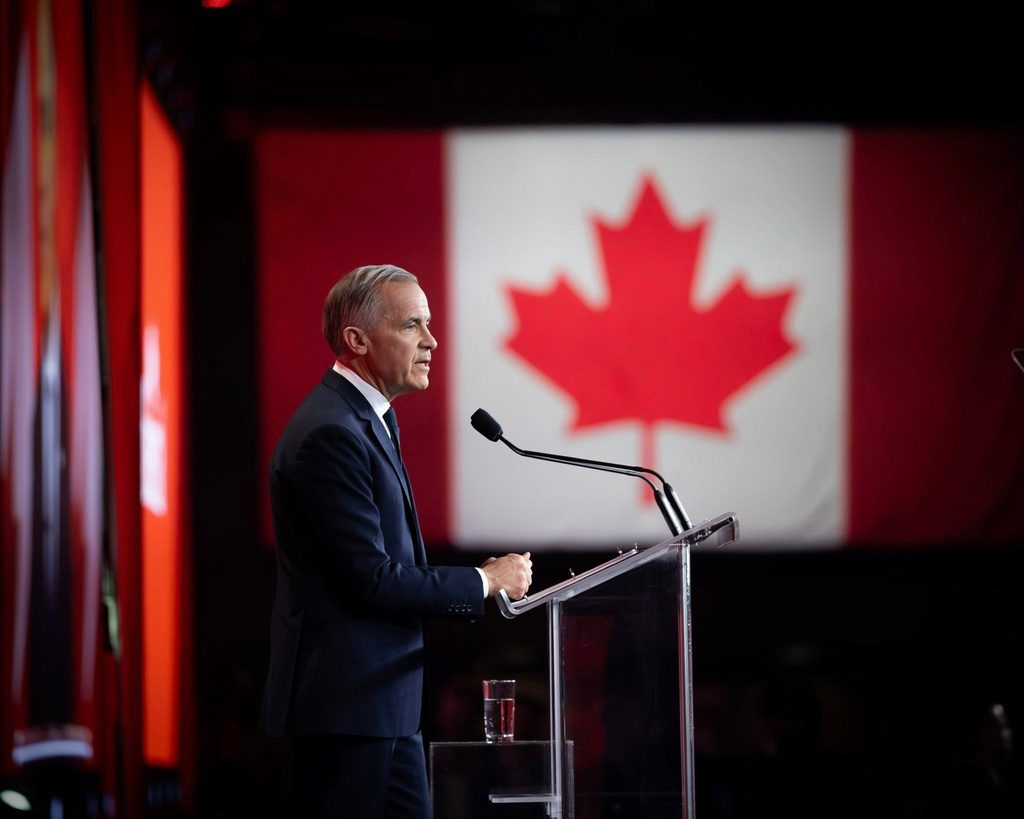
Carney suspended the negotiations, ordered Canadian negotiators back to Ottawa and announced that Canada would answer the new U.S. tariffs “dollar for dollar.” He said the response would focus on sectors including steel, dairy, appliances, agricultural equipment, pulp and paper and electronics.
The Canadian measures are scheduled to take effect Sept. 8, the Tuesday after Labor Day, with the detailed product list still to be released. Carney acknowledged retaliation would raise some costs and reduce consumer choice in Canada but argued that accepting the U.S. terms would do greater damage to Canadian industries and sovereignty.
Ontario Premier Doug Ford, whose province contains the core of Canada’s auto industry, has advocated an even harder response. On Monday he said Canada should be prepared to restrict electricity and critical mineral exports if the dispute worsens. Those threats are not yet federal policy, but they show how rapidly the conflict has moved beyond tariff schedules into broader questions about cross border economic dependence.
Why autos are the pressure point
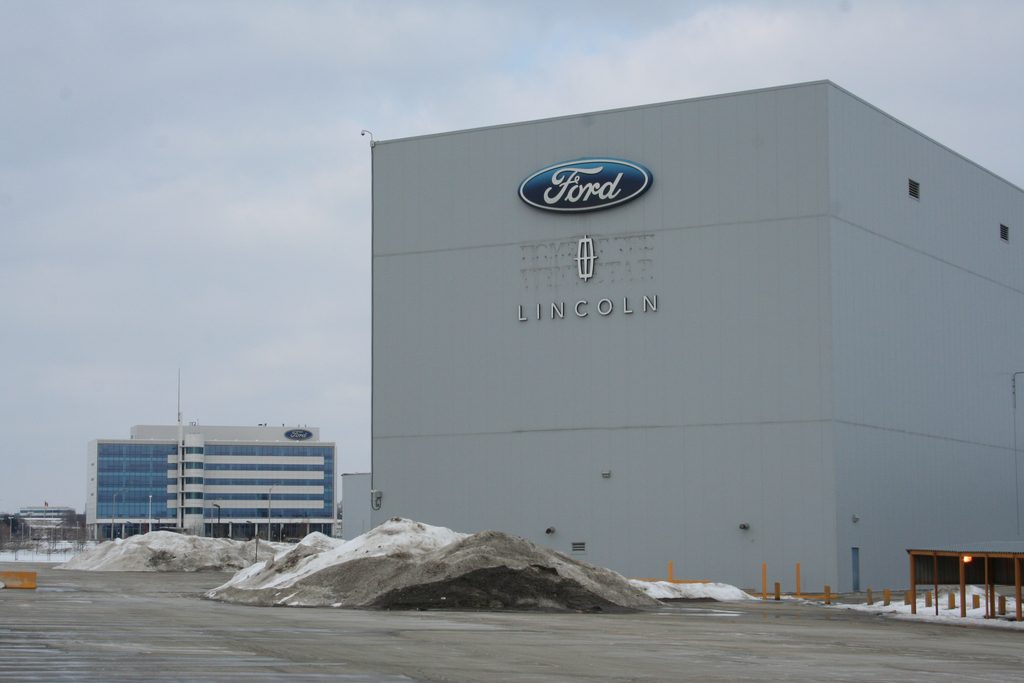
Canada’s auto industry is unusually exposed to the U.S. market. The Canadian government says more than 90% of Canadian made vehicles and about 60% of Canadian made auto parts are exported to the United States. Canada produced more than 1.2 million passenger vehicles in 2025, and the sector supports roughly 125,000 direct jobs.
That dependence runs both ways. Canadian government data say about half the value of Canadian built vehicles exported to the United States comes from U.S. parts, and Canada is a major market for American vehicles and components. Parts can cross the border repeatedly before a finished vehicle leaves an assembly line, making the sector difficult to separate cleanly by nationality.
The scale of the broader relationship magnifies that risk. USTR estimates U.S. Canada goods and services trade totaled $872.3 billion in 2025, while two way goods trade alone reached $715.5 billion. Canada was the top destination for U.S. exports and one of the largest sources of U.S. imports. A disruption centered on autos therefore sits inside a much larger commercial relationship involving energy, agriculture, machinery and cross border services.
The integrated structure is why tariffs can hit U.S. manufacturers as well as Canadian plants. A higher duty on a Canadian assembled vehicle can penalize American made components inside it, while tariffs on parts can raise costs for factories on either side of the border. Automakers therefore care not only about the headline tariff rate but also about content rules, exemptions and customs procedures.
Financial markets registered that concern Monday. Reuters reported declines in shares of major automakers after Trump’s announcement, while market coverage showed Ford, Stellantis and General Motors among companies under pressure. The reaction does not establish the eventual economic cost, but it reflects investor concern about another disruption to already complicated North American supply chains.
Trump’s trade deficit claim needs context
Trump said Canada’s trade practices had produced a $60 billion deficit for the United States. Official U.S. Trade Representative data put the U.S. goods trade deficit with Canada at $48.3 billion in 2025, down 21% from 2024. The United States simultaneously ran a $27.7 billion services surplus with Canada.
Those figures do not settle the policy argument, but they show why the number depends on what is being counted. A merchandise deficit measures trade in goods; a broader balance that includes services produces a smaller net U.S. deficit. Energy imports are also a major component of U.S. purchases from Canada, a point Carney emphasized in his Aug. 22 remarks.
The administration argues tariffs can encourage domestic manufacturing, reduce dependence on imports and strengthen industries it considers important to national security. Critics counter that tariffs are import taxes collected from U.S. importers and can be passed through in higher costs, absorbed by companies through lower margins, or partly offset by changes in supply chains and exchange rates. The eventual burden varies by product and market conditions.
The next dates matter most
The trade fight now has two separate clocks. Canada says its retaliation against the tariffs that took effect Aug. 22 will begin Sept. 8. Trump’s threatened increase on Canadian autos and auto parts is dated Jan. 1, 2027. Between those dates, either government could change course, reopen negotiations or issue new legal measures.
The January threat also lands ahead of the next major phase in North American trade policy. The three countries have already been wrestling with the future of the USMCA, and auto rules are among its most politically sensitive provisions. Earlier this year, major auto trade groups urged the administration to preserve the agreement, arguing that integrated regional production is crucial to U.S. competitiveness.
For now, the most consequential fact is not that Canadian automobiles are already paying a blanket 50% tariff. They are not. Trump has put a Jan. 1 escalation on the table after negotiations failed, while existing auto duties and a separate set of new 50% Canadian tariffs remain in force under different legal authorities.
Whether that threat becomes the final tariff regime depends on what the administration formally issues next and whether Washington and Ottawa return to the negotiating table. With Canada preparing retaliation and both governments publicly hardening their positions, the period before Jan. 1 has become another negotiating deadline rather than a settled endpoint.
Leave a Reply