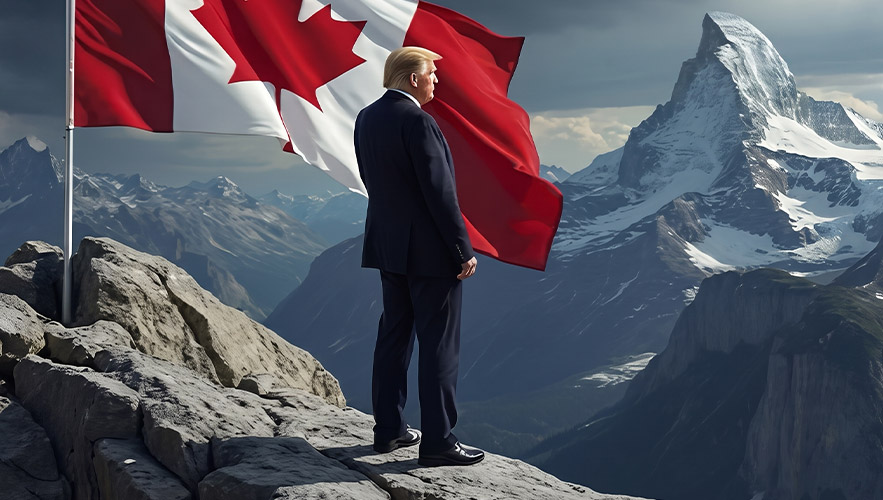
President Donald Trump says the United States is seriously considering calling Lake Ontario “Lake America.” The proposal has triggered ridicule, but the more consequential story is an escalating tariff fight with Canada — and the limits on what a U.S. name change could actually accomplish.
President Donald Trump turned a worsening trade dispute with Canada into a geographic naming fight Tuesday, saying his administration was giving “serious consideration” to changing Lake Ontario’s name to “Lake America.” He tied the idea directly to his claim that the United States no longer expected to do much business with Ontario.
The remark quickly drew mockery online, including criticism highlighted by Raw Story from commentators who called the proposal juvenile, pointless or evidence that Trump had run out of ideas. But the underlying dispute is neither symbolic nor small: the United States and Canada have moved into another round of retaliatory tariffs after trade negotiations collapsed late last week.
What Trump actually proposed

Trump did not announce a completed renaming. He said the United States was considering one. That distinction matters because no executive order or formal federal naming action for Lake Ontario had been announced with the social media post itself.
The idea echoes Trump’s January 2025 executive order directing the federal government to use “Gulf of America” instead of “Gulf of Mexico.” That order instructed the Interior Department to update federal geographic naming records and told federal agencies to use the new name in maps, contracts, documents and communications.
ABC News reported that a U.S. president could direct a name change for official federal use in a way similar to the Gulf action. But Lake Ontario is not an exclusively American feature. It lies along the U.S. Canada boundary, with New York on the American side and Ontario on the Canadian side. A Washington decision could not force Canada, international bodies, publishers or mapmakers outside U.S. federal control to adopt the same terminology.
That makes the proposal partly a question of federal nomenclature and partly a political signal. A name used by federal agencies can carry practical consequences for U.S. government documents and databases. It does not, by itself, rewrite the geographic vocabulary used by another sovereign country.
The Senate claim misses the process
One reaction quoted in the original Raw Story report argued that a renaming had not been “passed by the US Senate.” That framing overstates the Senate’s role in the federal geographic naming process.
The U.S. Board on Geographic Names, created in 1890 and established in its present statutory form in 1947, exists to standardize geographic names across the federal government. The board shares responsibilities with the secretary of the interior, and its decisions govern federal usage. The Geographic Names Information System serves as the federal repository for recognized domestic geographic names.
Trump’s Gulf of America order illustrates the mechanism. He did not seek a Senate vote before directing the Interior Department and federal agencies to adopt the new federal name. That does not mean presidents have unlimited authority over every naming question, especially a feature shared with another country. It does mean that “the Senate has not passed it” is not, by itself, a decisive objection to a federal use renaming.
The larger legal and diplomatic limit is more basic: U.S. federal naming rules govern U.S. federal usage. They do not give Washington authority over what Canada calls Lake Ontario.
Lake Ontario is a shared waterway
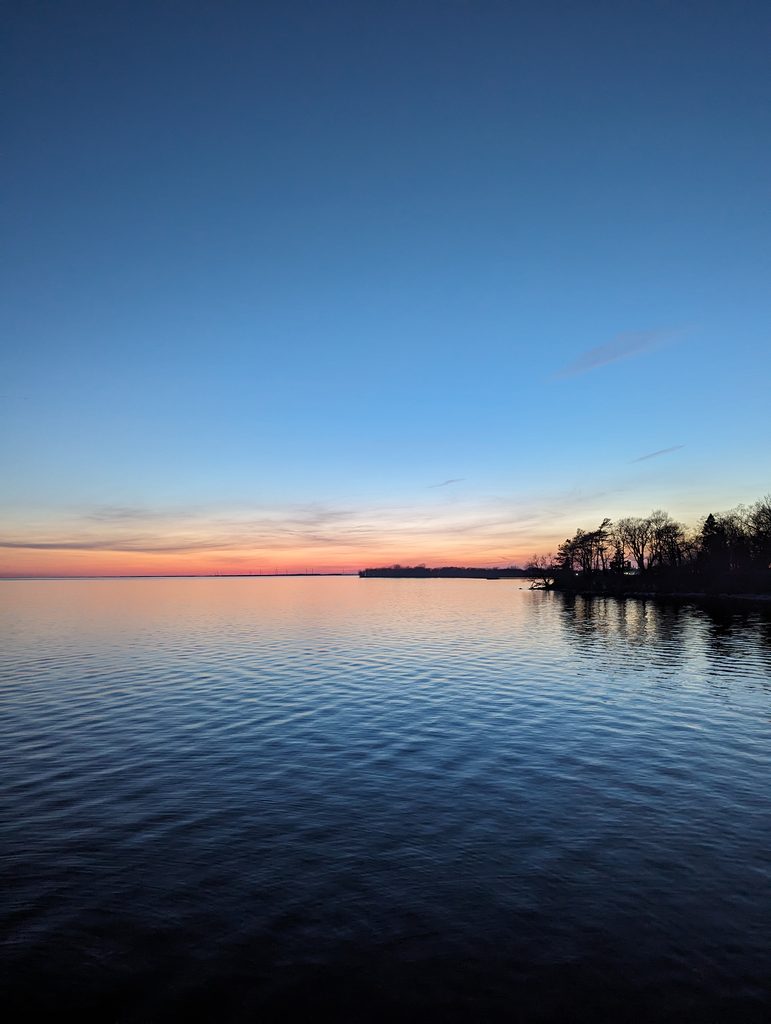
Lake Ontario’s status makes Trump’s proposal different from an ordinary domestic place name dispute. The lake forms part of the international boundary system governed by more than a century of U.S. Canadian cooperation.
The 1909 Boundary Waters Treaty defines boundary waters as lakes, rivers and connecting waterways along which the international boundary passes. It established the International Joint Commission, with members from both countries, to help prevent and resolve disputes over shared waters. The treaty also protects equal navigation rights and sets rules for projects that could affect water levels or flows across the border.
Today, Lake Ontario and the St. Lawrence River are managed through a web of bilateral institutions and agreements. The International Joint Commission oversees policies affecting certain water levels and flows, while the Great Lakes Water Quality Agreement commits the United States and Canada to cooperate on restoring and maintaining the Great Lakes ecosystem.
None of that means the IJC has a veto over what Trump orders federal agencies to print on a U.S. map. It does show why the lake cannot be treated politically as though it were an exclusively American body of water.
Why the trade fight matters more
The renaming threat landed after a sharp deterioration in economic relations. The Trump administration’s latest Section 338 tariffs impose additional 50% duties on covered Canadian goods. The White House has said the measures respond to what it describes as discriminatory Canadian treatment of U.S. alcohol, dairy and motor vehicle exports. After a brief three day suspension, the new duties were set to take effect on August 22.
The Associated Press reported that the new tariffs reach more than 550 Canadian products and affect roughly $20 billion in goods. Trump has also threatened another escalation: 50% tariffs on Canadian cars, trucks and automotive parts beginning in 2027, after trade negotiations broke down.
Canada responded Tuesday with its own package. Reuters reported that Ottawa announced retaliatory tariffs on C$27.6 billion, or about US$20 billion, in American goods, with rates of 15%, 25% and 50% across roughly 700 products. Those countermeasures are scheduled to begin September 8. Canada also announced billions of dollars in support for businesses and workers exposed to the dispute.
The numbers make the contrast with the naming argument stark. Lake Ontario may dominate social media for a news cycle, but tariffs can affect supply chains, prices, investment decisions and jobs on both sides of the border.
A deeply integrated relationship is at risk
Canada is not a marginal U.S. trading partner. U.S. Trade Representative data show that two way U.S. Canada trade in goods and services totaled an estimated $872.3 billion in 2025. Goods trade alone totaled about $715.5 billion.
The Census Bureau reported that in the first six months of 2026, the United States exported about $175.8 billion in goods to Canada and imported about $200.2 billion. That scale helps explain why new tariffs can reach far beyond the sectors named in presidential statements. Businesses that buy components, materials or finished products across the border can face higher costs even if they are not directly involved in the political dispute.
The auto industry is especially exposed because production networks span the border. Ontario is central to Canada’s vehicle manufacturing base, and U.S. factories rely on Canadian made vehicles and parts. The Associated Press reported warnings from businesses that tariffs could raise costs for American companies and consumers as well as Canadian exporters.
That economic interdependence is why Trump’s assertion that the United States may no longer do much business with Ontario carries more weight than the proposed name itself. It is rhetoric attached to a trade policy with measurable consequences.
Critics focused on the spectacle
Raw Story’s piece emphasized the ridicule that followed Trump’s post. The Bulwark’s Sam Stein wrote, “He’s out of ideas.” Dispatch editor and CEO Stephen Hayes argued that Trump’s behavior resembled juvenile emoting rather than serious policymaking. Another critic, Roland Ley, called Trump the “greatest idiot” he had witnessed in his lifetime.
Those comments are opinions, not evidence about the legality or economic effects of the proposal. They do, however, capture one strand of the reaction: frustration that a dispute involving tariffs, industrial policy, cross border supply chains and national sovereignty was being expressed through a threat to rename a shared lake.
Canada’s federal government took a different public approach. Dominic LeBlanc, the minister responsible for U.S. trade, told CNBC that the government had decided months earlier not to respond to daily social media posts from Trump or members of his administration.
That restraint contrasts with the broader political rhetoric surrounding the trade fight. Ontario Premier Doug Ford has sharply attacked Trump, while Prime Minister Mark Carney has said Canada will not accept a negotiating posture that treats the country as a U.S. subsidiary.
The Gulf precedent has limits
Trump’s 2025 Gulf renaming shows that he can make a geographic name change matter inside the federal government. His executive order directed the Interior Department to update the federal naming system and required agencies to adopt the Gulf of America terminology.
But federal standardization is not universal recognition. Other governments, international organizations and private publishers can continue using a different name. In Lake Ontario’s case, that gap would be especially visible because Canada shares the lake and has its own jurisdiction, institutions and mapping practices.
The underlying water does not change with the label. U.S. Canadian treaty obligations, navigation rights, water quality commitments and flow management arrangements would remain legal and operational questions separate from what the U.S. government calls the lake on federal documents. The Boundary Waters Treaty and Great Lakes agreements are built around shared jurisdiction and cross border effects, not branding.
That is why describing a potential U.S. renaming as though it would erase “Lake Ontario” internationally would go too far. The strongest supportable conclusion is narrower: Trump could pursue a federal use name change, but he could not unilaterally make Canada accept it.
What happens next
The immediate question is whether Trump turns Tuesday’s social media statement into a formal presidential action. As of the announcement, he had floated the idea but had not completed a renaming. Any order would need to specify how federal agencies and the U.S. geographic naming system should implement the change.
The faster moving story, however, is trade. Canada’s newly announced counter tariffs are scheduled to take effect September 8, while Trump has threatened additional duties on Canadian vehicles and related products starting January 1, 2027. Those future measures remain threatened or scheduled rather than completed, and both governments could still alter course before they take effect.
For now, the Lake America proposal is best understood as an escalation in rhetoric, not a settled international name change. It has supplied Trump’s critics with an easy target, but the dispute behind it is more consequential: two deeply connected economies are raising barriers against each other while leaders on both sides increasingly frame the conflict in terms of sovereignty and national leverage.
Whether “Lake America” ever appears in federal records or not, Lake Ontario remains a shared U.S. Canadian waterway. The tariffs, counter tariffs and breakdown in negotiations are the developments most likely to determine what this confrontation costs.
Leave a Reply