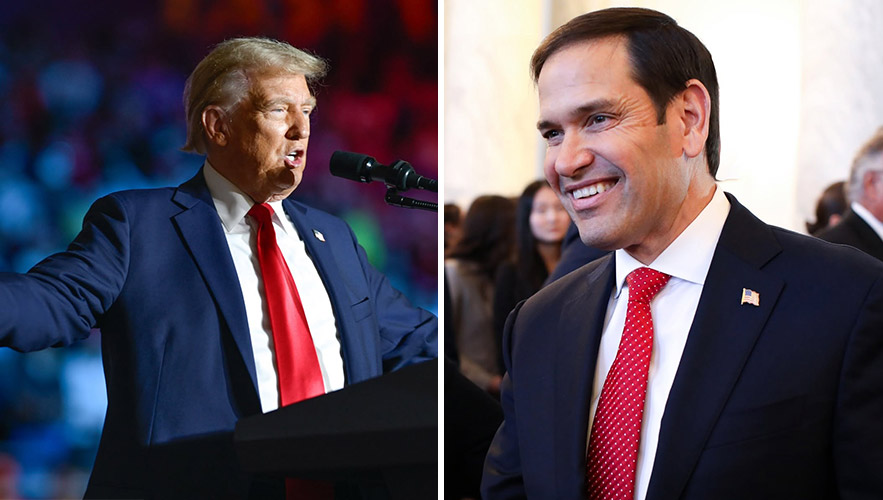
Secretary of State Marco Rubio’s department is preparing to revoke business and tourist visas held by people who later sought asylum in the United States. Officials say the rolling action could affect up to 200,000 visas, but the final number, legal challenges and individual immigration consequences remain unsettled.

The Trump administration is preparing a potentially unprecedented visa revocation campaign aimed at foreign nationals who entered or sought entry as temporary visitors and later applied for asylum. The State Department, led by Secretary of State Marco Rubio, is coordinating with the Department of Homeland Security on the review.
State Department spokesman Tommy Pigott explicitly tied the initiative to Rubio’s leadership, saying the department was acting “under President Trump and Secretary Rubio’s leadership” and was working with DHS to identify and revoke non immigrant visas of people who came as short term visitors and then filed for asylum. The department has not said Rubio personally made each revocation decision.
What Rubio’s department is preparing
The reported plan would focus on B1 and B2 visas issued between 2016 and 2026. B1 visas are generally used for temporary business travel, while B2 visas cover tourism, family visits and certain medical travel. State Department guidance requires applicants to demonstrate a temporary purpose and an intent to leave the United States after the trip.
The Associated Press reported that as many as 200,000 visas could be affected and that, if carried out at that scale, the action would be the largest single mass visa revocation in U.S. history. The State Department has not publicly confirmed that exact figure. Pigott said the total would remain “dynamic” because revocations would be handled on a rolling basis.
That qualification matters. The administration has confirmed the policy direction, but 200,000 is a potential ceiling reported from internal documents and officials, not a final published count of completed cancellations.
Why Marco Rubio matters here
Rubio’s role is institutionally and legally significant because the State Department controls visa issuance and revocation, while DHS handles admission, immigration enforcement and much of the asylum system. Federal law states that a consular officer or the secretary of state may revoke a visa after issuance, giving Rubio’s department broad authority over the travel document itself.
The State Department’s Foreign Affairs Manual distinguishes between revocations by individual consular officers and those undertaken centrally by the department. It says ordinary consular officers generally should not revoke a visa while the holder is already in the United States, outside specified exceptions, but the department’s Visa Office can act in such cases.
Rubio has made aggressive visa enforcement a feature of his tenure. Earlier this month, the State Department said more than 175,000 visas had been revoked under the current administration for reasons including criminal activity, national security concerns and violations of visa terms. The asylum linked review would be different because it uses a later asylum filing as a trigger for reassessing an earlier visitor visa.
A visa revocation is not deportation
The most important practical distinction is that canceling a visa does not automatically remove someone from the United States. A visa is a travel document that allows its holder to seek admission at a port of entry; it is not a guarantee of admission, nor is it the same thing as a person’s immigration status after entry.
For someone outside the United States, revocation normally means the canceled visa can no longer be used to travel to a U.S. port of entry. For someone already inside the country, the effect depends on that person’s admission history, whether the authorized stay has expired and whether another immigration process, such as an asylum case, is pending.
AP reported that the planned cancellations would not necessarily lead to immediate deportation. Many people with pending asylum matters would instead lose their B1 or B2 classification or ability to rely on that visa for future travel while their asylum cases continued under separate procedures.
Asylum law creates the central tension
The administration argues that people who obtain visitor visas by representing that their stays will be temporary should not then use those visas as a route to remain permanently through asylum. Deputy Secretary of State Christopher Landau has publicly criticized what he calls “bogus” asylum claims and said asylum should not become a loophole around immigration law.
But federal asylum law separately allows a person physically present in the United States to apply for asylum regardless of immigration status, subject to statutory exceptions and filing rules. USCIS likewise explains that a person can seek asylum after arriving in the country even without continuing lawful nonimmigrant status.
Those rules do not mean every asylum claim is valid, and they do not prevent the government from investigating fraud. They do mean that filing for asylum is not automatically unlawful simply because the applicant originally entered on a visitor visa.
Intent can therefore become a central factual issue. A person who obtained a B visa while already planning to remain permanently may face a different legal problem from someone whose circumstances changed after arrival. Federal law also recognizes changed circumstances as a possible exception to the general one year asylum filing deadline.
Fraud is a separate question
Pigott has said that obtaining a visa in order to seek asylum can constitute fraud and provide grounds for revocation. That is a stronger and more specific allegation than simply noting that a visa holder later filed an asylum application.
Under immigration law, fraud or willful misrepresentation can carry serious consequences, but it generally depends on facts about what the applicant represented and intended when seeking the visa. A later asylum filing, standing alone, does not necessarily prove what the applicant’s intent was earlier.
The State Department’s own visa manual says a consular revocation should normally rest on an actual finding that a person is ineligible, not merely on unsupported derogatory information. It also allows the department broader “prudential” revocation authority in some circumstances, including when another U.S. agency supplies adverse information.
How Rubio’s department structures the program—whether it uses categorical rules, individualized findings, prudential revocations or some combination—could shape both its practical reach and any litigation that follows.
Who may be caught in the review
The reported 2016 to 2026 window covers a decade of B1 and B2 issuances, but the administration has not publicly broken down the affected group. It is unclear how many people in the potential pool still hold valid visas, how many are outside the United States, how many have pending affirmative asylum cases or how many are already in removal proceedings.
Those categories matter because the same revocation can have very different consequences. A person overseas may lose the ability to use a visitor visa for travel. Someone in the United States whose authorized B status already expired may have little remaining visitor status to lose, although the cancellation could still affect future travel and later visa applications.
A pending asylum application also does not itself create a new nonimmigrant status. USCIS decisions and guidance distinguish between being allowed to remain while an application is pending and holding a particular lawful immigration status. That is another reason “200,000 visa revocations” should not be read as “200,000 immediate deportations.”
The State Department has not said whether every person who ever filed for asylum after receiving a B visa will be treated the same way, or whether the review will account for changed circumstances, already decided cases or evidence showing lawful temporary intent at the time of the original application.
Legal challenges could test the process
The government has a strong textual basis for the proposition that the secretary of state has authority to revoke visas. Section 221(i) of the Immigration and Nationality Act says the secretary or a consular officer may revoke a visa after issuance. The Foreign Affairs Manual further describes procedures for consular and department level revocations.
But broad statutory authority does not settle every question about how a mass program can be implemented. A lawsuit could challenge the way the government identifies people, the factual basis for treating an asylum filing as evidence of prior misrepresentation, or the procedures used to notify visa holders and allow them to respond.
The State Department manual says consular officers should, when practicable, notify a person of an intent to revoke and allow an opportunity to show why the visa should not be cancelled. Department level revocations under the secretary’s discretionary authority can operate under different rules. Which mechanism is used at scale may become important.
Rubio’s department has also faced recent judicial scrutiny in a separate visa dispute. On Aug. 22, a federal judge struck down a policy suspending immigrant visa processing for nationals of 75 countries, ruling that the department had exceeded its authority. That case involved a different visa category and legal theory, so it does not decide the legality of this B1/B2 plan.
The move fits a broader crackdown
The planned cancellations sit within a wider Trump administration effort to tighten visa screening and immigration enforcement during the president’s second term. The State Department has expanded vetting and pursued revocations on criminal, security, immigration and foreign policy grounds.
Rubio’s department has repeatedly framed visas as privileges rather than rights and said it will use revocation authority to protect what it calls the integrity of the immigration system. The asylum initiative extends that approach by connecting State Department visa records with information held by DHS and USCIS about later asylum filings.
According to AP, screening of current B1 and B2 visa holders began after the State Department received asylum related information from U.S. Citizenship and Immigration Services. That interagency data flow allows a later immigration filing to prompt a fresh review of an earlier consular decision.
What remains unresolved
As of Aug. 26, the newest authoritative reporting still describes the action as being prepared and rolled out, not as a completed 200,000 person revocation. The State Department has not published a final list of affected visa holders, a definitive total or a comprehensive public rule explaining exactly how individual cases will be selected.
The most defensible description is therefore narrower than some headlines suggest: Marco Rubio’s State Department is preparing a large scale B1/B2 visa revocation effort targeting people who sought asylum after receiving temporary visitor visas, with up to 200,000 potentially affected according to officials and documents reported by AP.
What happens next will depend on the final implementation method, the evidence used in individual cases, the response of affected visa holders and any court challenges. The cancellations could be historically large, but they would not by themselves erase pending asylum claims or automatically convert every targeted person into an immediate deportation case.
Leave a Reply