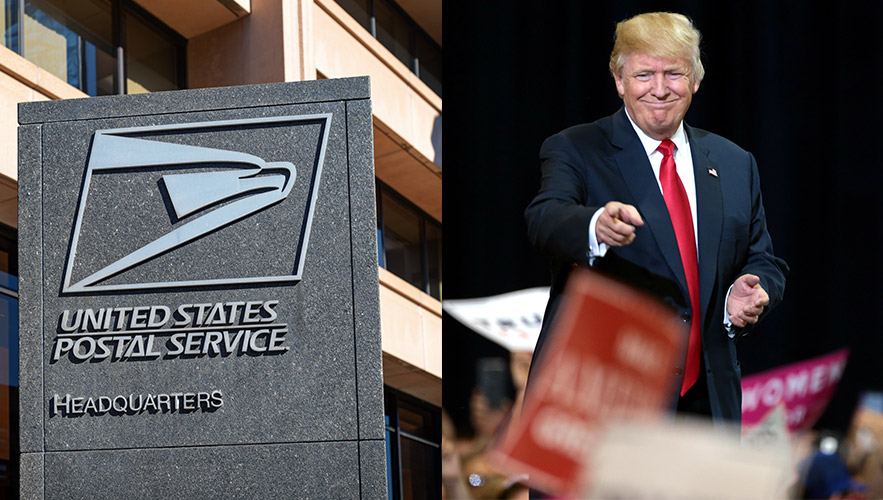
Eight voting and civil rights organizations asked a federal judge to enforce her Aug. 11 injunction after the U.S. Postal Service issued a 95 page mail ballot rule tied to President Donald Trump’s executive order. The rule remains blocked for the Nov. 3 elections unless existing injunctions are lifted.

The immediate fight is not over whether the new Postal Service requirements are already governing the 2026 midterms. They are not. It is over whether USPS was allowed to finish the rulemaking at all after U.S. District Judge Indira Talwani ordered the agency not to implement Section 3 of Trump’s March election executive order or complete the specified rulemaking for elections on or before Nov. 3.
That dispute sharpened over the weekend. USPS issued the final rule on Aug. 21 and put it on track for formal Federal Register publication Aug. 26. On Aug. 23, Talwani ordered the federal defendants to respond to the voting groups’ emergency motion by 8 a.m. Aug. 25, one business day before publication. She has not yet ruled that USPS violated the injunction or ordered the rule withdrawn.
What the Postal Service finalized
The rule creates new standards for ballot mail in federal general, special and runoff elections. Outbound ballot envelopes would have to carry the official Election Mail logo, meet automation standards and bear a unique Intelligent Mail barcode. States or their authorized mailers would use a new Federal Ballot Mail Portal to upload information associated with mailed ballots.
The final version is less rigid than Trump’s executive order on one timing point. The order contemplated state lists at least 60 days before an election. USPS instead says initial Portal data should be entered, if possible, at least 30 days before Election Day or by the date state law requires ballots to begin going out. States could later add, correct or remove entries.

USPS says verification occurs when election officials present outbound ballot mailings for acceptance. Noncompliant mailings would be returned for correction and resubmission. Once accepted, an outbound mailing would move through the mailstream normally. Voters returning completed ballots could still use residential mailboxes, blue collection boxes or postal counters.
The rule exempts ballots covered by the Uniformed and Overseas Citizens Absentee Voting Act and does not apply to primaries. Its document lists Aug. 21 as the effective date, even though formal publication is scheduled for Aug. 26. USPS says it will not implement the rule for the 2026 midterms unless it obtains relief from the court orders now blocking Section 3.
Why Judge Talwani intervened
Trump’s March 31 executive order directed USPS to develop rules for mail ballots, including state submitted participation information and standards that could result in some ballot mail not being transmitted when required conditions were not met. Lawsuits by Democratic led states and voting rights groups argued that the president had crossed constitutional and statutory lines by trying to regulate elections through executive action.
Talwani first blocked parts of the order in a case brought by 23 states and the District of Columbia. On Aug. 11, in a separate case brought by voting organizations, she entered a preliminary injunction barring USPS from implementing or enforcing Section 3 for the Nov. 3 election or any earlier federal election. The order specifically covered refusing to transmit mail ballots and “initiating or completing rulemaking” for the regulations described in the executive order.
A preliminary injunction is interim relief, not a final judgment resolving every legal question. But Talwani concluded that the plaintiffs had shown the requirements for relief, including a likelihood of success on their claims. Her order was designed to preserve the preexisting election mail system while litigation continued and election officials moved closer to mailing ballots.
Why the emergency motion matters
The eight plaintiffs — including the League of Women Voters of Massachusetts, the League of Women Voters of the United States, U.S. Vote Foundation, OCA Asian Pacific American Advocates and Delta Sigma Theta Sorority returned to court after USPS issued the final rule. They argued that completing the rulemaking itself violated the plain terms of the Aug. 11 injunction, regardless of whether USPS immediately enforces the new standards.
The Justice Department disputes that reading. In a filing opposing the plaintiffs’ request for an accelerated schedule, the government said the final rule creates no new obligations for the Nov. 3 election while the injunctions remain in place. Its position is that USPS has not violated the order because the agency will not implement the requirements unless courts lift all relevant restraints.
Talwani’s Aug. 23 order did not resolve that conflict. Instead, she noted that the federal defendants had neither appealed her Aug. 11 preliminary injunction nor obtained a stay of it, and she questioned why USPS issued the final rule anyway. She gave the government the Aug. 25 response deadline, while also saying she could allow a later filing deadline if she temporarily stayed publication.
Election timing raises the stakes
The calendar explains why both sides are moving quickly. Election Day is Nov. 3, and the final rule itself says ballots generally begin being mailed in September. USPS said it made the rule effective Aug. 21 because delaying effectiveness could make implementation impracticable if courts later lift the injunctions in time for the midterms.
That same timetable is central to the challengers’ argument. Election administrators have already been preparing ballot designs, mailing systems, vendor contracts and voter instructions under existing rules. The Postal Service’s own final rule document records objections from election officials and other commenters who warned about implementation costs, data systems, privacy, ballot envelope redesigns and the risk of disruption close to voting.
The agency said it received more than 200,000 responses, many of them form submissions, plus more than 250 organizational letters. USPS made some changes from the proposal but retained the central Portal, barcode and mail acceptance framework.
USPS says this is postal regulation
The Postal Service rejects the characterization that it is deciding who may vote. In the final rule, USPS says states remain responsible for voter eligibility and voter rolls. The agency says it will not compare Portal information against state voter databases, inspect ballot contents, open sealed ballot mail or collect party affiliation.
USPS describes the Portal information as data tied to the exterior of ballot mail, including names, addresses and barcodes submitted by election officials. It says the resulting participation list is intended to give states and law enforcement better visibility into ballot mail activity. Postmaster General David Steiner has argued that the system would let officials compare the ballots states say they are sending with what actually enters the mailstream.
The administration frames the policy as an election integrity measure. Critics, including the plaintiffs and Democratic state officials, argue that USPS lacks authority to impose election administration conditions of this kind and that the rules create a risk of lawful ballot mail being rejected or delayed. Those competing legal claims remain in litigation; USPS’s issuance of a final rule does not settle them.
Mail voting remains a major channel
The practical importance is substantial because mail voting is not a marginal feature of U.S. elections. The U.S. Election Assistance Commission reported that 30.3% of voters cast ballots by mail in the 2024 general election. That was down from the pandemic era share in 2020 but still above pre 2020 levels.
Mail rules differ sharply by state, including whether ballots are sent automatically or must be requested and which return deadlines apply. That state by state structure is part of the dispute: challengers say the executive branch is imposing federal conditions in an area where states and Congress have specified roles.
Trump has long criticized mail voting and has continued to allege serious fraud risks. Reuters notes that his claim that widespread fraud caused his 2020 defeat is false. The Postal Service’s own final rule takes a narrower position: it says disagreement over how common mail voting fraud is does not determine whether USPS has legal authority to adopt mail processing standards.
A separate voter data fight continues
The mail ballot case is one piece of a broader administration effort involving state election records, but the disputes should not be conflated. The Justice Department has separately sued numerous states seeking unredacted voter registration data. Those cases concern federal access to voter rolls, not the Postal Service’s ballot mail acceptance rule.
As of Aug. 7, Reuters counted 21 consecutive district court losses for the administration in those voter roll cases. Judges appointed by presidents of both parties had rejected the government’s demands, while the administration had appealed 16 of the losses and other lawsuits remained pending. That record is stronger evidence than a broad claim that every state challenge has been finally resolved.
The administration argues federal law authorizes access needed to enforce election statutes. States resisting the demands cite privacy rules, limits on federal authority and sensitive personal information. Appeals could change the picture, so the current losing streak is not a final nationwide judgment.
The Supreme Court has not settled it
A separate injunction from Talwani’s June ruling is already before the Supreme Court on an emergency application from the Trump administration. The government asked the justices to stay that order while litigation proceeds, and after the Aug. 11 League of Women Voters ruling, the Justice Department filed a supplemental brief telling the Court that the new nationwide injunction increased the urgency of Supreme Court action.
As of Aug. 24, the Supreme Court docket shows no order granting the administration’s requested stay. That means the judicial restraints remain important to the Postal Service’s own implementation plan. Even if the Supreme Court acts in the separate state case, additional litigation over the Aug. 11 injunction could still matter.
This distinction is central: an emergency stay ruling would address whether a lower court order remains in force during litigation. It would not, by itself, necessarily resolve the ultimate merits of every constitutional or statutory challenge to Trump’s election order.
What happens next
The next concrete deadline is Talwani’s Aug. 25 response order. If the government maintains that publication can proceed without violating the injunction, the judge could decide whether to enforce or clarify her Aug. 11 order. She also raised the possibility of temporarily staying publication if the government needs more time to respond.
Formal Federal Register publication is scheduled for Aug. 26. Under USPS’s own terms, however, the new requirements will not govern the Nov. 3 election unless the agency obtains relief from the outstanding injunctions. The administration’s Supreme Court application and separate appellate proceedings could therefore determine whether the rule remains only a finalized contingency plan or becomes an operational change during the midterm cycle.
The current record shows a fast moving institutional fight: eight organizations are asking a federal court to enforce an injunction, USPS says it has finalized but will not yet implement its rule, and courts are deciding how much authority the executive branch and Postal Service may exercise over election mail.
Leave a Reply