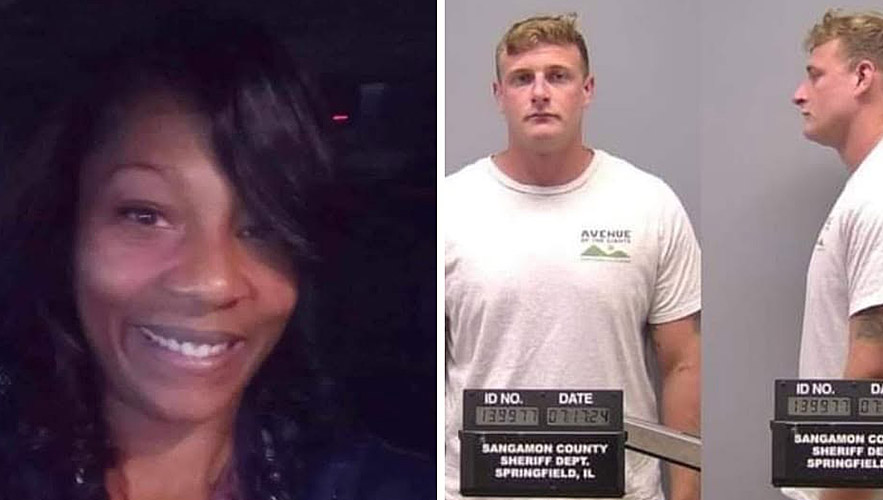
Sean Grayson, the former Sangamon County sheriff’s deputy convicted of killing Sonya Massey, died Sunday at 32 while serving a 20-year sentence. He had advanced cancer, but officials had not publicly confirmed his cause of death or where he died as of Monday.
Sean Grayson died on Aug. 23, less than seven months after a judge imposed the maximum prison term for his second-degree murder conviction in the killing of Sonya Massey. His attorney, Daniel Fultz, confirmed the death. The Illinois Department of Corrections had not publicly provided a cause, manner or location of death as of Monday.
The timing immediately renewed attention to a medical-release request Grayson filed in May. A three-member Illinois Prisoner Review Board panel rejected that application unanimously on July 31, after hearing from Massey’s relatives and reviewing records showing that Grayson’s colon cancer had spread to his liver and lungs.
What is known about his death
Grayson was 32 and remained in the custody of the Illinois Department of Corrections when he died. His exact prison location had not been publicly disclosed, and his lawyer declined to provide additional details when confirming the death. That leaves a basic distinction important: Grayson’s cancer was documented, but an official cause of death had not yet been released.
Attorneys Ben Crump and Antonio Romanucci, who represent Massey’s family, referred in a statement to Grayson’s “death in custody from cancer.” That characterization is consistent with his known medical condition, but it is not the same as a formal cause-of-death finding from corrections officials, a coroner or another medical authority.
Grayson’s illness predated Massey’s killing. His defense said he was diagnosed with colon cancer in 2023. By his January 2026 sentencing, attorney Mark Wykoff told the court that the disease had advanced to Stage 4 and spread to Grayson’s liver and lungs. The defense also cited rectal cancer in arguing for leniency.
Massey called police for help
Massey, a 36-year-old Black woman and mother of two, called 911 early on July 6, 2024, because she believed someone was prowling outside her home in unincorporated Sangamon County near Springfield. Grayson and Deputy Dawson Farley responded but found no prowler.
Body-camera footage later released by Illinois State Police showed the encounter moving inside Massey’s home. The deputies noticed a pot of hot water on the stove and asked Massey to deal with it. As she moved the pot, Grayson backed away. Massey said, “I rebuke you in the name of Jesus.”
Grayson then drew his handgun, threatened to shoot Massey in the face and ordered her to drop the pot. The footage showed Massey apologizing and lowering herself behind the kitchen counter. Grayson moved toward her and fired three times. One bullet struck her in the head, fatally wounding her.
Farley later testified that he did not view Massey as a threat before Grayson drew his weapon and that he unholstered his own gun only after Grayson did. Prosecutors also emphasized what happened immediately afterward: Grayson initially discouraged Farley from providing medical aid, while Farley retrieved medical equipment and tried to help Massey until emergency responders arrived.
Why the verdict was second-degree
Grayson was fired after the shooting and indicted on first-degree murder charges. Because of extensive pretrial publicity in Sangamon County, jurors were selected in Peoria County. On Oct. 29, 2025, the jury found him guilty of second-degree murder rather than first-degree murder.
That verdict did not mean the jury found the shooting justified. Under the theory presented to jurors, they determined that Grayson’s conduct met the legal standard for first-degree murder but accepted a mitigating finding that he believed he was acting in self-defense even though that belief was unreasonable.
Grayson had argued that he feared Massey would throw the hot water at him. Prosecutors argued that he escalated the encounter, failed to follow his crisis-intervention training and used deadly force after Massey had apologized and dropped behind the counter. The body-camera video became central evidence at trial.
Circuit Judge Ryan Cadagin sentenced Grayson on Jan. 29, 2026, to 20 years in prison, the maximum available for second-degree murder, followed by mandatory supervised release. At sentencing, Grayson apologized for his conduct and told the judge he had made “terrible decisions,” while Massey’s relatives said the maximum term still could not restore what they had lost.
Medical release became the last fight
Grayson sought release under Illinois’ Joe Coleman Medical Release Act, which allows people in custody with a terminal illness or qualifying medical incapacity to apply to the Prisoner Review Board. Under the law, a terminal illness must be irreversible and incurable and, with reasonable medical certainty, likely to cause death within 18 months.
His handwritten application created an unusual record. Grayson did not check the box saying his illness was likely to cause death within 18 months. A medical professional reviewing his case did check that box and also indicated that his condition was likely to worsen and could result in incapacity. The same medical review, however, reported no limitations across a series of basic daily activities.
The application also revived the dispute over Grayson’s account of the shooting. In his handwritten description, he maintained that Massey had attacked him with a pot of boiling water and that he fatally shot her. Capitol News Illinois, which obtained the application through a public-records request, reported that the description expressed no remorse.
That stood in tension with Grayson’s January sentencing remarks, when he apologized and acknowledged making serious mistakes. The medical-release record therefore did not erase his earlier apology, but it showed that months later he continued to describe Massey as the aggressor in the encounter.
The board rejected release
Sangamon County State’s Attorney John Milhiser opposed Grayson’s release, arguing that his cancer was already known when the sentence was imposed. He also pointed to the circumstances of the shooting and argued that releasing Grayson would be a “miscarriage of justice” and an insult to Massey’s family.
Massey’s relatives made the same basic argument at the July 31 hearing. Her father, James Wilburn, told the board that while some people might believe compassion required allowing Grayson to die near family, his daughter had been denied that possibility when she was killed in her home.
The three-member panel voted unanimously to deny medical release. The Joe Coleman Act does not make a qualifying diagnosis an automatic ticket out of prison. The board can weigh the medical prognosis alongside public-safety considerations, the person’s ability to pose a danger, health-care issues and statements from crime victims.
Grayson died 23 days after that decision. The short interval makes the medical-release proceeding newly significant, but it does not establish that the board knew exactly when he would die or that his cancer caused his death. Those are separate questions, and the second still requires official confirmation.
The killing exposed hiring failures
Massey’s death quickly became about more than the actions captured on one body camera. Grayson had worked for six law-enforcement agencies in about four years and had two prior driving-under-the-influence convictions. Personnel records from Logan County, where he worked before joining Sangamon County, documented disciplinary problems and concerns about judgment.
Among the records reviewed after the shooting were reports that Grayson disobeyed an order to end a high-speed pursuit and needed extensive additional training. A Logan County supervisor at one point asked him during a recorded meeting how he was still employed there. Grayson later resigned and joined the Sangamon County Sheriff’s Office in May 2023.
The scrutiny eventually reached the sheriff who hired him. Jack Campbell, then the Sangamon County sheriff, faced mounting criticism over the department’s hiring process and announced his retirement in August 2024. Massey’s family and advocates argued that the case showed how warning signs can be lost when officers move from agency to agency.
Illinois changed its hiring rules
In August 2025, Gov. JB Pritzker signed legislation in Massey’s honor requiring Illinois law-enforcement agencies to conduct more extensive background reviews before hiring officers. The measure took effect Jan. 1, 2026.
The law requires hiring agencies to request personnel files from previous employers and requires applicants to authorize access to a broad range of records, including disciplinary, employment, criminal, driving and military information. Previous employers generally must provide responsive records within a specified period, subject to limited exceptions.
The legislation was a direct response to questions raised by Grayson’s employment history, but it was not a finding that one missing record alone caused Massey’s death. Its practical purpose is narrower: to make it harder for a prospective officer’s history to remain fragmented across agencies when a new department is making a hiring decision.
Sangamon County also agreed in February 2025 to pay $10 million to settle the Massey family’s wrongful-death claim. The settlement provided civil compensation without replacing the separate criminal case that later produced Grayson’s conviction and sentence.
Federal scrutiny brought broader reforms
The Justice Department opened a civil-rights investigation after Massey’s killing and in January 2025 reached an agreement with Sangamon County, the sheriff’s office and the county’s central dispatch system. The federal review examined race and disability discrimination in policing and emergency-dispatch services.
Under the agreement, local agencies committed to reviewing policies on nondiscriminatory policing, use of force, de-escalation and interactions with people with behavioral-health disabilities. The agreement also called for additional training, better coordination between 911 and behavioral-health services, development of a mobile crisis response program and two years of federal monitoring.
The Justice Department made an important qualification: the agreement did not constitute an admission of liability by Sangamon County or its agencies, and the department said it had not reached a finding of discrimination. The reforms were negotiated as a resolution to the federal investigation, not imposed after a court judgment.
Those institutional changes outlast Grayson. His death ends his incarceration and forecloses the possibility that he will serve most of the 20-year term, but it does not end the policing, hiring and crisis-response changes that Massey’s killing set in motion.
What remains after Grayson’s death
For Massey’s family, Grayson’s death does not reverse the event at the center of the case: she called law enforcement for help and was killed by one of the deputies who responded. In their statement Sunday, her attorneys said Grayson’s death did not bring Massey back and extended condolences to his family while emphasizing the permanent grief carried by hers.
The most immediate unanswered question is official confirmation of how and where Grayson died. Until that information is released, reporting should distinguish his documented Stage 4 cancer from a formally established cause of death.
The larger record is already clearer. Grayson was convicted, given the maximum sentence, denied medical release and died in state custody less than a month later. Massey’s killing produced a civil settlement, new police-hiring requirements and a federal reform agreement. Those outcomes cannot undo her death, but they remain the lasting public consequences of a 911 call that ended in her own kitchen.
Leave a Reply