
The BBC’s new motion does not decide whether its acknowledged editing error defamed Donald Trump. It asks a newly assigned federal judge to end the case first on jurisdictional grounds and, alternatively, because the broadcaster says Trump has not plausibly pleaded actual harm or actual malice.

The BBC returned to federal court Monday, Aug. 24, asking U.S. District Judge Jeffrey Kuntz to dismiss President Donald Trump’s amended lawsuit over a 2024 documentary about his reelection campaign. The broadcaster says the case does not belong in Florida because the program was produced in London, was never authorized for U.S. broadcast and was restricted to U.K. viewers online.
The dispute centers on an acknowledged editing error in the documentary Trump: A Second Chance? A short sequence combined remarks from Trump’s Jan. 6, 2021, speech that were delivered roughly 54 minutes apart. Trump says the edit falsely made it appear that he directly urged supporters toward violence. The BBC apologized in November 2025 but denied that the mistake amounted to defamation.

The first fight is over Florida
Before Kuntz reaches whether the documentary was defamatory, the BBC wants him to decide whether a Florida federal court has authority over the British broadcaster at all. That threshold issue is called personal jurisdiction: a court generally needs sufficient ties between the defendant, the forum state and the dispute before it can require a foreign defendant to litigate there.
The BBC argues neither form of personal jurisdiction works. Specific jurisdiction, which depends on conduct connected to the lawsuit, allegedly fails because the challenged documentary was made and aired abroad. General jurisdiction, which permits broader claims against a defendant essentially “at home” in the forum, allegedly fails because the BBC is a U.K. corporation.
Trump’s amended complaint points to the broadcaster’s online presence, Florida viewers and corporate relationships in the state. The BBC counters that employees at a Coral Gables office work for a separate entity, BBC News USA Inc., and had no role in the documentary. It makes a similar argument about BBC Studios Americas.
If Kuntz agrees that Florida lacks personal jurisdiction, he could dispose of the case without deciding whether Trump has adequately pleaded defamation. A dismissal based solely on jurisdiction would not itself establish that the BBC’s editing was legally protected or that Trump’s defamation theory failed on the merits.
Why 34 play starts matter
Trump’s revised jurisdiction theory relies in part on allegations that the documentary generated 34 “play starts” from 10 users in Florida. The BBC says those starts represented about 0.006% of roughly 570,000 successful requests for the program and were not authorized U.S. distribution.
The broadcaster says its iPlayer service was intended for U.K. users, its terms barred viewing from outside the United Kingdom, and technological restrictions were designed to block access elsewhere. It argues that any Florida viewing occurred through circumvention tools such as virtual private networks, or through technical failures that did not amount to deliberately targeting the state.
The BBC warns that treating unauthorized VPN viewing as purposeful contact with Florida would expose foreign publishers and online businesses to lawsuits wherever users defeat geographic restrictions. Trump’s position is that Florida access is among the contacts supporting jurisdiction over a publication he says injured his reputation in the state where he resides.
The motion describes that theory as unprecedented. Whether Kuntz accepts that characterization will depend on the pleaded facts and governing jurisdiction cases, not simply on whether a Florida resident managed to see the program. The question is whether the BBC itself purposefully created relevant contacts with Florida.
The BBC admits the edit was wrong
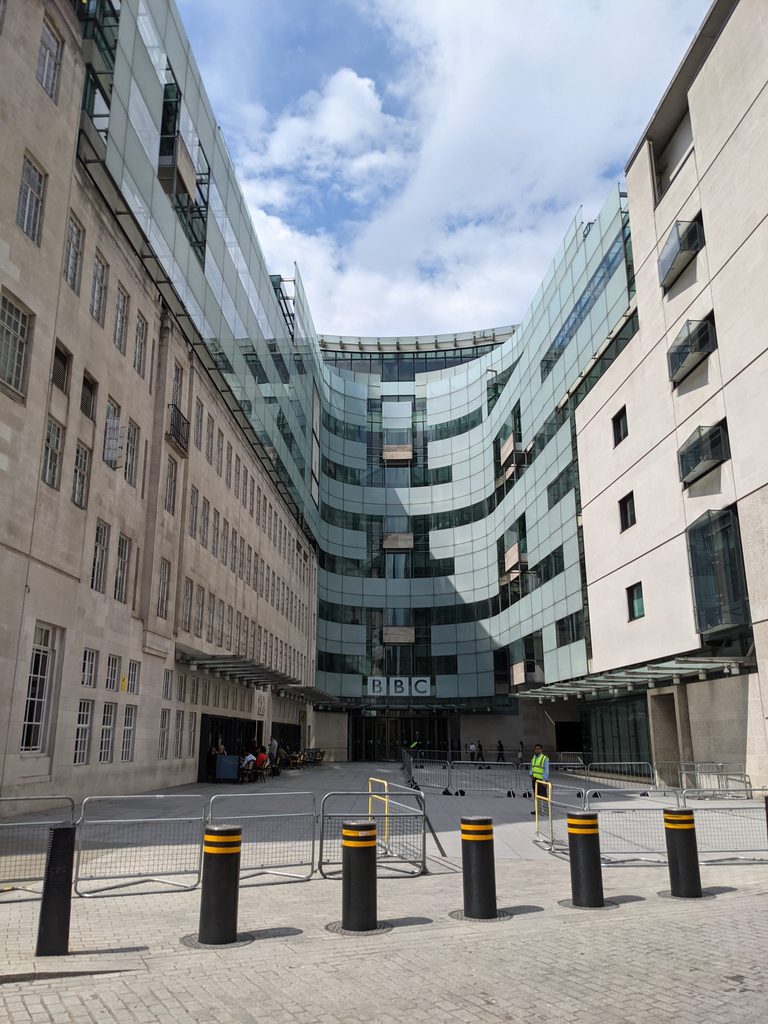
The jurisdiction fight should not obscure an important point the parties no longer seriously dispute: the broadcast edit did not present Trump’s Jan. 6 remarks in their original sequence. The documentary joined two passages separated by more than 50 minutes, creating a condensed statement that Trump had not delivered continuously.
After Trump’s lawyers complained in November 2025, the BBC acknowledged that the edit created a “mistaken impression” that Trump had made a direct call for violent action. It apologized for what it called an error of judgment and said the documentary would not be rebroadcast in that form.
The BBC’s apology, however, does not automatically resolve a U.S. defamation claim. Trump still must satisfy the elements required under applicable law, including falsity, defamatory meaning, publication, injury and — because he is a public official and public figure — the demanding constitutional standard known as actual malice.
Trump argues the splicing was not a harmless production mistake but a deliberate distortion of a politically consequential speech. His lawyers have described the documentary as false and malicious and continue to seek billions of dollars in damages. The BBC says the editing was wrong but insists the legal requirements for defamation are not met.
Trump still must prove actual harm
The amended complaint narrowed Trump’s damages theory. His original lawsuit included alleged harm to his businesses and brands, which helped trigger a discovery fight over financial records. The revised complaint focuses on personal reputational injury while continuing to seek up to $10 billion through defamation and Florida consumer protection claims pleaded in the alternative.
The BBC says that revised theory still fails because Trump has not plausibly shown that the documentary caused measurable reputational harm. It points to the chronology: the program aired in Britain on Oct. 28, 2024, and Trump won the presidential election eight days later. In Florida, the motion notes, he received 56.1% of the vote and won by roughly 13 percentage points.
Election results do not, by themselves, prove that a person suffered no reputational injury. A public figure could theoretically prevail politically while still showing compensable harm in another context. But the BBC uses Trump’s electoral success, the lack of authorized U.S. distribution and extensive preexisting controversy over Jan. 6 to attack the complaint’s causal theory.
That is a pleading argument, not a factual finding. Kuntz must decide whether the amended allegations are legally sufficient to proceed, drawing the distinctions required on a motion to dismiss rather than weighing a full trial record.
Actual malice is a separate hurdle
For a public official such as Trump, proving a false and damaging statement is not enough. Under the Supreme Court’s New York Times v. Sullivan standard, he must also show actual malice — meaning the defendant knew the challenged statement was false or acted with reckless disregard for whether it was true.
The BBC argues the amended complaint does not plausibly connect that state of mind to the people responsible for the documentary. It says allegations about criticism from outside advisers, politicians or other BBC personnel do not establish what the relevant editors and producers knew when they made the challenged cut.
The broadcaster also says poor journalistic practice, failure to seek comment or hostility toward a subject is not automatically actual malice. In its telling, the later apology supports the opposite inference: that the edit unintentionally created a misleading impression rather than reflecting a conscious decision to publish something known to be false.
Trump’s theory is fundamentally different. He alleges the decision to splice distant parts of the speech was intentional and designed to mislead viewers about his words and conduct on Jan. 6. If the case survives, evidence about how the edit was conceived, reviewed and approved could become central to actual malice.
The consumer claim faces attack too
Trump also invokes the Florida Deceptive and Unfair Trade Practices Act, commonly called FDUTPA. The statute generally targets unfair or deceptive conduct in trade or commerce. The BBC argues it cannot be used here to transform the same editorial publication at issue in the defamation count into a separate consumer protection violation.
Its motion says Florida’s “single action” doctrine bars repackaging a defamation claim under a different label when the injury flows from the same publication. It also argues the documentary was editorial speech on a matter of public concern, not commercial speech or a transaction covered by the consumer statute.
Trump’s amended complaint continues to press the statutory count. Kuntz will have to decide whether the claim is independently viable or merely duplicates the defamation theory. Again, the BBC’s motion states a defense position; it is not yet the court’s ruling.
Discovery shaped the amended lawsuit
The new dismissal fight follows months of procedural maneuvering over what Trump would have to disclose if the case moved into discovery. His original theory included commercial and business harm, and the BBC sought financial material it argued was relevant to testing those alleged damages.
Earlier this month, then presiding Judge Roy Altman allowed Trump to file an amended complaint that removed the business damage allegations and concentrated on reputational harm. Altman treated the BBC’s earlier motion to dismiss as moot, clearing the way for the broadcaster to attack the revised complaint instead.
The case was then reassigned to Kuntz, who recently joined the Southern District of Florida after Senate confirmation. The reassignment did not resolve pending disputes. Separate discovery fights have continued, including BBC efforts to obtain testimony or documents from members of Trump’s family and Trump’s objections to those requests.
Those disputes matter because a dismissal now could prevent the case from reaching broader merits discovery. If the case survives, questions about who made the edit, what they knew, how the documentary was distributed and what injury Trump can prove are likely to remain central.
What Judge Kuntz decides next
As of Aug. 25, Kuntz has not ruled on the BBC’s new motion. The broadcaster has asked for dismissal with prejudice and requested a hearing. Trump will have an opportunity to oppose the motion, and the court may decide the issues on the papers or after argument.
The judge can analyze the defenses separately. He could conclude the court lacks personal jurisdiction and stop there. He could find jurisdiction exists but dismiss one or both claims for failure to state a legally sufficient case. Or he could allow some or all of the amended lawsuit to proceed.
A two week trial remains scheduled for February 2027, but that date matters only if the case survives the preliminary challenges and later pretrial proceedings. The immediate question is whether Trump has pleaded a case that a Florida federal court has power to hear and that U.S. defamation law permits to move forward.
The BBC’s apology ensures the editing decision itself will remain part of the public record. What it does not establish is the answer to the legal questions now before Kuntz. The next ruling will determine whether those questions end at the courthouse door or become the foundation for a broader examination of the documentary and the damages Trump says it caused.
Leave a Reply