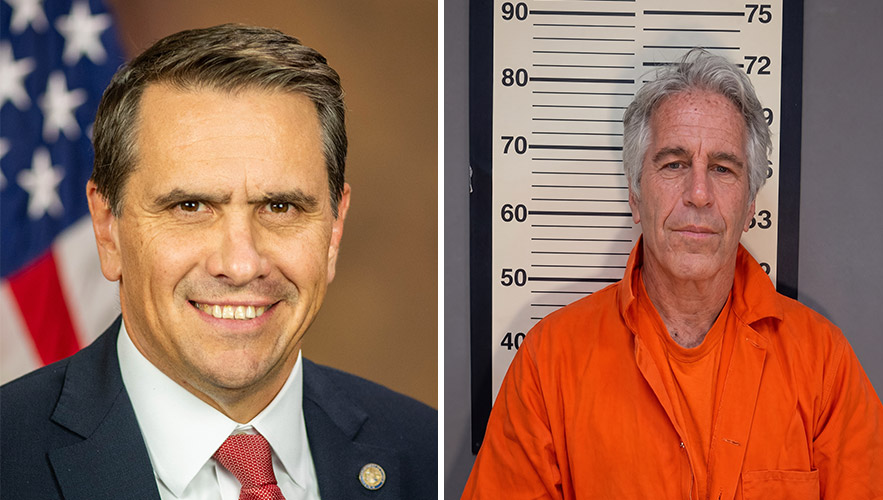
Attorney General Todd Blanche has appealed a June injunction in the Epstein files case, but the latest docket undercuts claims that he faced an Aug. 25 production deadline. That date appeared only in an unsigned proposal; Judge Emmet Sullivan instead ordered DOJ to respond by Aug. 27.
The Justice Department has opened a new front in its fight over the Epstein Files Transparency Act, filing what it called a “protective” notice of appeal in journalist Katie Phang’s lawsuit against Attorney General Todd Blanche. The one page filing, dated and entered Monday, Aug. 24, asks the U.S. Court of Appeals for the D.C. Circuit to review Sullivan’s June 25 preliminary injunction order.
The notice is unusually cautious about appellate jurisdiction. DOJ said it considers appealability “inconclusive,” while arguing that any part of Sullivan’s order that grants injunctive relief can be appealed immediately under federal law. The filing preserves the government’s appellate position, but contains no stay order or ruling removing the dispute from Sullivan’s courtroom.
What DOJ actually appealed
The appeal targets Sullivan’s June 25 order granting Phang a preliminary injunction, not a new Aug. 25 compliance order. Sullivan’s accompanying 48 page opinion found that Phang was likely to succeed on claims that DOJ had failed to meet requirements of the Epstein Files Transparency Act, including the obligation to publish written justifications for redactions.
The June order directed Blanche either to produce certain records with specified redactions removed or explain why the material should remain withheld. It also addressed handwritten FBI interview notes, foreign language materials and the redaction log Congress required. The ruling did not resolve Phang’s entire lawsuit; it was preliminary relief while the case continues.
Sullivan separately rejected DOJ’s request for a stay. In his opinion, he wrote that the department had acknowledged noncompliance with at least parts of the statute and emphasized that the law’s original disclosure deadline had already passed months earlier.
The Aug. 25 deadline was never entered
The most important correction to the latest round of coverage is procedural. An Aug. 20 filing by Phang included a proposed order asking Sullivan to require DOJ to submit four sets of handwritten FBI interview notes to the court by 3 p.m. on Aug. 25. The proposal also asked for a sworn declaration by Sept. 3 about the status of the department’s redaction log.
But the document was explicitly labeled “[PROPOSED] ORDER,” and the signature line for Sullivan was blank. It was a request from the plaintiff, not an order already imposed by the judge.
On Aug. 21, Sullivan chose a different path. According to the docketed minute order, he directed DOJ to respond by Aug. 27 to Phang’s latest filings and gave Phang until Sept. 3 to reply. The proposed Aug. 25 deadline therefore never became operative.
That distinction substantially changes the posture of the story. DOJ did appeal one day before Aug. 25, but it did not retreat from a court imposed Aug. 25 production deadline because no such deadline had been entered.
Why Sullivan called the hearing
The appeal follows weeks of increasingly pointed exchanges over whether DOJ had adequately supported its redactions and withholding decisions.
On Aug. 6, after reviewing documents in chambers, Sullivan said the government had not supplied documentation required by his July 25 order to support representations that certain redacted names belonged to victims. DOJ had provided assertions about victim identities, he wrote, but not the documentation he had demanded.
Sullivan also focused on handwritten FBI notes underlying several FD 302 interview reports. DOJ had argued that the notes were “substantially similar to” typed reports and that handwritten material posed a risk of inadvertently exposing victim information. Sullivan observed that the Epstein law does not contain an exception for documents merely because they are substantially similar or duplicative and asked why the notes could not be redacted manually or another way.
A third issue was the redaction log. The law says redactions must be accompanied by written justifications published in the Federal Register and submitted to Congress. Sullivan ordered the department to be prepared to explain when it intended to comply with that requirement.
The judge’s contempt warning
Those unresolved questions led to an Aug. 13 status conference in Washington, where Sullivan’s frustration became unmistakable.
NBC reported that DOJ lawyer Andrew Block said he could not commit to a timetable for the redaction log and described information as “forthcoming.” Sullivan responded, “Christmas is forthcoming.” At another point, NBC reported, he asked whether the government wanted him to issue another order saying, in effect, that he really meant the first one.
CNN reported an even sharper warning. Sullivan said the public, Epstein’s victims and the court had a right to know what was happening and reminded government lawyers that he had previously held Justice Department attorneys in contempt. He said he was not eager to do so again but made clear that contempt remained available if court orders were not obeyed.
That warning did not itself amount to a contempt finding, a sanction or a ruling that Blanche personally had violated an Aug. 25 deadline. It was a warning about future enforcement and about Sullivan’s dissatisfaction with the explanations he had received.
Handwritten notes became the next fight
After the Aug. 13 hearing, Phang’s lawyers filed another notice challenging a representation made by DOJ counsel about handwritten FBI notes.
At the hearing, Block was asked whether other handwritten notes tied to FD 302 reports had been published. He answered that, to his knowledge, they had not. Phang’s Aug. 20 filing said that answer was incorrect and pointed the court to examples of handwritten interview notes already published by DOJ. The filing described nearly 100 examples.
That dispute is now part of the briefing Sullivan scheduled. DOJ’s response is due Aug. 27, and Phang’s reply is due Sept. 3. The court has not yet ruled that the government’s position on the notes is false, nor has it ordered the specific Aug. 25 production proposed by Phang.
This is also why the procedural labels matter. A plaintiff’s filing can accuse the government of inconsistency and ask for a remedy. It does not become a judicial finding until the judge adopts the argument or enters an order.
What the June ruling did not decide
The preliminary injunction is important, but it is not a final judgment that every disputed Epstein record must be released without redaction. Sullivan’s order required action on a defined set of records and compliance steps while preserving lawful protections for victims and other information Congress permitted DOJ to withhold. The underlying case remains open.
That limit matters in a controversy where a person’s appearance in Epstein related records can be misconstrued. Being named in an investigative file, address book, email, flight record or witness statement does not by itself establish criminal conduct. The litigation concerns whether DOJ followed the disclosure statute and properly justified its redactions, not whether every person referenced in the records committed wrongdoing.
What the transparency law requires
Congress enacted the Epstein Files Transparency Act in November 2025, and President Donald Trump signed it on Nov. 19. The law required the attorney general, within 30 days, to make publicly available a searchable and downloadable collection of unclassified Justice Department records related to Jeffrey Epstein, Ghislaine Maxwell and specified categories of related investigative material.
The statute permits withholding or redaction for defined reasons, including victim identifying information, child sexual abuse material, certain depictions of injury or death, properly classified national security material, and information whose release would jeopardize an active federal investigation or prosecution. It expressly bars withholding merely to avoid embarrassment, reputational harm or political sensitivity.
The law also imposes an additional transparency requirement: redactions must be accompanied by written justification published in the Federal Register and submitted to Congress. That obligation has become one of the central points of dispute in Phang’s case.
DOJ said on Jan. 30 that it had published approximately 3.5 million pages and that the production marked compliance with the law. Phang sued in April, arguing that the department’s disclosures remained incomplete and that some redactions and withholdings violated the statute. Sullivan granted preliminary relief on June 25.
Blanche’s status has also changed
The case began when Blanche was acting attorney general. He has since become the permanent head of the Justice Department.
The Senate confirmed Blanche on Aug. 8 by a 50 49 vote, and DOJ says he was sworn in as the 88th attorney general on Aug. 10. The Aug. 24 notice of appeal therefore identifies him as attorney general rather than acting attorney general, although the lawsuit remains an official capacity case.
That change in title does not alter what the June order decided. Nor does it turn the appeal into an appellate victory. The D.C. Circuit must address the appeal, including any jurisdictional question raised by DOJ’s own statement that appealability is uncertain.
What happens next
For now, two tracks are moving at once.
In the district court, DOJ faces Sullivan’s Aug. 27 deadline to respond to Phang’s latest filings over the handwritten notes and proposed next steps. Phang is scheduled to reply by Sept. 3. Sullivan can then decide whether further production, declarations, sanctions or other relief are warranted.
At the appellate level, DOJ has preserved its attempt to challenge the June 25 preliminary injunction. The notice relies on the statute allowing immediate appeals from certain injunctions while openly acknowledging that the appealability of Sullivan’s order is not entirely clear. The D.C. Circuit has not issued a merits ruling on that question.
The practical result is less dramatic than the claim that Blanche escaped an Aug. 25 ultimatum at the last moment, but more consequential than a routine scheduling dispute. DOJ is asking an appeals court to review the injunction while Sullivan continues pressing the department for explanations about redactions, handwritten interview notes and a transparency requirement written directly into federal law.
The next concrete deadline is Aug. 27. Unless a new court order changes the schedule, that is when the government must answer Sullivan’s latest questions — and when the record will show whether the appeal changes DOJ’s litigation strategy or simply adds another layer to an already contentious disclosure fight.
Leave a Reply