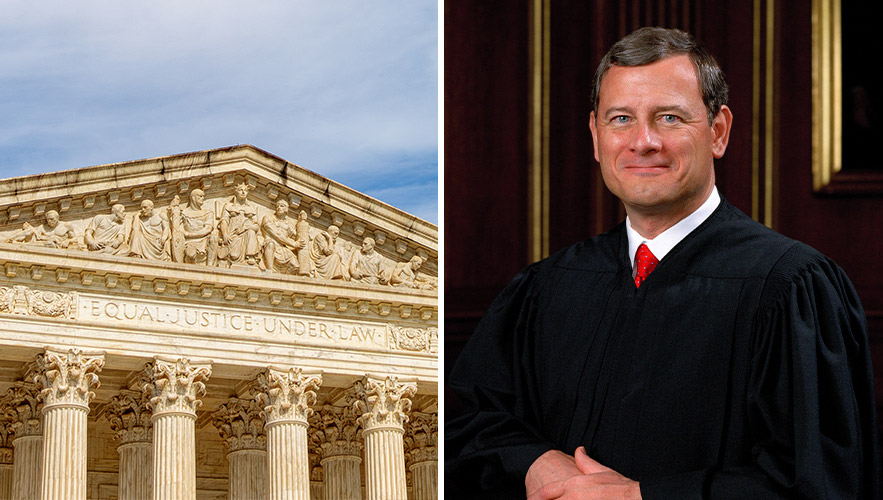
A peaceful Aug. 15 flotilla brought more than 40 demonstrators to the waters and shoreline near Chief Justice John Roberts’ summer home in Maine. The protest reflected broader criticism of the Court, but claims that Roberts was “humiliated” or that every disputed ruling was his personal doing go beyond the evidence.
Chief Justice John Roberts’ summer retreat off the Maine coast became the setting for an unusual protest this month when activists arrived by kayak, canoe and rowboat to criticize the direction of the Supreme Court.
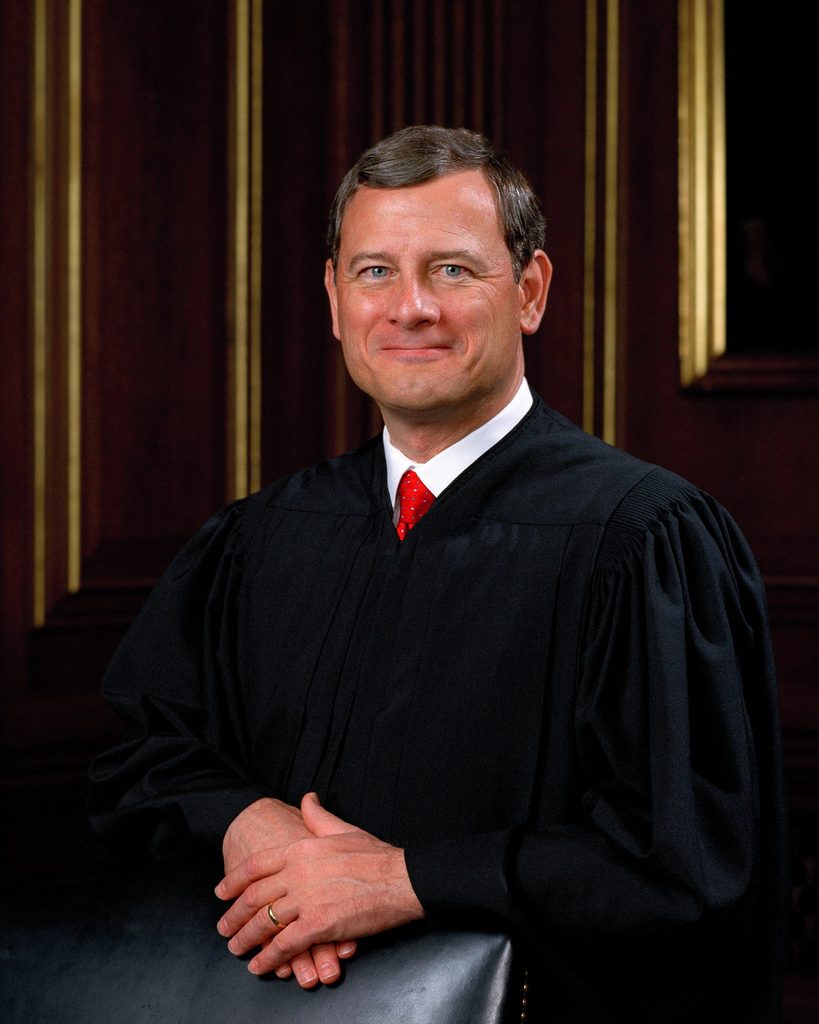
The demonstration took place Aug. 15 near Hupper Island, off Port Clyde. Local reporting counted 21 people and one dog in small watercraft during a one hour “floating vigil,” while roughly 20 more people demonstrated from the public landing on shore. The Supreme Court did not immediately comment.
What happened off Hupper Island
The action was organized by The Audacity: Creative Action Together, a progressive grassroots group based in midcoast Maine, alongside regional Indivisible organizations. Organizers had advertised coordinated “By Land or by Sea” vigils in several Maine communities, with the Port Clyde action focused on Roberts and the Supreme Court.
Photographs and local accounts showed protesters carrying signs accusing the Roberts Court of abandoning constitutional principles and acting as a “rubber stamp” for authoritarianism. Organizers said the demonstration was intended to draw attention to decisions they believe weakened voting rights, reproductive rights and limits on presidential power.
The event was not unprecedented. A similar flotilla took place in July 2025, when demonstrators launched from Port Clyde and paddled toward Hupper Island with signs criticizing the Court. Roberts and his wife, Jane Roberts, have owned a home on the island since 2006 and later acquired another nearby property.
Published accounts of the Aug. 15 action describe a nonviolent vigil in the water and at a public landing. They do not establish that protesters entered Roberts’ property or confronted him face to face. They also do not establish that Roberts was personally “humiliated,” a characterization used in partisan coverage rather than an observable fact.
Why Roberts became the target
Roberts has led the Supreme Court since 2005, when President George W. Bush appointed him chief justice. The Court shifted more sharply right during Donald Trump’s first term after Trump appointed Justices Neil Gorsuch, Brett Kavanaugh and Amy Coney Barrett, producing the current 6-3 conservative majority.
That majority has rewritten major areas of constitutional and administrative law. It eliminated the federal constitutional right to abortion, narrowed federal regulatory power, expanded some gun and religious liberty protections and issued a major presidential immunity ruling in Trump’s favour.
For critics, Roberts is not merely a ceremonial leader. He controls opinion assignments when he is in the majority and has authored or joined some of the Court’s most consequential decisions. Yet his record is not identical to that of the Court’s most conservative justices, and several claims surrounding the Maine protest require that distinction.
Roberts’ record is more complicated
The 2022 abortion decision, Dobbs v. Jackson Women’s Health Organization, is one example. The five justice majority overturned Roe v. Wade and Planned Parenthood v. Casey, ending the federal constitutional right to abortion and returning abortion policy largely to elected governments.
Roberts did not join that part of the majority opinion. He agreed that Mississippi’s 15 week abortion ban should be upheld, but argued that the Court did not need to overrule Roe and Casey entirely. He therefore supported the judgment for Mississippi without joining the broader reasoning that erased those precedents.
The situation was different in Trump v. United States in 2024. Roberts wrote the 6-3 majority opinion holding that a former president has absolute immunity from criminal prosecution for actions within his exclusive constitutional authority and at least presumptive immunity for other official acts. Unofficial acts receive no immunity.
That ruling was one of the decisions protesters cited when accusing the Court of placing presidents above ordinary legal accountability. The majority rejected that characterization, saying its framework followed separation of powers principles and applied to every president, not only Trump.
Voting rights criticism needs precision
The protesters also pointed to Louisiana v. Callais, an April 2026 ruling involving Section 2 of the Voting Rights Act and Louisiana’s congressional map. Some political coverage described the decision as “gutting” the law, but the Court did not repeal or invalidate the Voting Rights Act itself.
Justice Samuel Alito wrote the 6-3 majority opinion, and Roberts joined it. The Court held that the Voting Rights Act did not require Louisiana to create an additional majority Black district under the circumstances presented and concluded that the state’s use of race in drawing the challenged map was unconstitutional.
The majority also revised the framework governing Section 2 vote dilution claims, requiring plaintiffs to satisfy stricter conditions when using illustrative maps and placing greater emphasis on separating racial voting patterns from partisan preferences. Justice Elena Kagan, writing for the three liberal justices, warned that the new test would sharply weaken Section 2’s practical force.
It is therefore accurate to describe Callais as a major narrowing of voting rights doctrine. Saying the Court “overturned the Voting Rights Act,” however, would be wrong. The statute remains in force, though the ruling changed how an important part of it can be used in redistricting cases.
New Trump orders sharpen the dispute
Events after the Aug. 15 protest have added new fuel to the argument over the Court’s relationship with the Trump administration.
On Aug. 21, Roberts issued a brief administrative stay that temporarily allowed construction on Trump’s planned White House ballroom to continue. A federal appeals court had upheld a preliminary injunction requiring the administration to stop above ground work because, at that stage, the lower courts concluded congressional authorization was required.
Roberts’ one sentence order did not decide whether Trump ultimately has legal authority to build the project. An administrative stay is temporary case management relief meant to preserve conditions while the Supreme Court considers an emergency request. Construction can continue for now, but the underlying dispute remains unresolved.
Three days later, on Aug. 24, the full Court granted the Trump administration emergency relief in litigation over an executive order tightening rules related to mail voting. By a 6-3 vote, the justices paused an injunction that had prevented federal agencies from implementing key parts of the directive against 23 Democratic led states and the District of Columbia.
That order also was not a final ruling on legality. A separate nationwide injunction still blocks a key Postal Service provision, and further litigation remains possible. Temporary Supreme Court relief can have major practical consequences without resolving the merits of a constitutional dispute.
The emergency docket is central
Much of the activists’ criticism focuses on what is often called the Supreme Court’s “shadow docket,” an informal label for orders issued outside the Court’s regular merits process. The Court generally refers to this work as its orders or emergency docket.
Emergency cases can arrive on compressed schedules because governments and litigants need immediate answers about whether a policy or lower court order should remain in effect. The justices may act without the full briefing, oral argument and lengthy signed opinions associated with ordinary merits cases.
Critics argue that consequential policies can change through short, sometimes unsigned orders that provide little explanation. Defenders respond that emergency relief is a necessary part of appellate judging and that deciding whether to pause a lower court order is different from deciding who ultimately wins.
That distinction has become especially important during Trump’s second term as the administration repeatedly asks the justices to intervene after lower courts block federal policies. Interim orders can therefore produce significant political effects even while the underlying lawsuits continue.
Roberts defends judicial independence
The Maine protest also sits inside a broader debate over how judges should be criticized and how far political pressure should go.
Roberts has repeatedly said criticism of court decisions is legitimate. In his 2024 year end report, he wrote that public engagement with the courts can strengthen democratic understanding. But he also warned about violence, intimidation, disinformation and threats to defy lawful judgments, calling those dangers to judicial independence.
That distinction matters because federal judges and Supreme Court justices have faced increased security threats in recent years. Roberts has argued that judges must be able to decide cases without fearing retaliation for unpopular rulings.
At the same time, he has pushed back against the idea that the Supreme Court should be understood simply as another political institution. In public remarks in May 2026, Roberts lamented the perception that justices are “purely political actors,” defending the Court’s role as an independent interpreter of law.
A peaceful protest in public waters does not resolve that tension. It is political expression directed at a public official, but its location near a justice’s home inevitably raises questions about privacy, security and the boundary between criticism and personal pressure.
Public opinion remains divided
The protest also reflects a measurable partisan split in attitudes toward the Court.
A Marquette Law School national poll conducted July 22-29 found that 47% of adults approved of the Court’s performance and 53% disapproved. Approval was 74% among Republicans, 35% among independents and 22% among Democrats. The survey interviewed 1,076 adults and had a margin of error of plus or minus 3.2 percentage points.
The same poll found that 55% of adults believed the Court had ruled for the Trump administration often or fairly often during his second term. That view was held by 77% of Democrats, compared with 37% of Republicans.
Those figures help explain why the same Court can be described by one side as an essential constitutional check and by another as an institution enabling executive power. They also show why a small protest in coastal Maine can become a national political story.
What the protest actually shows
The strongest conclusion supported by the evidence is narrower than the most dramatic headlines.
Roberts was the target of a coordinated, peaceful protest near his Maine vacation home. The demonstrators were motivated by identifiable Supreme Court decisions and by the Court’s handling of Trump related emergency cases. Their grievances are rooted in real rulings, but some of their broader political descriptions are arguments rather than neutral findings of fact.
The Court’s record also resists a one line summary. Roberts authored the presidential immunity ruling, joined the majority in Callais and personally issued the temporary ballroom stay. But he did not join the Dobbs majority’s decision to overrule Roe and Casey, and the Court’s latest mail voting and ballroom actions remain interim rather than final merits judgments.
The Maine flotilla therefore matters less as evidence of Roberts’ personal embarrassment than as a sign of institutional pressure surrounding the Supreme Court. A chief justice who has spent years warning that the judiciary must remain independent is now facing public criticism not only at the Court’s marble steps, but near the place where he spends part of his summer.
Whether that criticism changes anything inside the Court is unknowable. What is clear is that the fight over the Roberts Court’s legitimacy, its emergency powers and its role in Trump’s second presidency is no longer confined to Washington.
Leave a Reply