
Hillary Clinton’s claim that Republicans are “secretly cheering” Canadian Prime Minister Mark Carney is speculation, not an established fact. But public Republican unease over President Donald Trump’s Canada tariffs is real, and the dispute has escalated since Clinton spoke.
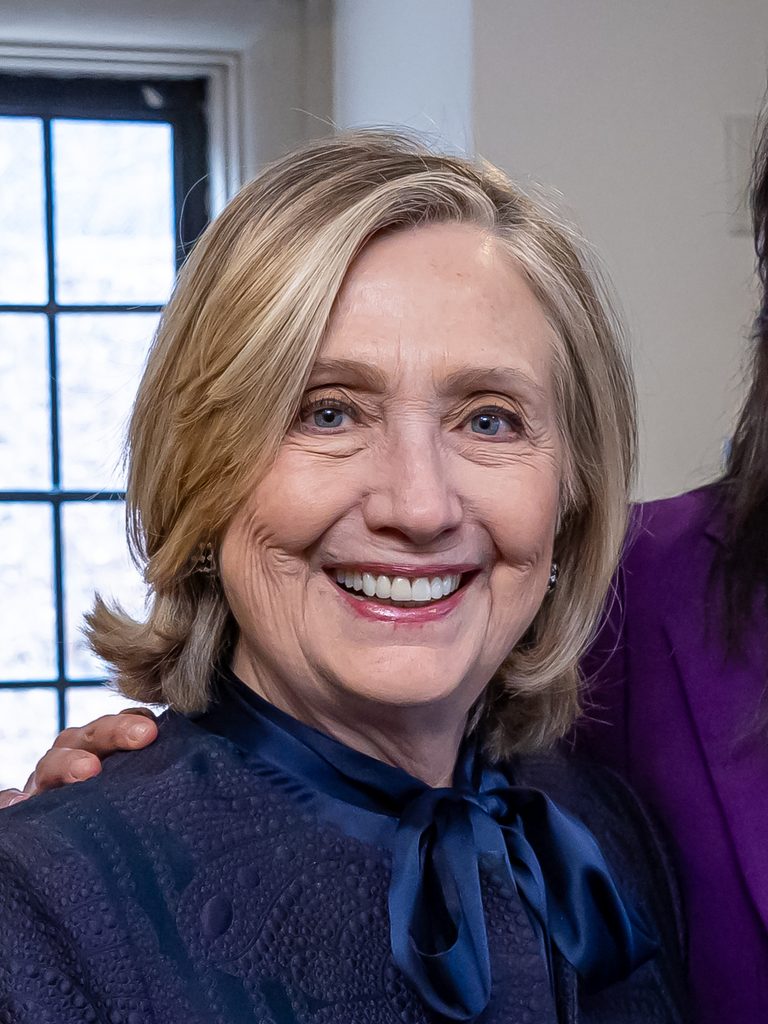
Former Secretary of State Hillary Clinton used a Monday night appearance in East Hampton, New York, to argue that President Donald Trump’s renewed trade confrontation with Canada could create more bipartisan resistance than is visible publicly. The August 24 Hamptons Institute event focused broadly on U.S. diplomacy, national security and global leadership.
Clinton said she could not imagine much enthusiasm among Republican senators for a trade war with Canada. She suggested some Republicans were privately pleased that Canadian Prime Minister Mark Carney was resisting Trump, pointing to the importance of Canadian trade for states such as Ohio and Michigan.
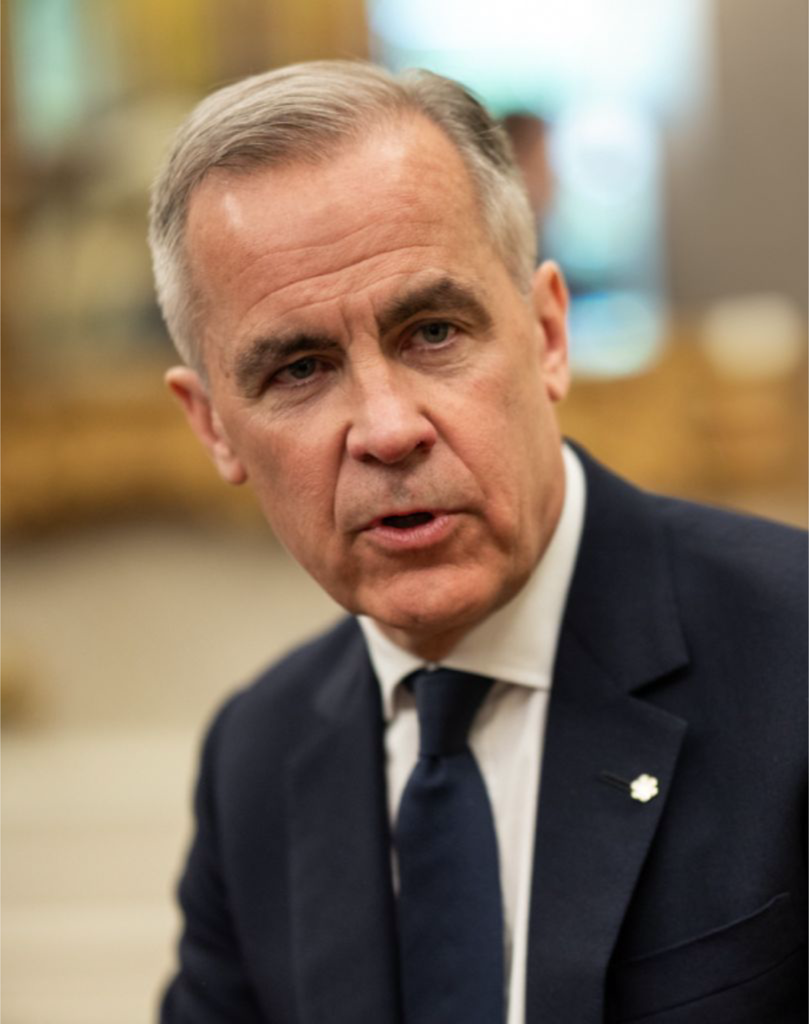
The timing matters. Clinton spoke two days after new U.S. tariffs of 50% took effect on a group of Canadian imports following the collapse of last minute negotiations. One day after her remarks, Canada announced a matching package of retaliatory tariffs on C$27.6 billion in U.S. goods, scheduled to take effect September 8.
What Clinton actually argued
Clinton’s central point was political rather than evidentiary. She was not reporting private conversations with Republican senators, and she did not identify lawmakers who had told her they supported Carney. Her “secretly cheering” line was an inference about how elected Republicans might view an economically risky fight with a deeply integrated trading partner.
That distinction matters because the public record shows a more complicated Republican response. Some Republicans have criticized or cautioned against the tariffs. Others have defended Trump’s approach, arguing that Canada has treated U.S. producers unfairly and that Washington needs leverage to force changes.
Clinton also framed the dispute as an opportunity for bipartisanship, suggesting that Republicans from states heavily exposed to Canadian trade may share concerns usually voiced by Democrats. The broad premise that Canada matters enormously to the economies of multiple U.S. states is well supported. Her specific percentages, however, were not.
Her export figures were high
Clinton said roughly 40% of Ohio’s exports and about 60% of Michigan’s exports go to Canada. The latest state level figures published by the Office of the U.S. Trade Representative are lower.
USTR says Ohio exported $56.5 billion in goods worldwide in 2025, including $18.3 billion to Canada. That makes Canada about 32% of Ohio’s goods exports. For Michigan, USTR reports $60.3 billion in total goods exports and $23.2 billion to Canada, or about 39%.
Those are still unusually large shares. Canada was the largest foreign market for both states in 2025. In Ohio, transportation equipment alone accounted for $18.8 billion in exports. In Michigan, transportation equipment represented $25.2 billion, reflecting the auto industry’s extensive cross border supply chains.
So Clinton’s political point about exposure to Canada has a strong factual basis, but the numbers she used overstated the current shares, especially for Michigan. The more defensible version of her argument is narrower: Canadian trade is critical to both states, not that a majority of all Michigan exports now go there.
Republican resistance is not hypothetical
There is public evidence of Republican concern, even if it does not prove Clinton’s claim about private support for Carney.
Republican Sen. Susan Collins of Maine said Monday that “imposing new tariffs on Canada is a mistake,” warning that the policy would hit industries such as lobster, blueberries and lumber in a state where Canada is the largest export market. USTR says about 41% of Maine’s 2025 goods exports went to Canada.
Ohio Republican Sen. Jon Husted signed a bipartisan letter earlier this year urging caution in the renegotiation of North American trade rules. At the same time, he has publicly backed the Trump administration’s broader “America First” economic agenda, illustrating the political tension Clinton was describing rather than a clean Republican break with the president.
Vice President JD Vance has defended the administration’s position. During a Maine visit Monday, he argued that Washington is seeking fairness and accused Canada of expecting the United States not to fight back. Former Pence adviser Marc Short, meanwhile, told the Associated Press that the Canada dispute could become a political trap for Republicans representing agricultural states.
That record supports the conclusion that disagreement exists inside the Republican coalition. It does not establish that many Republicans are privately rooting for Carney.
Why Canada walked away
The latest escalation followed weeks of negotiations that had briefly appeared capable of producing a deal. Carney said Canada wanted to preserve broad tariff free access to the U.S. market, reduce tariffs on strategic industries and maintain its ability to make independent decisions on trade and domestic policy.
On August 21, Carney suspended the talks and recalled Canadian negotiators to Ottawa. He said last minute U.S. changes were unfair, uneconomic and raised doubts about whether an agreement would be reliable. A day later, he said Washington had “asked too much” and offered too little.
The Trump administration tells the story differently. The White House says Canada has discriminated against U.S. products in alcohol, dairy and motor vehicles. In July, Trump signed three proclamations under Section 338 of the Tariff Act of 1930 authorizing additional 50% duties on specified Canadian goods.
The White House says those duties apply to covered products even when they otherwise qualify under the U.S. Mexico Canada Agreement. It excluded several categories, including goods already covered by separate Section 232 tariffs and certain other products.
The two governments therefore disagree not only about tariff levels but about the underlying relationship: Canada says the U.S. demands intrude on its sovereignty and economic independence, while the Trump administration says its measures respond to discriminatory Canadian trade practices.
The trade war just escalated
The U.S. tariffs took effect at 12:01 a.m. Eastern time on August 22 after a three day postponement failed to produce an agreement. They cover about C$27.6 billion, or roughly $20 billion, in Canadian goods and affect only a portion of Canada’s overall exports to the United States.
On August 25, Canada detailed its retaliation. Beginning September 8, Ottawa says it will impose tariffs of 15%, 25% and 50% on U.S. products worth C$27.6 billion, matching the latest U.S. action dollar for dollar. The list covers sectors including steel, dairy, appliances, agricultural equipment, pulp and paper, and electronics.
Canada also announced C$7.5 billion in support for affected businesses and workers. Reuters reported that Industry Minister Mélanie Joly said the product list was designed partly to apply political pressure in specific U.S. states ahead of the November 3 midterm elections.
That is a significant development since Clinton’s remarks. Her comments anticipated domestic U.S. political pressure from the trade fight; Canada has now openly said part of its countermeasure strategy is intended to create exactly that pressure.
Why the Midwest stakes are real
The economic exposure is not limited to headline export percentages. U.S. and Canadian manufacturing has been integrated for decades, particularly in autos, steel, machinery, agriculture and energy. Components can cross the border multiple times before a finished product reaches a customer, meaning tariffs can affect imported goods as well as domestic production that depends on Canadian inputs.
The overall trading relationship is enormous. USTR says U.S. Canada goods trade totalled about $715.5 billion in 2025. U.S. goods exports to Canada were $333.6 billion, while imports were $381.9 billion. Including services, total bilateral trade reached an estimated $872.3 billion.
Michigan is an especially clear example. Canada was its largest foreign market in 2025, and transportation equipment was by far the state’s largest manufacturing export category. That means disruptions to auto and parts trade can spread through suppliers, logistics companies and factories on both sides of the border.
Ohio’s exposure is broader but still substantial. Canada was also its largest export market, and its biggest manufacturing export category was transportation equipment. For lawmakers in both states, the debate is therefore not an abstract argument about tariff theory. It touches employers, supply chains and voters before a midterm election.
The legal basis has changed
The current tariffs are also different from the Canada tariffs Trump imposed earlier in his second term.
In February, the Supreme Court ruled in Learning Resources v. Trump that the International Emergency Economic Powers Act did not authorize the president to impose the sweeping tariffs challenged in that case. The decision eliminated an important legal foundation the administration had used for earlier country specific and “reciprocal” tariffs.
The administration then turned to other statutes. It imposed a temporary 10% import surcharge under Section 122 of the Trade Act of 1974 and continued using Section 232 for sector specific national security tariffs. For the latest Canadian dispute over alcohol, dairy and motor vehicles, Trump invoked Section 338 of the Tariff Act of 1930.
Section 338 expressly allows additional duties, capped at 50%, when the president determines that a foreign country discriminates against U.S. commerce in specified ways. The White House’s July proclamations rely on that authority.
That legal distinction does not settle every possible future court challenge, but it means the August 22 Canada tariffs should not be described as simply the same measures invalidated by the Supreme Court in February. They rest on a different statute and a different set of presidential findings.
The political test comes next
Clinton’s most provocative claim that Republicans are privately cheering Carney cannot be independently verified from the evidence she cited. The public evidence supports a more limited conclusion: some Republicans are openly worried about the costs of a Canada trade war, while others remain aligned with Trump’s strategy.
That split could become more visible as the economic effects accumulate. Maine, Michigan, Ohio and Alaska all have competitive political stakes and important commercial links to Canada. Canada’s decision to target some retaliatory tariffs with U.S. political pressure in mind adds another layer to the midterm fight.
Trump has shown no sign of retreating. The Associated Press reported that he said Monday he intends to raise tariffs on Canadian automobiles, auto parts and steel to 50% in 2027, while U.S. Trade Representative Jamieson Greer has downplayed the likely economic effect of the current measures.
Carney, meanwhile, has presented resistance as part of a longer term Canadian strategy to reduce dependence on the U.S. market and diversify trade abroad. His government has also acknowledged that retaliation will raise costs and reduce choices for Canadians.
The measurable question, then, is not whether unnamed Republicans are privately applauding Canada’s prime minister. It is whether public Republican opposition grows as tariffs reach businesses and consumers and whether that pressure changes Trump’s course before the November midterms or pulls the two countries back toward negotiations.
Leave a Reply